

About This Video
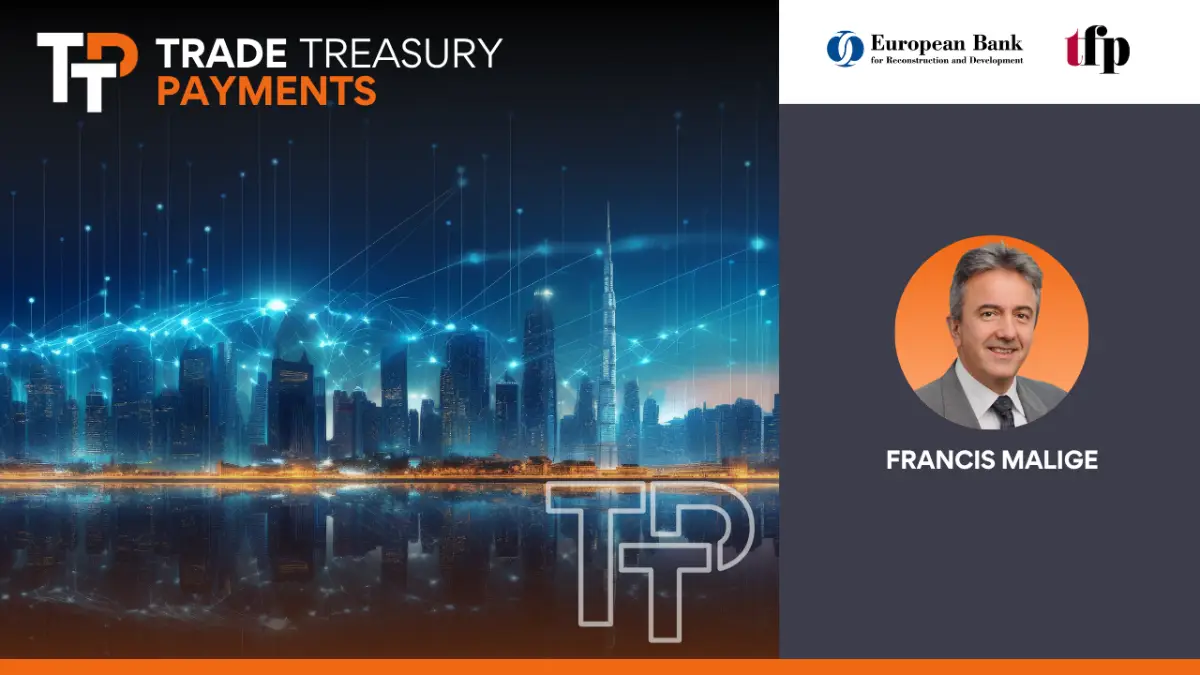
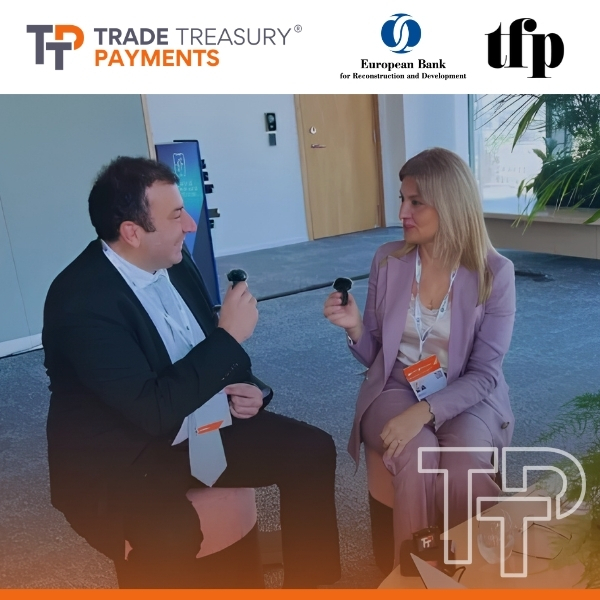
At the European Bank for Reconstruction and Development (EBRD) 2025 Annual Meeting and Business Forum in London, Trade Treasury Payments (TTP) spoke with Francis Malige, Managing Director and Head of Financial Institutions at EBRD, to understand how the bank is responding to conflict, disruption, and economic reconstruction across its regions of operation.
Trade is often the first casualty in times of crisis. Whether in Lebanon, Gaza or Ukraine, commercial banks are quick to pull back credit lines when volatility hits and that is precisely where the EBRD steps in.
Malige said, “You often hear people say that banks will give you an umbrella, but then take it away the moment it starts raining. That’s not true at all for the EBRD. When it starts raining, that’s when we open the umbrella. We actually increase our support to our clients.”
In Ukraine, that commitment has been significant. EBRD investment in the country has doubled since the onset of war, reaching €2 billion per year, up from €1 billion annually before the invasion. The bank has worked closely with local financial institutions to introduce novel products tailored to wartime conditions, such as large-scale risk-sharing facilities designed to maintain liquidity and preserve access to finance for the real economy.
Malige said, “Reconstruction is not just about building power plants or railway networks. It’s about hundreds of thousands of SMEs making individual investment decisions that ultimately drive economic growth.”
To reach those businesses, the EBRD relies on a deep network of partner banks. While the bank itself funds around 500 projects annually, its partners lend to hundreds of thousands of SMEs each year.
“After war or disruption, recovery is about recreating hope,” he said. “That’s where our partner banks play a vital role, with our support.”
The EBRD is preparing to broaden its geographic footprint and just this month its shareholders accepted an amendment to Article 1 of the Agreement Establishing the EBRD, enabling the expansion of its operations to selected countries in sub-Saharan Africa and Iraq. As with the EBRD’s post-Cold War work in Eastern Europe, the aim is to help deliver prosperity through a blend of trade finance, SME support, financial inclusion, and green investment.
Malige said, “Sub-Saharan Africa is going to be the engine of growth in the 21st century. The market for products like SME lending, women in business, green energy finance, is large and we look forward to contributing to the development of these countries.”
With operations approved in Nigeria, Benin and Ivory Coast and soon launching in Kenya, Ghana and Senegal, the EBRD is setting itself up to become a long-term partner for resilience and renewal where it is needed most.
Key Topics
- The role of trade finance in maintaining economic activity during periods of conflict and disruption.
- How international financial institutions support markets when commercial banks withdraw.
- The importance of small and medium sized enterprises in economic recovery and reconstruction.
- The value of strong partnerships between development banks and local financial institutions.
- Expanding access to trade finance and financial inclusion in emerging markets such as Sub Saharan Africa and Iraq.
Key Insights
Expert Analysis
Francis Malige, Managing Director of Financial Institutions at the European Bank for Reconstruction and Development, highlights the vital role trade finance plays in supporting economies during periods of instability. In times of crisis, whether caused by war, political disruption or global shocks such as the pandemic, trade flows often come under immediate pressure. Commercial banks tend to reduce credit lines as risk rises, which can quickly limit access to financing for businesses. According to Malige, this is precisely the moment when development institutions must step forward. Rather than retreating, EBRD increases its support to partner banks and clients. In Ukraine, for example, the bank has doubled its annual investment since the start of the invasion, expanding from around one billion euros a year to approximately two billion euros. One of the key tools used has been portfolio risk sharing facilities, which allow partner banks to continue lending to companies even during periods of severe economic disruption. Malige also stresses that economic recovery is not driven only by large infrastructure projects. While rebuilding energy systems or transport networks is important, long term recovery also depends on the strength of smaller businesses. Small and medium sized enterprises form the backbone of most economies and play a major role in job creation and local investment. To reach these businesses at scale, EBRD works closely with partner banks across its regions. Each year the institution invests in hundreds of projects, while its partner banks extend financing to hundreds of thousands of smaller businesses. Looking ahead, EBRD is preparing to expand its activities into new regions including Sub Saharan Africa and Iraq. Trade finance is expected to play a central role in this expansion, alongside programmes that support SME development, financial inclusion, women in business initiatives and investment in green energy.— Francis Malige
Key Findings
- Trade activity is often one of the first areas affected during geopolitical crises.
- Development banks can play a stabilising role by increasing support when markets become volatile.
- Risk sharing facilities enable banks to continue lending despite heightened uncertainty.
- SMEs are a key driver of economic rebuilding and long term growth.
- Strengthening trade finance frameworks in developing regions can support broader economic development.
Implications
- Development banks will remain essential in supporting trade during periods of geopolitical instability.
- Strong partnerships with local banks will be key to reaching businesses across regional markets.
- Risk sharing structures can help financial institutions maintain lending during uncertain periods.
- Trade finance will likely act as a gateway for wider financial sector development in emerging economies.
- Expanding SME financing and financial inclusion will be central to long term economic resilience.
Key Takeaways
- Trade finance is a critical tool for sustaining economic activity during conflict and disruption.
- Development institutions play an important role when commercial banks scale back risk exposure.
- SMEs are vital to job creation and economic recovery in crisis affected economies.
- Collaboration between international institutions and local banks helps extend financing to businesses at scale.
- Expanding trade finance access in emerging markets will support long term growth and development.