SMBC's Kawamura on risk, resilience, and the future of trade finance
In the ever-evolving landscape of modern global trade, it is critical to be able to adapt to shifting geopolitical realities, supply chain disruption, and the demands of a changing financial climate. It is precisely because of its capacity for adaptability to meet the challenges of contemporary trade that SMBC was recognised as the ‘Best Trade Finance Bank (Global)’ and ‘Best Trade Finance Bank (Latin America)’ at the TTP Awards in February.
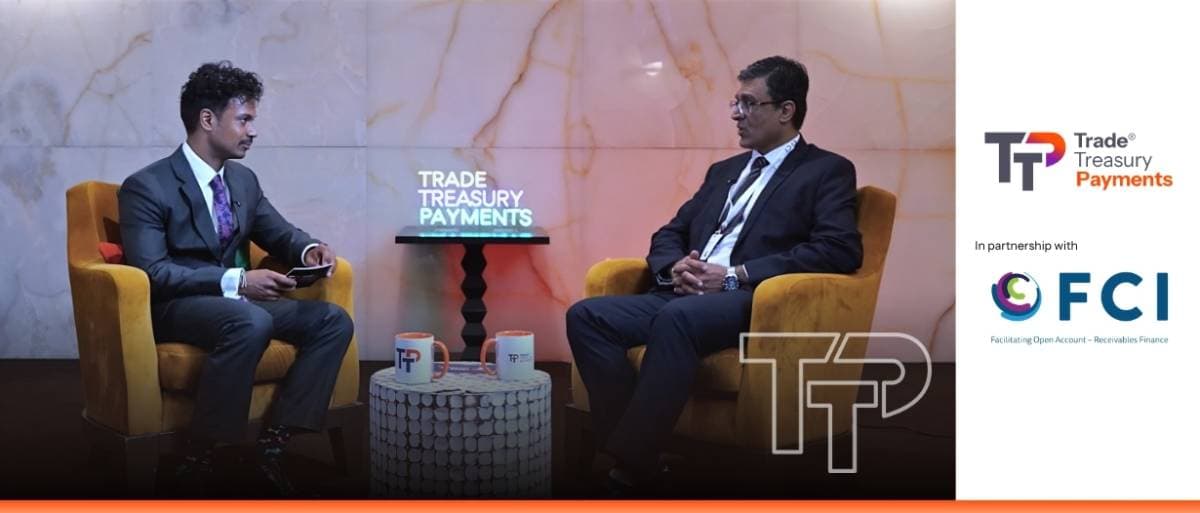
Deepesh Patel, Editor at TTP, sat down with Mitsuhiro Kawamura, General Manager and Global Head of the Trade Finance Department at SMBC, to discuss his unique perspective on SMBC’s award-winning trade finance operations and how the bank is navigating the complex waters of global finance to support corporate clients.
A global footprint with regional nuance
SMBC has a vast global presence, with a team of around 200 professionals operating across the Americas, EMEA, Asia, and Africa. However, as Kawamura emphasises, a global presence is only effective when matched by tailored strategies. “Customers’ financing needs are quite different by region,” he explains.
Expanding on this, Kawamura details how in his experience, client needs differ significantly based on the economic development of the region. “In the developed countries, the customer’s requirement is more on the balance sheet optimisation rather than just pure funding,” he details, meaning these corporate clients require sophisticated, structured solutions “carefully thinking about customers, account treatment, et cetera”.
Conversely, in developing markets, the primary requirement remains access to reliable, foundational funding, “so we need to think about how to provide the necessary funding by mitigating the risk if necessary,” he says.
How this nuance is achieved
SMBC relies on a robust partnership model to bridge critical gaps in liquidity and risk distribution in emerging markets. “We are not funding or trying to finance by ourselves, but we are partnering with our partner banks or institutions,” Kawamura explains. Multilaterals and development finance institutions (DFIs), for example, are crucial partners in Africa.
In Asia, SMBC has gone one step further by making strategic investments, acquiring stakes in local banks across Indonesia, India, the Philippines, and Vietnam. With such firm relationships established with these partners, “we can also leverage those relationships to support our customers in those regions,” Kawamura explains.
Energy transition and infrastructure
There is currently an important dialogue about the role of trade finance in the global energy transition. SMBC has been heavily involved in supporting large-scale renewable energy and infrastructure projects. Recognising that pure project finance can be extremely costly for clients during the intensive construction phase, SMBC is utilising supply chains and receivable finance tools to bridge the gap. “We’re trying to support our customers who are the project companies or buyers to procure the equipment because this is the area that is quite capital-intensive”, he explains.
By supporting clients – be they project companies or buyers – in the procurement of essential equipment, SMBC is providing a financing structure that is efficient and accounting-friendly, often avoiding the classification of simple debt. This innovative approach ensures that capital-intensive infrastructure projects can move forward despite the pressures inherent to the construction period of such undertakings.
An end-to-end approach to navigating uncertainty
As trade routes become increasingly unpredictable amid rising geopolitical tensions, the top priority for corporate treasurers is maintaining supply chain resilience. As Kawamura notes, banks can no longer look at financing in a vacuum and instead must take a more holistic view of the supply chain.
“We try to look at end-to-end trade flow,” he explains, “and then try to figure out where is the bottleneck in terms of the financing and then where is the opportunity for us to support”. By understanding and being cognisant of the interconnectedness of suppliers, buyers, and their respective counterparts, SMBC is able to offer risk mitigation solutions that address the specific vulnerabilities of the supply chains of their clients, particularly in volatile emerging markets.
The future of trade finance
Looking to the future, Kawamura suggests that what is driving the demand for trade finance is shifting, noting that this will “probably be slightly different from the past decade”. Previously, trade finance requirements have often been closely linked to absolute trade volume. Today, however, this previously close correlation is being tested by uncertainty. Tariff wars, sanctions, and geopolitical risk are all forcing clients to constantly reconfigure their supply chains.
As a result, Kawamura expects demand for risk mitigation tools and financing solutions that align with these changing supply chain strategies to surge. Simultaneously, the rapid advancement of digitalisation is set to broaden SMBC’s customer base. By leveraging new technologies, the bank is increasingly positioned to service clients previously underserved, marking a new chapter in SMBC’s evolution. “We also need to keep developing our capability of the products,” he summarises, to “keep supporting those customers in the coming years as well”.
Not resting on any laurels
For Kawamura, the TTP Awards for Global and Latin American excellence are not mere accolades, but rather encouraging signals that SMBC’s efforts to meet global client requirements are resonating with the market. As SMBC continues to innovate its products and expand its capabilities, there remains a firm focus on supporting clients through the uncertainties of the modern trade landscape.
With the industry looking ahead to the next few years, the ability to combine global scale with local intelligence, underpinned by digital innovation and collaborative partnership, will more than likely be what defines the leaders in trade finance. With precisely these attributes, a strategy focused on end-to-end support, and an unwavering commitment to address the evolving needs of its diverse client base, SMBC stands ready to meet these challenges face on and continue to be a standard bearer for excellence in trade finance.
Prefer to listen? The full conversation is also available as a podcast below.
Key Topics
- SMBC's global trade finance operations combine regional presence with locally tailored strategies to meet diverse client financing needs.
- Developed markets require balance sheet optimisation and structured solutions, whilst emerging markets prioritise access to foundational funding with risk mitigation.
- Strategic partnerships with multilateral institutions, development finance institutions, and local banks enable SMBC to bridge liquidity gaps and distribute risk in emerging markets.
- Supply chain finance and receivable finance tools help clients procure capital-intensive equipment for renewable energy and infrastructure projects more efficiently.
- Demand for trade finance is increasingly driven by geopolitical uncertainty and supply chain reconfiguration rather than absolute trade volume growth.
Key Insights
Expert Analysis
Mitsuhiro Kawamura, General Manager and Global Head of the Trade Finance Department at SMBC, emphasises that effective global trade finance requires combining substantial geographic footprint with locally nuanced strategies. He notes that as geopolitical tensions and supply chain disruptions reshape the landscape, banks must shift from viewing financing in isolation to taking an end-to-end approach that examines trade flows and identifies financing bottlenecks across the entire supply chain. Kawamura observes that the demand drivers for trade finance are fundamentally changing—what previously correlated closely with absolute trade volume is now being reshaped by tariff wars, sanctions, and geopolitical risk, which force clients to constantly reconfigure their supply chains. He highlights that continued innovation in products and capabilities, combined with digital advancement, will be essential for supporting clients through these evolving uncertainties in the modern trade landscape.
Key Findings
- SMBC operates approximately 200 trade finance professionals across the Americas, EMEA, Asia, and Africa, positioning the bank to deliver both global scale and regional expertise.
- SMBC received recognition as Best Trade Finance Bank (Global) and Best Trade Finance Bank (Latin America) at the TTP Awards in February 2024, reflecting the bank's adaptive capacity and operational excellence.
- In emerging markets, SMBC partners strategically with multilateral institutions and development finance institutions, and has acquired stakes in local banks across Indonesia, India, the Philippines, and Vietnam to strengthen regional support capabilities.
- Tariff wars, sanctions, and geopolitical risk are forcing corporate clients to constantly reconfigure supply chains, shifting trade finance demand away from volume-based correlations towards risk mitigation and flexible financing solutions.
- Digital innovation is broadening SMBC's addressable customer base by enabling the bank to service previously underserved client segments with enhanced product capabilities.
Implications
- Trade finance institutions must balance global reach with local market understanding and customised solutions; a purely standardised approach will not serve diverse regional client bases effectively.
- Partnerships with development finance institutions and multilateral organisations are becoming essential for banks seeking to operate sustainably in emerging markets and manage geopolitical risks.
- Renewable energy and infrastructure financing will increasingly depend on supply chain and receivable finance tools rather than traditional project finance, reshaping how capital-intensive sectors access funding.
- Corporate treasurers are prioritising supply chain resilience and visibility over simple cost optimisation, requiring banks to develop deeper, end-to-end understanding of trade flows.
- Digital capabilities and product innovation will determine competitive advantage in trade finance as the sector pivots to address geopolitical volatility and reconfigured supply chains.
Key Takeaways
- Regional variations in client needs demand tailored approaches: developed markets require balance sheet optimisation, whilst emerging markets prioritise foundational funding access and risk mitigation.
- Partnership with multilaterals, development finance institutions, and local banks is a core strategy for distributing risk and accessing liquidity in emerging markets.
- Supply chain and receivable finance tools effectively support capital-intensive renewable energy and infrastructure projects during construction phases in a more efficient and accounting-friendly manner.
- End-to-end supply chain visibility enables banks to identify financing bottlenecks and deliver targeted risk mitigation solutions that support corporate treasury resilience.
- Geopolitical uncertainty and supply chain reconfiguration are reshaping trade finance demand more than absolute trade volume, requiring continuous product innovation and digital investment.