Building the legal foundations for MSME finance
The ability for micro, small, and medium-sized enterprises (MSMEs) to secure financing is one of the biggest drivers of economic growth. For many of these businesses, traditional collateral is simply unavailable. Instead, their most valuable asset is often the business itself – namely, the receivables generated by their day-to-day operations.
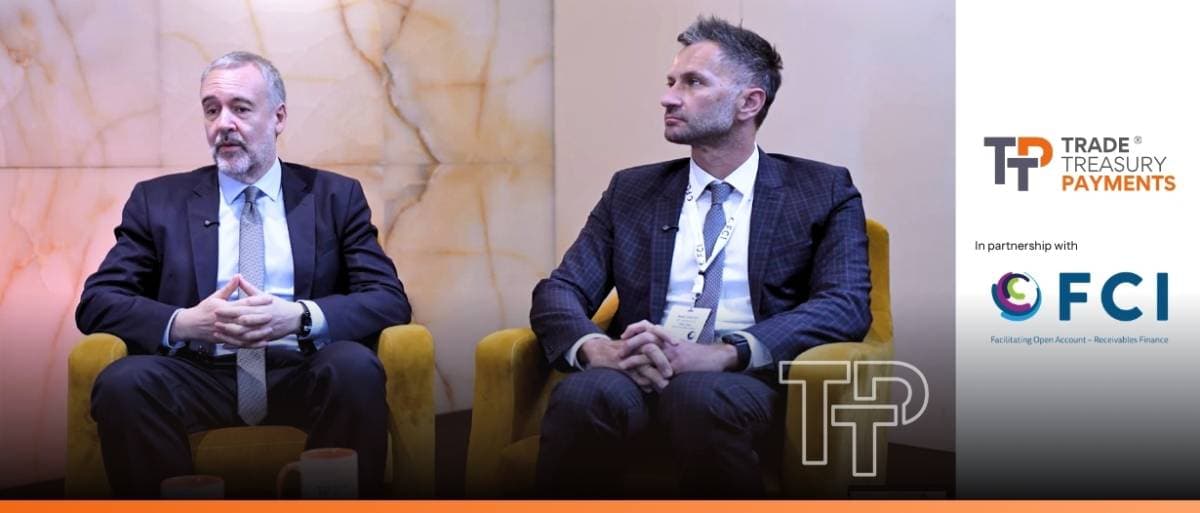
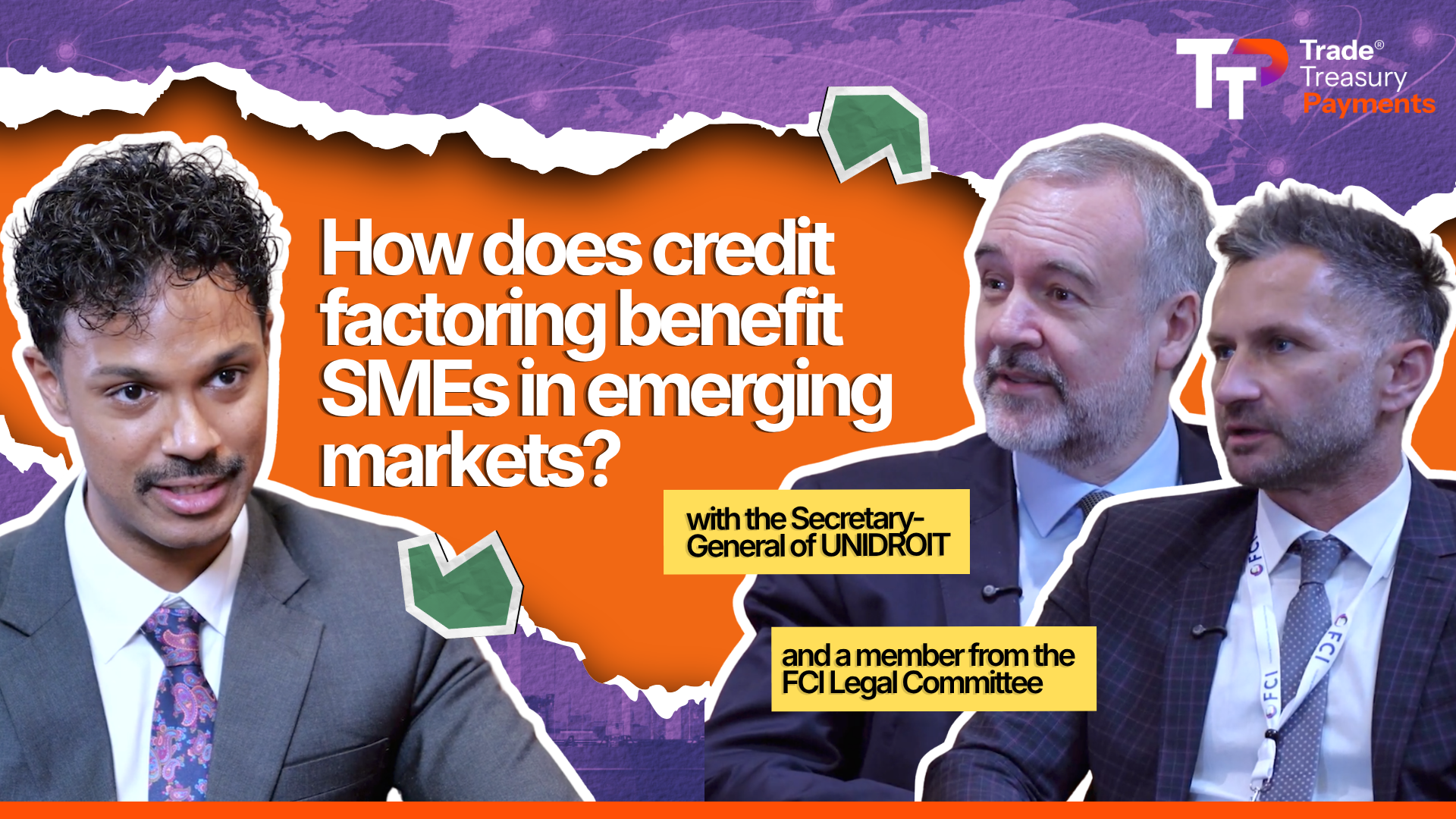
At the FCI 58th Annual General Meeting in Lisbon, Deepesh Patel, Editor at Trade Treasury Payments, sat down with Ignacio Tirado, Secretary General at UNIDROIT (The International Institute for the Unification of Private Law), and Marek Dubovec of the International Law Institute and member of the FCI Legal Committee, to discuss how the UNIDROIT Model Law on Factoring (MLF) is providing the legal infrastructure necessary for MSMEs to unlock their potential.
A century-long legacy
UNIDROIT was founded 100 years ago and now stands, as Tirado explains, as “an international organisation with 65 member states that represent 74% of the world population and more than 90% of the world GDP”.
“Basically, the world’s market is in our constituency,” he summarises. The organisation is dedicated to a mission of harmonising and modernising private law frameworks, and boasts a track record of producing cornerstone commercial treaties
The MLF and its newly-launched Guide to Enactment are two of the contemporary additions to this proud, century-long legacy. The model law, enacted in 2023, is essentially a legal template that legislators can integrate into their national systems. “For the crowd in this conference, model law on factoring is a very simple, clear example of how to legislate on factoring,” Tirado says. By ensuring such frameworks meet the highest global standards, UNIDROIT aims to facilitate easier access to finance for startups and small enterprises – entities that rely on their business cases over hard assets to secure funding.
The importance of receivables finance
For MSMEs in general, but especially for those in emerging and developing markets, the MLF addresses the fundamental challenge of legal recognition. “The model law itself was proposed by the World Bank Group in 2019 when they realised that the reforms, general reforms, to facilitate the use of movable assets as collateral were not delivering the expected results,” explains Dubovec.
The economic logic is fairly straightforward – if a business relies on, say, intellectual property or specialised equipment as collateral, valuation and liquidation can be plagued with difficulty. Receivables are far more bankable. If a transferor defaults, the financier doesn’t “have to send a repo man to take a car or take equipment,” as Dubovec puts it. Rather than go through the potentially complex process of asset repossession, they simply collect the payment owed. It’s this inherent simplicity that makes factoring such a powerful tool for bridging liquidity gaps.
MLF key features and the Guide to Enactment
As Tirado details, the MLF is built around key pillars. “The key features are just the list of the beauty of the model of factoring because it has some attributes which make it particularly user-friendly,” he explains. It covers a broad spectrum of economic activity, including sales of goods, service provisions, intellectual property licensing, and credit card receivables.
While the MLF provides a core legal framework, it’s the Guide to Enactment that serves as a vital companion piece for effective deployment. It assists legislators, judges, and legal practitioners in less developed economies by clarifying technicalities and ensuring the model law is compatible with existing national legal structures.
Technology, fraud, and futureproofing
Trade finance is embracing the benefits of digitalisation, but alongside this are the unavoidable risks associated with emerging technologies and digital instruments like Artificial Intelligence (AI) and tokenised receivables. “The Guide to Enactment has a supplement that deals specifically with digital technologies,” Dubovec details. Discussing AI, he emphasises that while it is increasingly being used for practical applications like verifying the creditworthiness of a party, the MLF isn’t concerned with the technological methodology, but rather the legal framework.
With tokenised assets becoming more prevalent, the challenge shifts to determining which legal regime applies. Depending on whether a receivable is treated as an intangible right, a digital negotiable instrument, or a tokenised asset, different laws might come into play. The supplement to the Guide to Enactment provides guidance on how to navigate this evolving regulatory landscape and ensure the appropriate laws are being applied when considering assets.
When it comes to the ever-present issue of fraud, different registries play different roles. The UNIDROIT registry system focuses on legal effects and priority, while separate invoice registries function as due diligence tools, allowing for the existence of an invoice to be verified and for confirmation that it has not been double financed. Ideally, systems should integrate both of these strings to maximise security and transparency.
A message to all stakeholders
The overall message for the FCI and stakeholders globally is clear from both Tirado and Dubovec: the infrastructure for a more inclusive and efficient trade finance ecosystem is already here and offering significant benefits. “We are offering a standard, highest level standard, state-of-the-art model law, which is very easy to implement. It’s very easy to incorporate to your own legal system, probably easier than even the national legal system that is in place,” Tirado summarises. “This is great for the business, it’s great for the economy, it’s great because it’s producing access to credit to those that need it the most. Help us make our instrument useful; we are going to help your business, and everyone together, we’re going to help the economic grow”.
Dubovec echoed this sentiment, pointing to cost reduction as a major benefit for industry players. By removing legacy formalities like stamp duties and implementing modern registration systems, nations can significantly reduce the costs of doing business.
Through collaborative effort, there is a clear path to a modernised, legally robust factoring environment. The path may be clear, but the journey toward universal adoption continues.
Prefer to listen? The full conversation is also available as a podcast below.
Key Topics
- MSMEs can leverage receivables as collateral to unlock financing when traditional physical assets are unavailable.
- The UNIDROIT Model Law on Factoring establishes legal templates that national legislators can integrate into their systems to standardise factoring frameworks globally.
- Receivables finance offers inherent simplicity over complex asset repossession by enabling direct collection of payments owed.
- The Guide to Enactment supplements the MLF by helping legislators and practitioners navigate digital technologies, AI applications, and tokenised receivables within factoring law.
- Integrated registry systems combining UNIDROIT legal priority registries with invoice verification tools maximise security and prevent double financing.
Key Insights
Expert Analysis
Ignacio Tirado, Secretary General at UNIDROIT, emphasises that the Model Law on Factoring represents a state-of-the-art, highest-standard legal framework deliberately designed for ease of implementation. He notes that the MLF is often simpler to incorporate into national legal systems than existing national frameworks themselves, and positions it as a mechanism for broadening access to credit for those most in need whilst supporting broader economic growth. Marek Dubovec of the International Law Institute highlights the economic logic underpinning receivables finance: rather than engage in complex asset repossession (such as vehicle recovery), financiers can simply collect the payment owed, making factoring a straightforward liquidity tool. He also underscores that the Guide to Enactment's digital supplement addresses the emerging challenge of tokenised receivables and AI applications, ensuring that legal frameworks remain fit for purpose as technology evolves. Dubovec further stresses that removal of legacy formalities like stamp duties through MLF adoption significantly reduces the cost of doing business for all stakeholders."
Key Findings
- The UNIDROIT Model Law on Factoring, enacted in 2023, emerged from World Bank Group proposals in 2019 recognising that general movable asset collateral reforms were not delivering expected results for MSMEs.
- The MLF covers a comprehensive spectrum including sales of goods, service provisions, intellectual property licensing, and credit card receivables.
- The Guide to Enactment serves as a practical companion to the MLF, assisting legislators, judges, and legal practitioners in less developed economies to ensure compatibility with existing national legal structures.
- Tokenised receivables present classification challenges: depending on legal treatment as intangible rights, digital negotiable instruments, or tokenised assets, different legal regimes may apply.
- UNIDROIT operates as an international organisation with 65 member states, representing 74 per cent of world population and more than 90 per cent of world GDP.
Implications
- Adoption of the MLF by more countries could significantly expand access to receivables finance for MSMEs in emerging and developing markets, directly supporting economic growth.
- Legal clarity around tokenised assets and digital technologies is essential for financial institutions and businesses to confidently engage in modern factoring arrangements.
- Integrated registry systems combining UNIDROIT priority registries with invoice verification tools will become increasingly important as digital factoring scales and fraud risks multiply.
- Removal of legacy formalities and stamp duties through MLF adoption can materially reduce transaction costs, making factoring accessible to smaller enterprises with tighter margins.
- Harmonisation of factoring law across jurisdictions reduces legal uncertainty for cross-border receivables finance and facilitates international trade.
Key Takeaways
- Receivables are highly bankable collateral because they eliminate the complexity and cost of asset repossession, offering MSMEs a practical route to liquidity.
- The UNIDROIT Model Law on Factoring is a flexible, state-of-the-art legal template designed for easy adoption by national legislatures without requiring wholesale legal system redesign.
- The Guide to Enactment, particularly its digital supplement, equips legislators and practitioners to navigate tokenised receivables, AI applications, and emerging technologies within a coherent legal framework.
- Dual registry architecture—combining legal priority records with invoice verification tools—is essential for fraud prevention and ensuring transparent, secure factoring transactions.
- Global adoption of the MLF has the potential to reduce transaction costs, unlock credit for underserved enterprises, and drive inclusive economic growth across UNIDROIT's 65 member states.