

Unlocking India’s factoring potential
India’s trade finance landscape is undergoing a significant transformation, driven by an ambitious push to modernise financing for micro, small, and medium enterprises (MSMEs). Central to this is the factoring market – a tool that has been a staple in global trade for years, but is only now beginning to realise its immense potential within India.
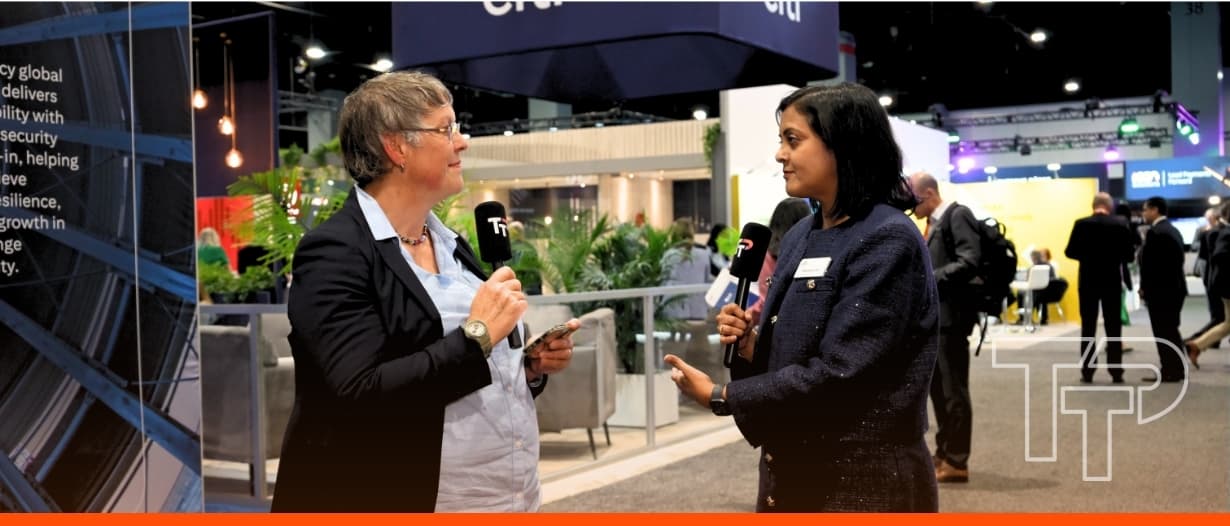
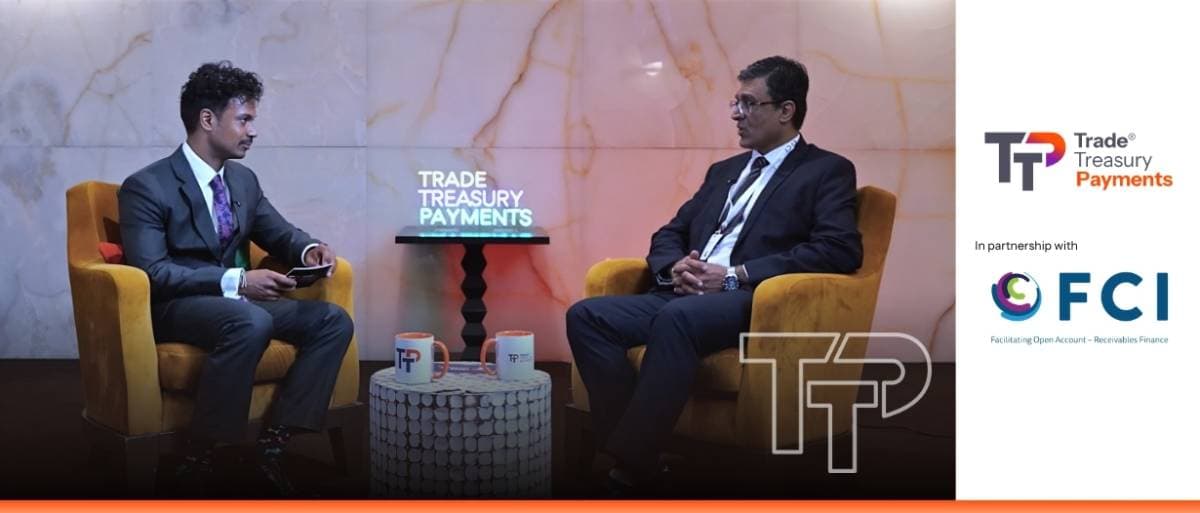
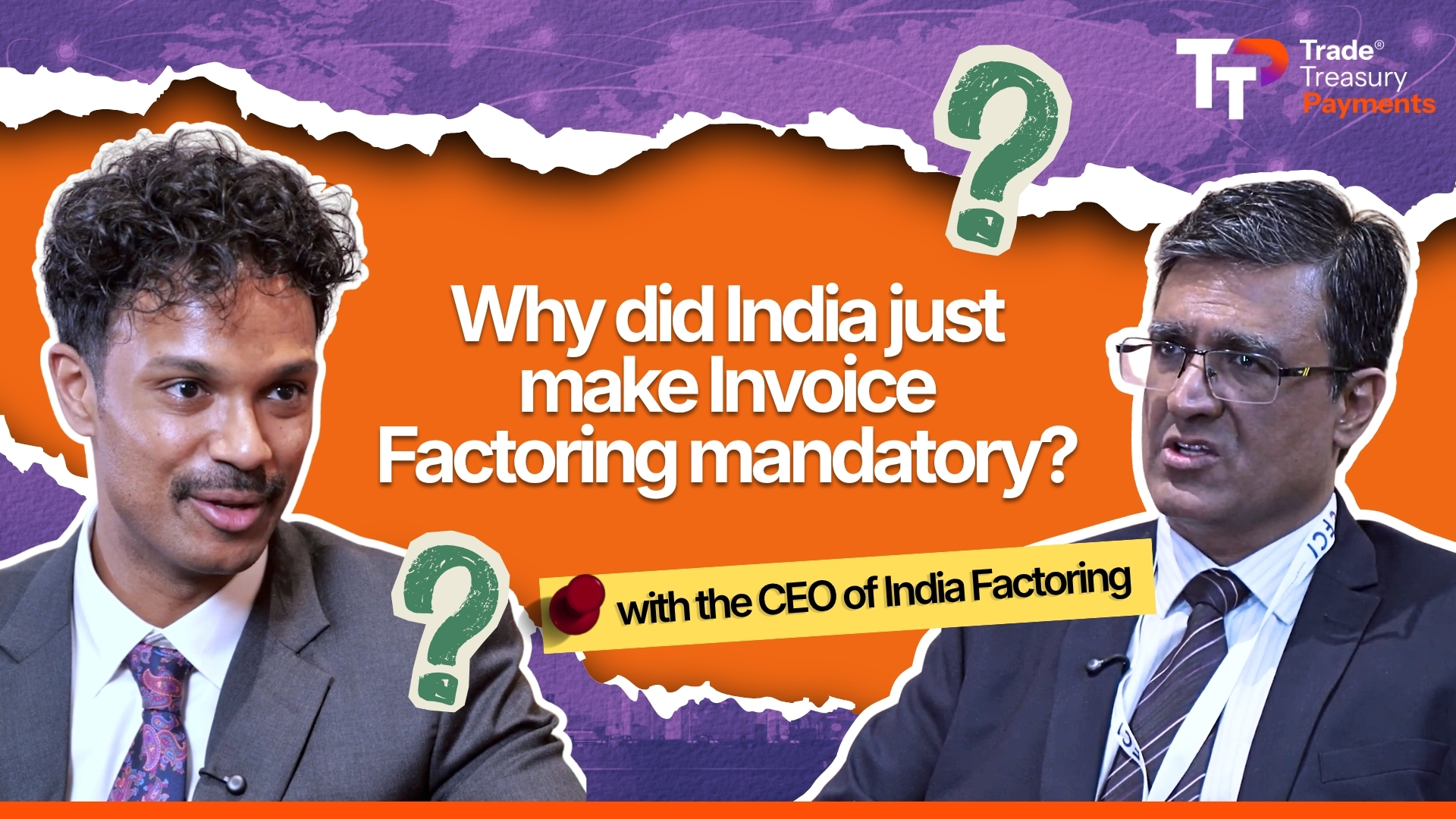
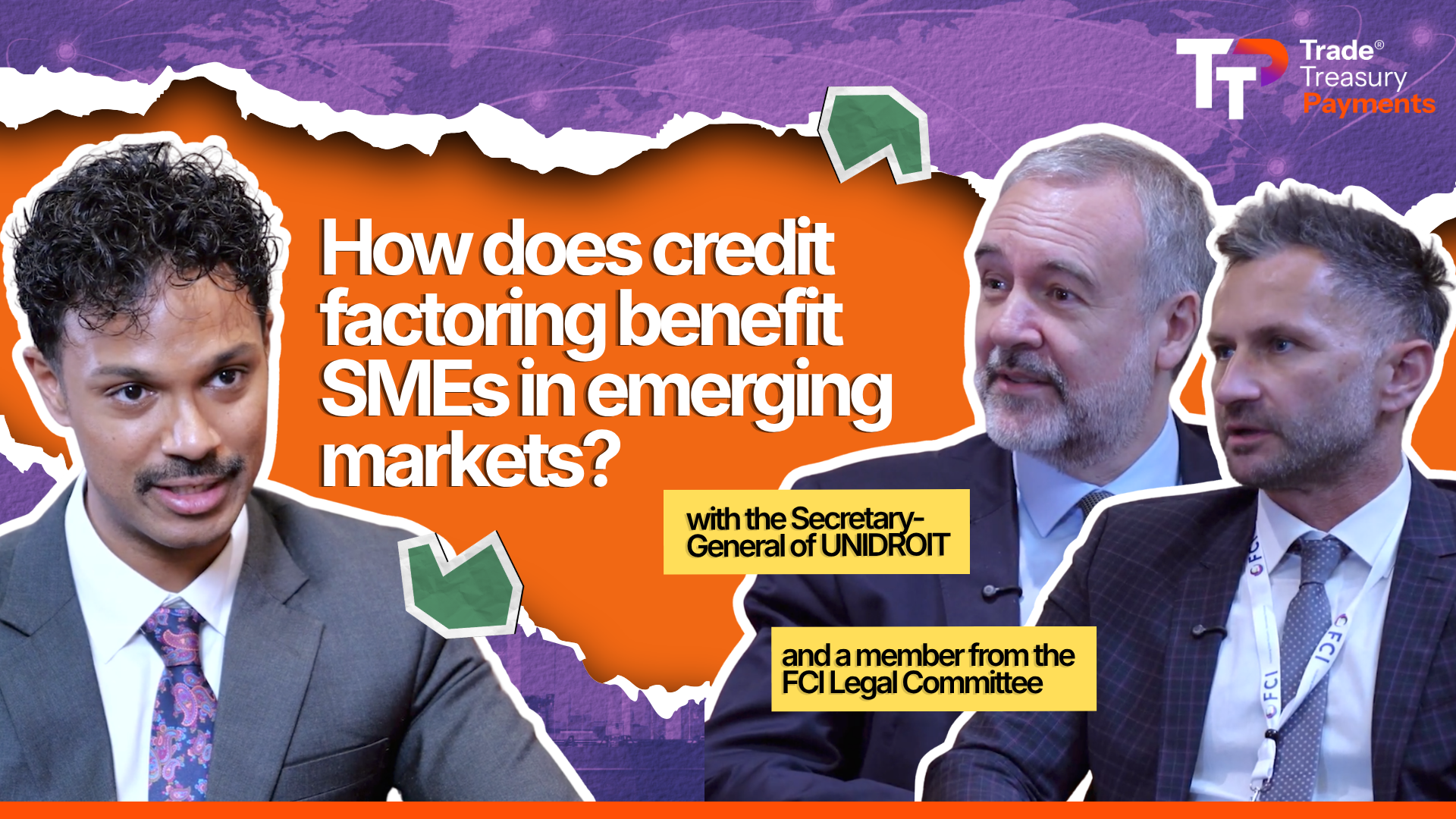
Deepesh Patel, Editor at Trade Treasury Payments (TTP), sat down with Ravi Valecha, CEO of India Factoring, at the FCI 58th Annual Meeting in Lisbon, to better understand the drivers behind this shift in Indian trade finance and the path ahead for the country.
The opportunity gap
India’s domestic factoring market is valued at approximately $140 billion, but its actual penetration remains modest when compared to global benchmarks. There is a striking discrepancy when looking at this wider context, in that, while factoring contributes around 20% of GDP in markets like Portugal, it accounts for just 1% in India.
This disparity is not due to a lack of underlying trade activity, however. “The export market from India is $850 billion,” Valecha explains. After accounting for non-factorable goods and commodities like oil, we arrive at this $140 billion figure. “That’s the opportunity,” he states.
Yet, the current usage of factoring by banks and financial institutions remains limited to a fraction of its potential. Valecha said, “Against that, if you put together all the banks, financial institutions, factoring companies doing the cross-border trade, it’s around about $2-2.5 billion. Even if you consider a supply chain finance business, possibly $5 billion. So that’s a clear gap of around about $135 billion in the open account finance, which is not being done by the factoring product”.
The reason for this gap is a reliance on legacy banking behaviours. “Am I saying that it is not getting financed? No,” he clarifies, “but it is getting financed in the regular traditional trade finance mechanism, but that’s leverage or loans on the balance sheet of the bank or the company who’s borrowing that”.
TReDS and the factoring revolution
But this narrative is changing. “This 1% which we are talking about was possibly 0.1% a few years back,” he explains. This increase is thanks in large part to the implementation of the Trade Receivables Discounting System (TReDS) platform. Since its introduction, TReDS has acted as a catalyst for awareness and, ultimately, adoption of factoring. Governmental regulatory interventions – particularly those surrounding the 2021 Factoring Regulation Act – have also been instrumental. Legislative changes have clarified the legality of non-recourse factoring and expanded participation beyond traditional banks to also include non-bank finance companies.
Perhaps most effectively of all, the Ministry of MSME has mandated, alongside requirements for e-invoicing, that large corporate buyers register and participate on TReDS. This shift has fundamentally moved factoring from a niche product to an essential mechanism for ease of finance. And SMEs – the lifeblood of any economy – benefit.
“In the regular scheme of things,” Valecha notes, “the SMEs used to approach the banks; the banks used to finance the receivables financing, which is a loan, not a factoring product”. This created a leverage situation for SMEs. Under the TReDS mechanism, they can now access up to 100% of their funding against receivables, compared to the 70-75% previously available, effectively unlocking liquidity that was previously trapped in their capital cycles.
The ‘win-win’ of priority sector lending
Another pivotal change is the Reserve Bank of India’s decision to recognise MSME factoring transactions as eligible for Priority Sector Lending (PSL). Banks have historically been cautious about MSME exposure due to perceived risks and the difficulty of obtaining collateral; by allowing banks to categorise factoring transactions under TReDS as PSL, the regulator has created a powerful incentive.
For banks, there is a secured mechanism where the obligor risk lies with the larger corporate buyer, as opposed to the MSME supplier. It’s a “win-win situation for all the stakeholders involved,” Valecha said.
Banks are able to fulfil their PSL obligations by financing productive trade, rather than parking capital in lower-yielding government bonds. At the same time, MSMEs gain access to faster, affordable liquidity. Overall, the system becomes de-risked.
The $2 trillion question
India has an ambitious target of $2 trillion in exports by 2030. Supported by infrastructure like the International Financial Services Centre (IFSC) at GIFT City, the role of international collaboration in achieving this ambition becomes paramount. For organisations like the FCI, the focus is on providing the necessary legal framework guidance, advocacy, and education to help scale Indian factors. For Valecha, that expertise is a non-negotiable; he notes that 70% of his team at India Factoring is certified through FCI programs.
Looking forward, the introduction of the FCIs ‘hub consultancy’ initiative, designed to provide end-to-end guidance for new companies entering the receivables finance space, should further lower barriers to entry and drive the increased adoption of factoring.
“Now that the cycle has started, we are expecting that the growth is going to be much more compounded than what we have seen,” Valecha predicts. As this cycle of awareness and regulatory support accelerates, so too will factoring, leaving it poised to become an indispensable pillar of India’s economic growth. The $135 billion gap can then be transformed into an engine for MSME prosperity.
Prefer to listen? The full conversation is also available as a podcast below.
Key Topics
- India's factoring market is valued at $140 billion but penetrates just 1% of GDP compared to 20% in markets like Portugal, revealing a significant opportunity gap.
- A $135 billion gap exists between the $140 billion factorable market and the $2–5 billion currently financed through factoring and supply chain finance products, with most trade finance still conducted through traditional bank loans.
- The Trade Receivables Discounting System (TReDS) platform, combined with the 2021 Factoring Regulation Act and mandatory participation by large corporate buyers, has catalysed awareness and adoption of factoring as a mainstream mechanism.
- The Reserve Bank of India's recognition of MSME factoring transactions as eligible for Priority Sector Lending creates a risk-efficient structure where obligor risk lies with the corporate buyer rather than the MSME supplier.
- India's $2 trillion export target by 2030 depends on scaling factoring infrastructure and expertise, with international collaboration through bodies like the FCI providing essential legal, advocacy and educational support.
Key Insights
Expert Analysis
Ravi Valecha, CEO of India Factoring, explains that the core opportunity lies not in a shortage of trade activity but in a fundamental mismatch between supply and product fit. India's $850 billion export market generates $140 billion in factorable trade, yet only $2–5 billion flows through factoring products; the remainder is financed through traditional bank leverage. Valecha attributes this gap to legacy banking behaviour rather than lack of funds, and identifies three pivotal drivers of change: the Trade Receivables Discounting System, which has catalysed awareness and shifted factoring from 0.1% to 1% penetration; the 2021 Factoring Regulation Act, which clarified non-recourse factoring and opened participation to non-bank finance companies; and Priority Sector Lending recognition, which creates alignment between bank incentives and MSME needs by placing obligor risk with corporate buyers. He forecasts that with this regulatory cycle now in motion, growth will accelerate beyond historical trends, and MSMEs will unlock trapped liquidity by accessing 100% receivables financing rather than the 70–75% available under traditional mechanisms.
Key Findings
- India's factoring market is valued at approximately $140 billion, but only $2–5 billion is currently financed through factoring and supply chain finance, leaving a $135 billion gap financed through traditional bank leverage.
- The Trade Receivables Discounting System (TReDS) has been the primary catalyst for growth, increasing factoring's contribution from 0.1% to 1% of GDP through government mandates and regulatory clarity.
- MSMEs can now access up to 100% of receivables value through TReDS factoring, compared to 70–75% under traditional bank financing, unlocking trapped liquidity.
- The Reserve Bank of India's classification of MSME factoring transactions as Priority Sector Lending eligible removes bank reluctance and de-risks the lending structure by placing obligor risk with corporate buyers.
- Achieving India's $2 trillion export target by 2030 requires scaling factoring adoption, supported by international expertise from organisations like the FCI and initiatives such as the hub consultancy programme.
Implications
- The $135 billion financing gap represents untapped potential to accelerate MSME growth and strengthen India's position in global trade, with factoring poised to become essential infrastructure rather than a niche product.
- Banks have strong regulatory and commercial incentives to participate in factoring through TReDS rather than traditional leverage-based lending, fundamentally reshaping how working capital is deployed in Indian supply chains.
- Mandatory corporate participation on TReDS and Priority Sector Lending recognition signal government commitment to formalising and de-risking MSME finance, likely to drive convergence towards global best practices.
- The role of international expertise and certification through bodies like the FCI becomes critical to building domestic factoring capacity and ensuring compliance with global standards as the market scales.
- Compounded growth in factoring adoption will create a self-reinforcing cycle of awareness, participation, and liquidity, potentially enabling India to meet its $2 trillion export ambition while reducing reliance on traditional bank leverage.
Key Takeaways
- India's $140 billion factorable market is vastly underutilised, with only $2–5 billion currently financed through factoring products, representing a clear $135 billion opportunity for growth.
- TReDS, regulatory reforms and Priority Sector Lending recognition have collectively transformed factoring from a niche to a mainstream mechanism, enabling MSMEs to access 100% receivables financing instead of traditional 70–75% bank leverage.
- The Reserve Bank of India's de-risking approach places obligor risk with corporate buyers, creating alignment across all stakeholders—banks, MSMEs, and corporates—and removing historical barriers to MSME financing.
- International expertise from organisations like the FCI is essential to building certification, knowledge and institutional capacity, with 70% of India Factoring's team certified through FCI programmes.
- Factoring is poised to become indispensable to India's $2 trillion export target by 2030, with compounded growth expected as awareness and regulatory support accelerate in coming years.