Who lends to commodity borrowers without a track record?
Nobody in the room argued that capital was scarce. The disagreement was over who can get at it.
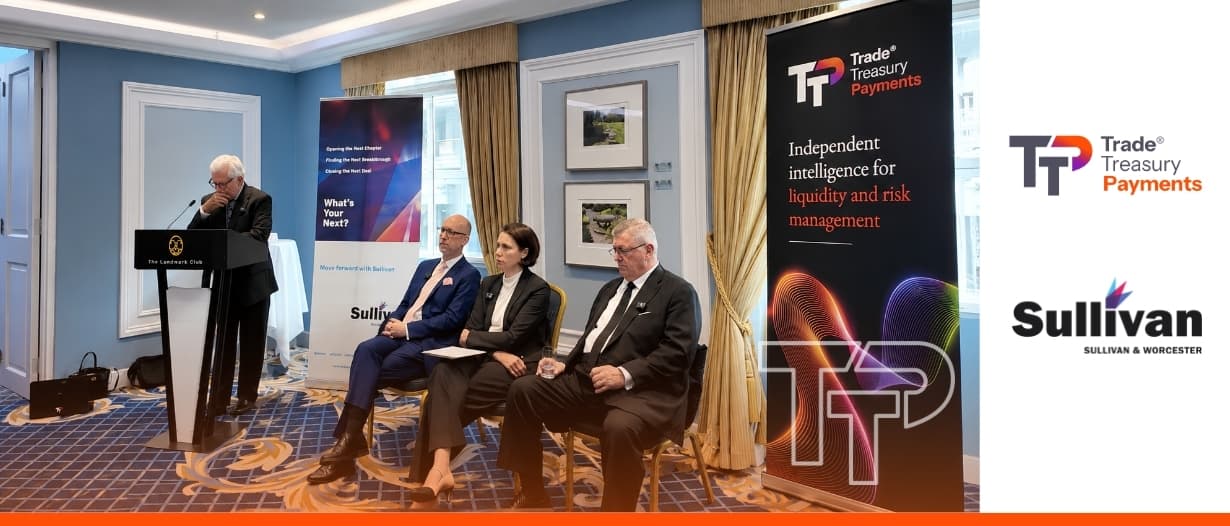
Eleanor Hill, treasury editor at TTP, welcomed guests to the breakfast, hosted with Sullivan & Worcester. Geoff Wynne, who moderated, opened by looking ahead to the rest of 2026 and beyond.
Resilience costs working capital
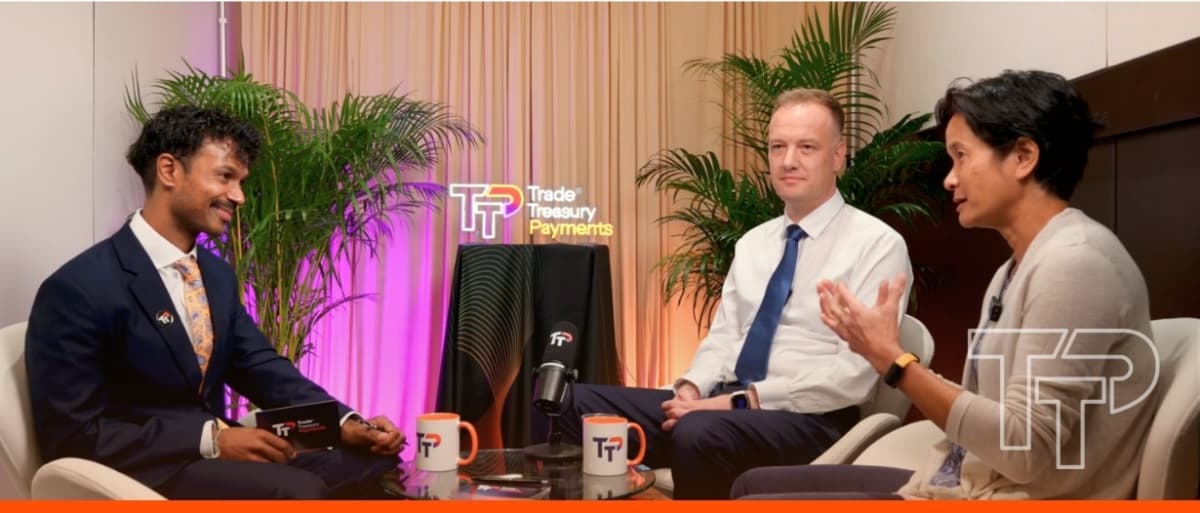
Tanya Epshteyn, head of structured and trade finance at Czarnikow Group, said businesses had spent decades optimising supply chains for efficiency. Covid, the war in Ukraine and disruption in the Red Sea changed the calculation.
Companies now hold more stock, use more than one supplier and maintain alternative logistics routes. All of it consumes cash.
Czarnikow supplies food and beverage ingredients to multinationals, so the inventory it carries can be what keeps a customer’s production line running.
“The cost of resilience is not measured in basis points for SMEs,” Epshteyn said. “It is measured in working capital and its availability.”
Bank regulation can make that money harder to obtain. Products deemed illiquid become less attractive; structured trade requires collateral monitoring; monitoring requires infrastructure and staff. A viable SME trade can become too expensive for a bank to finance.
Epshteyn argued for lending against the trade instead. In receivables finance, the buyer’s credit strength can support the funding. Inventory finance can use warehouse receipts and controlled stock. A borrowing base can combine the two.
Technology helps when it gives lenders better information about inventory and collateral.
“The cheapest source of liquidity is often improved transparency,” she said.
She expects supply chains to become more regional and inventory to be treated less as an inefficiency. Both require funding. SMEs, meanwhile, need better reporting, management information and inventory visibility if they want lenders to finance them.
Lenders want control
Wynne invited James Lowrey, managing director and head of trade and working capital product at Lloyds Bank, to shoot the argument down. Lowrey declined.
His concern is control. Commodity traders have grown enormously, he said, and the largest can now compete directly with the banks financing them. They borrow cheaply through facilities such as revolving credit facilities, then deploy the money elsewhere at much higher margins.
Lowrey said know-your-customer checks should therefore mean more than compliance. A bank needs to understand the customer, its counterparties and its trades, including what the customer will do when circumstances deteriorate.
He separates ability to pay from willingness to pay.
Then came his three rules. “Control is happiness”: control the cash flows and the security, and make sure that security is perfected. “Verify, verify, verify”: the customer, its systems and its counterparties. And third: “Pay me back. Using language my mum would understand.” Lowrey wants to know the second, third and fourth exits if the first fails. “Without authentication you are not lending money,” he said. “You are betting money.”
AI and better data should make it easier to establish where financed goods are, whether on a vessel, in a port or in a warehouse. Lowrey still wants people to check.
“Nothing beats going to see and touch what you have financed on the regular,” he said.
“The world is flush with liquidity,” Lowrey said. Much of it is chasing the same group of large borrowers, weakening terms for the companies that need protection least.
Structure does not excuse you from having equity
John MacNamara started in commodities in 1982, drifted from trading into finance, joined the Royal Marines, then returned to the City. He now runs Carshalton Commodities.
Higher commodity prices mean larger working capital requirements and often more than one lender on a transaction. He said the market had moved from a “flight to quality” towards a “flight to size”.
But size still needs equity behind it.
MacNamara described a trader who approached him this year with an Irish backer, government support for strategic imports and a Nigerian supply route. Then MacNamara asked how much money the trader had put in.
“None at all. Not a sausage.”
His rule of thumb is that a trader needs enough equity to absorb the loss of one cargo, preferably two. The amount varies enormously by commodity. A West African crude cargo might require a trader with hundreds of millions of dollars behind it; steel or scrap needs much less.
Epshteyn agreed that borrowers need skin in the game but questioned how it should be measured. It might be equity or a haircut on the transaction. The equity figure also needs to be considered against turnover, existing debt and how quickly the assets can be realised.
MacNamara said advance rates among the biggest traders had risen over the years from 80 per cent to 95 per cent, then 99 per cent and eventually 100 per cent.
“We all did this, of course. We all said yes.”
The haircut was not the only thing to disappear. MacNamara said escalation clauses, which require a borrower to post more collateral or reduce exposure when agreed triggers are reached, had also fallen away. They provided a cushion that might only be needed once every five years, he said, but mattered when it was.
Insurance is not a substitute. Problems arise when finance is built around what MacNamara called a synthetic trade rather than an underlying transaction that genuinely needs financing.
“The fact you’ve got a structure and the fact you’ve got insurance does not absolve you from being bloody careful.”
Moving up requires more than equity
Lowrey pointed out that today’s top-tier commodity traders were second tier ten years ago. Companies do move up. The harder decisions come further down, where banks may refuse transactions that traders and funds will finance at another price and another point in the capital structure.
MacNamara described using equity, first-loss insurance and rated paper to create different layers of risk in a trade finance fund. Lowrey called equity a starting point rather than an answer: evidence that someone has put their own money at risk or persuaded someone else to do so.
A broker who also acts as an expert witness said lenders should pay more attention to the legal contract. He described a trade finance deal as a stool, with finance, insurance and law as its three legs.
An in-house lawyer from Bank ABC said smaller specialist banks can be more willing to read beyond standard templates. At larger banks, she said, a small deviation from the checklist can mean no.
Wynne came back to it twice. Lenders say they only lend to borrowers with a track record. “How does a track record borrower get to have a track record if you won’t lend to him?”
One answer came from the floor. A funder said his firm starts smaller companies on back-to-back letters of credit, then moves them up to warehouse financing as their equity grows. Asked whether that meant taking on a borrower with no track record, he said yes.
“Well, if you talk to the banks in this room, they won’t.”
Prefer to listen? The full conversation is also available as a podcast below.
Key Topics
- Commodity traders require working capital to fund inventory and supply chain resilience, which banks can structure through receivables finance and inventory finance backed by collateral and buyer credit strength.
- Lenders managing commodity trade risk must implement robust controls over cash flows, collateral, and counterparty verification, supplemented by physical inspection and multiple exit strategies rather than relying solely on structure and insurance.
- Commodity borrowers need adequate equity or haircut protection to absorb cargo loss and demonstrate genuine skin in the game, as advance rates and escalation clauses have eroded across the market.
- Smaller and emerging commodity traders face barriers to growth when large banks refuse to lend without track records, though specialist lenders can bridge this gap using layered instruments and back-to-back structures.
- Technology and improved transparency on inventory location and collateral status can lower the cost of liquidity for SMEs seeking trade finance from increasingly cautious lenders.
Key Insights
Expert Analysis
Tanya Epshteyn, head of structured and trade finance at Czarnikow Group, argues that resilience costs for SMEs are measured not in basis points but in working capital availability. She advocates lending against the trade itself through receivables finance backed by buyer credit strength, or inventory finance using warehouse receipts and controlled stock. Technology that improves transparency on inventory and collateral is the cheapest source of liquidity. James Lowrey, managing director and head of trade and working capital product at Lloyds Bank, emphasises that control is the foundation of sound commodity lending: lenders must control cash flows and security, verify customer, counterparty and trade realities thoroughly, and maintain multiple exit strategies. He warns that the abundance of global liquidity chasing large borrowers weakens terms for those needing protection most. John MacNamara, who runs Carshalton Commodities, notes that borrowers must have equity sufficient to absorb one or two cargo losses, and observes that erosion of advance rate haircuts and escalation clauses has shifted risk onto lenders, particularly when lending follows synthetic trades rather than genuine transactions."
Key Findings
- Banks have progressively removed equity requirements and escalation clauses from commodity lending, with advance rates rising to 100 per cent in some cases, leaving lenders increasingly exposed to loss.
- Lending structures and insurance cannot substitute for rigorous due diligence on customer identity, counterparties, trade realities and multiple exit strategies.
- SMEs and smaller commodity traders cannot access capital through mainstream banks without a track record, despite specialist lenders proving that layered structures can reduce risk.
- Abundant global liquidity concentrates on large borrowers, weakening terms and protections for mid-market and smaller companies that face higher business risk.
- Improved transparency on inventory location and collateral status, supported by technology, can reduce the cost of liquidity for smaller borrowers.
Implications
- Commodity lenders face growing losses if they do not restore equity requirements, escalation clauses and rigorous verification practices despite market pressure to weaken terms.
- Emerging commodity traders and SMEs will continue to face financing barriers unless specialist lenders or alternative structures become more mainstream and accessible.
- Supply chains structured for resilience rather than efficiency require durable working capital solutions; temporary or short-term fixes will not meet evolving business needs.
- Technology investment in collateral and inventory transparency is a competitive advantage for lenders seeking to serve smaller borrowers at sustainable margins.
- The distinction between genuine trade finance and synthetic structures has become critical to managing counterparty and counterparty credit risk in a market with eroded protections.
Key Takeaways
- Commodity traders now require more working capital to fund resilience; SMEs need lenders willing to structure receivables and inventory finance instead of standard revolving credit.
- Effective commodity lending rests on control, verification and multiple exit strategies, not on structure or insurance alone.
- Borrowers should maintain equity sufficient to absorb significant cargo loss, and lenders should insist on it rather than accept eroded advance rates and missing escalation clauses.
- Smaller and emerging traders can graduate from back-to-back letters of credit to warehouse financing, but mainstream banks must be persuaded to lend to borrowers without prior track records.
- Investment in transparency technology and specialist lending capacity can unlock capital for mid-market commodity borrowers currently squeezed out by mainstream lenders' risk aversion.