PODCAST | TF COP’s moment of truth for closing the trade finance gap


With the next TF COP meeting just around the corner, held this time in London, this is an important time for the industry to come together and work at addressing the $2.5 trillion trade finance gap that has constrained smaller firms in emerging markets for far too long.
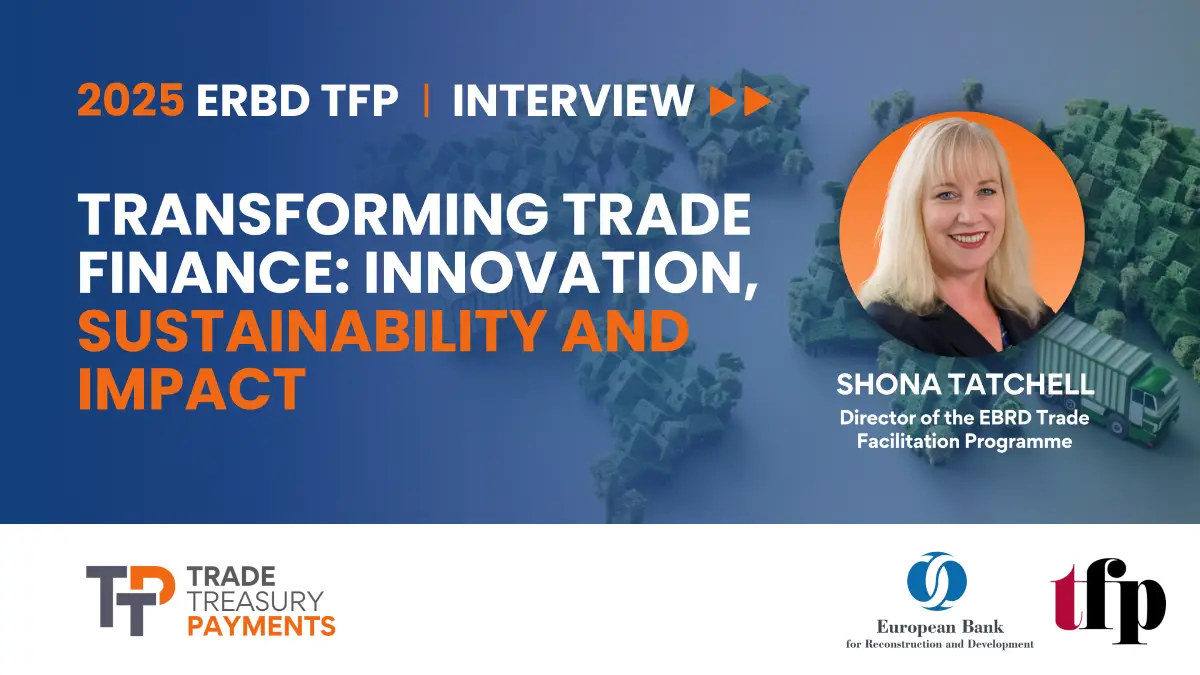
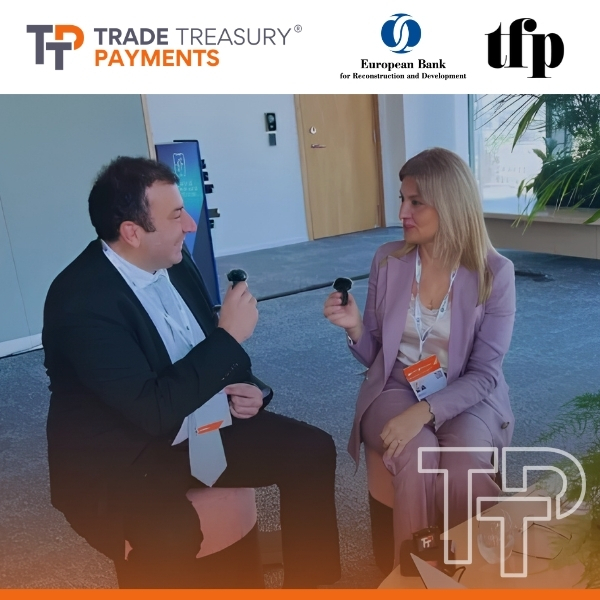
Ahead of this year’s gathering, Trade Treasury Payments (TTP) spoke with Makiko Toyoda, Global Manager of Trade and Supply Chain Finance at IFC, and Shona Tatchell, Director of the Trade Facilitation Programme at EBRD to hear their views the structural barriers that still impede liquidity, and what we can do to help change them.
Understanding why the gap persists
Throughout the discussion, five structural factors emerged repeatedly: weak regulatory and legal frameworks; constrained bank risk appetite and compliance requirements; SMEs’ lack of traditional collateral and credit histories; limited product structuring capacity in early-transition markets; and domestic bottlenecks that impede the flow of data and documentation.
The persistence of that $2.5 trillion figure is a firm indicator of the magnitude of the challenge that lies ahead in closing it. Tatchell also observed that global trade volumes have grown in the last year, while the estimated gap has remained unchanged, suggesting that unmet demand is either shifting into non-bank channels or not materialising into financed trade.
Toyoda noted that the gap owes much to lack of regulatory and legal frameworks in emerging markets, saying that many local banks face “compliance requirements [that] are so high that they are not able to provide trade finance as much as they can”. On the SME side, many exporters and importers struggle to offer the types of collateral and credit histories that banks typically require.
And the frictions are not evenly distributed. Tatchell noted that the gap is “far more concentrated… amongst smaller companies, particularly operating in high-risk markets where the economies themselves are also underdeveloped”.
Firms and banks in early-transition economies often hold valuable receivables but struggle to use them as collateral because they lack the necessary product structures, tools, and technical capacity to package the data in a format readily acceptable to lenders. Unlike entities in more developed markets, where receivables are a viable form of collateral, these firms often lack the traditional physical collateral, like mortgages, typically favoured by banks.
She said, “a lot of the banks that we work with… perhaps are also lacking in some of the more sophisticated structuring tools that could actually allow them to overcome some of these barriers”.
The result is a system unconducive to the success of smaller firms. Some unmet demand may be absorbed by non-bank lenders or peer-to-peer credit, while others fall out of the market altogether. “Companies are just going out of business because they can’t access financing,” Tatchell said.
To help mitigate this, capacity building on both sides of the transaction is as important as funding itself. Many SMEs need support to understand how to present documentation, engage with banks, and use trade finance tools, while many of the banks need support to communicate the nature of short-tenor trade assets to their own risk teams, supervisors, policymakers, and the wider financial community.
Tatchell raised the question, “How do you explain trade to a risk officer?” If the industry wants rejection rates to fall, both sides must be equipped with the requisite knowledge.
This is why there is a need for renewed coordination among multilaterals. Multilateral development banks (MDBs) had worked together through a trade finance expert group that was established by the WTO during the 2008 global financial crisis, but those efforts came to a halt during the pandemic. “We tried to revive this type of discussion,” Toyoda said, adding that MDBs are again meeting to examine legal structures, financial institution capacity, and regulatory reforms. That collaboration provides the backdrop for TF COP’s efforts to convene public and private actors in a more structured way.
What is TF COP ?
TF COP (Trade Finance Conference of Parties) is an ITFA-led, multi-stakeholder initiative launched in 2024 to design practical solutions to the global trade finance gap. Bringing together DFIs, multilaterals, banks, insurers, fintechs and regulators, TF COP has convened working sessions in Washington and Seville, on the sidelines of various UN/World Bank/IMF Meetings. Its mandate includes solution design, policy alignment, capacity building, and pilot development. Trade Treasury Payments (TTP) is a formal TF COP founding partner.
The role of MDBs as anchors and catalysts
MDBs are often seen as anchors in the global trade finance system. Their presence in transactions helps unlock private-sector appetite during periods of economic or geopolitical stress Tatchell explained that their guarantees “eliminate country risk and credit risk, allowing banks to freely transact with each other without any impact on their capital requirements”. With AAA ratings, she said, these transactions become “equivalent to cash”.
This countercyclical role means MDBs become increasingly more important as private risk appetite retreats from a market.
Ukraine is one example. IFC “decided to stay in the market and [is] working together with EBRD… and other partners like BII or DFC and MIGA,” Toyoda said. She described this work as a central element of the IFC mandate to remain present in high-risk markets and use risk-sharing mechanisms to keep trade moving.
Tatchell emphasised that MDBs step back once markets stabilise and commercial appetite returns; their mandate is transitional, not competitive.
The IFC works with 14 insurance companies under the Global Trade Finance Programme to share exposures and expand lending capacity into frontier markets. Structured products and co-risk facilities allow MDBs to mobilise additional private capital where demand is greatest. “Mobilisation is really key for us,” Toyoda said. “We try to mobilise private capital into emerging markets.”
Advisory services sit beside these transactional tools. IFC and WTO have been running trade-facilitation and capacity-building workshops for SMEs in markets such as Côte d’Ivoire and Rwanda, which are aimed at helping smaller firms understand how to access trade finance and engage banks more effectively. “We would be able to provide direct assistance to those exporters and importers,” Toyoda said.
The EBRD uses a similar approach, with a strong focus on improving compliance capacity. In regions such as Central Asia and the Caucasus, banks have faced heightened sanctions risks and, at times, withdrawals by correspondent banks. “Giving our banks and their clients the tools… to be more compliant is key,” Tatchell said.
The industry needs new structures, shared infrastructure, and coordinated experimentation. This is the space that TF COP aims to shape.
Why domestic supply chains matter for global finance
The link between domestic supply chain finance and cross-border trade finance is often overlooked. Yet, something as small as a ten per cent increase in domestic supply chain finance can increase cross-border trade finance by an entire per cent.
IFC has been expanding its domestic supply chain finance programme since 2022, with a focus on receivables discounting and pre-shipment finance. Toyoda siad that “about 68 per cent of domestic suppliers that we finance are actually SMEs”. This is a positive start, even as there is more room to grow. Strengthening domestic supply chains gives SMEs greater stability and allows them to meet the requirements of larger buyers. Over time, that stability can help them access cross-border trade finance instruments.
In effect, this insight widens the scope of what counts as a trade finance solution. Instead of focusing solely on cross-border mechanisms, the industry must improve the domestic foundations that enable trade in the first place.
For TF COP, this means that discussions must consider SME capacity, local financial systems, domestic supply chain structures, and the linkages between them. In other words, the gap begins at home, and any attempt to close it must recognise that domestic conditions shape cross-border outcomes.
Digitalisation and the slow path to interoperability
This brings us to digitalisation, the oft promised solution to the trade finance gap that seems to be moving slower than many expected. While the ICC DSI, WCO, and WTO are advancing standards, many countries still have customs systems, legal frameworks, and data processes that rely on paper. “As soon as you go back onto paper, you get stuck again,” Tatchell said.
EBRD is trying to connect the physical and digital elements of trade more coherently. If goods can move digitally through customs systems and financial documentation can be processed electronically, the whole chain becomes more efficient. But this only works if every stage accepts digital documents in legally recognised formats.
This is where legislative frameworks like the Model Law on Electronic Transferable Records (MLETR) come into play. Tatchell described ongoing work in regions such as Morocco, Egypt, Turkey, the Caucasus, and among Commonwealth countries, and although adoption is happening “more slowly than we would all like,” the progress is nonetheless visible. Harmonised standards at the customs level are also essential. “If we go in and develop customs in a country,” Tatchell said, “making sure that when that single window is established, the standards they are adopting are the same as everybody else’s.” These reforms often materialise through Single Trade Windows, national platforms that allow traders to submit all customs, licensing and regulatory data through one digital interface.
In Cairo, the EBRD Trade Facilitation Programme unveiled a new Innovation Lab, an online platform designed to help partner banks accelerate their digital trade readiness. The Lab combines three elements: a knowledge hub on digital trade and trade finance; a one-to-one advisory channel for banks to raise operational or strategic digitalisation questions; and a sandbox environment that allows institutions to test solutions with technology providers before implementation. The initiative reflects EBRD’s wider goal of building ‘digital trade corridors’ across its region by strengthening banks’ technical capabilities, improving benchmarking, and supporting legal and policy reforms such as MLETR adoption.
Designing solutions together at TF COP
So, what should TF COP aim to achieve? Toyoda described bilateral conversations with other multilaterals, banks, insurers, and fintechs as useful but limited since, in these meetings, each party tends only to express its own constraints and requests. She hopes that when participants gather at TF COP, the dynamic will shift. “It is not just a Christmas gift, wishful thinking type of ideas,” she said. Instead, the goal is to “co-design the same more like infrastructure where everybody can participate”.
Tatchell agrees, encouraging the industry to continue with “blue sky thinking” and to invite perspectives from people who do not carry the assumptions of the trade finance industry. Turning problems upside down, she said, can help spark new ideas. TF COP’s sandbox approach offers a way to test these ideas. “The only way to really find out is to try it,” she said.
Building the next phase of trade finance
Trade finance has always evolved through shared frameworks. From the standardisation of bills of lading to the establishment of the UCP rules, progress has depended on cooperation across institutions. The next phase is likely to follow the same pattern. MDBs will continue to stabilise frontier markets; banks, insurers, and fintechs will bring structured financial solutions and digital tools; and policymakers and regulators will shape the legal foundations that allow data and documents to move freely across borders.
TF COP is now the industry’s opportunity to convert years of analysis into shared design. If that momentum continues, the system may begin to shift in ways that finally reduce the structural barriers that have held back so many businesses across emerging markets.