






About This Video
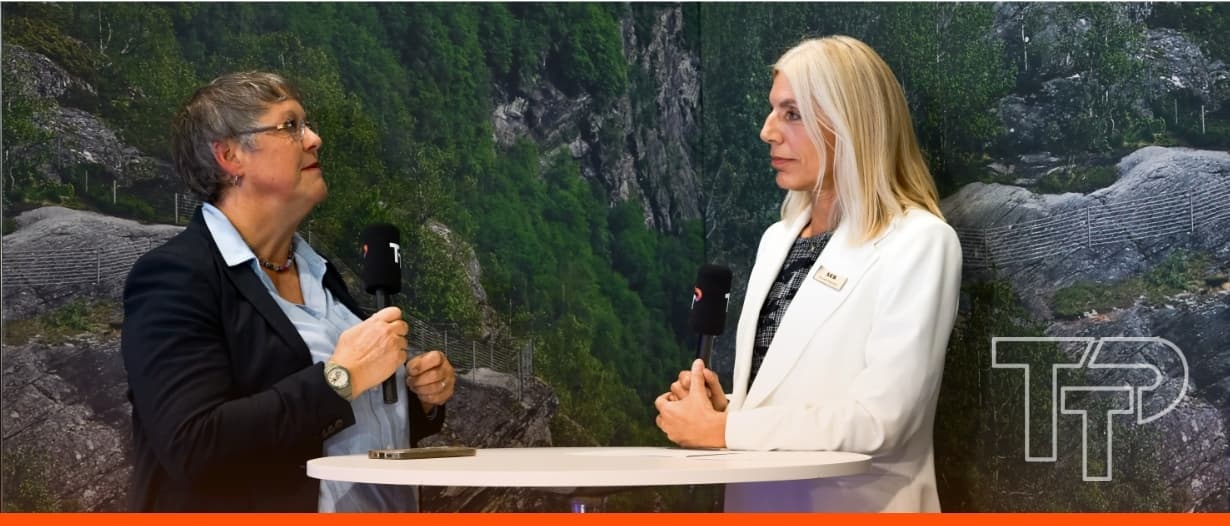
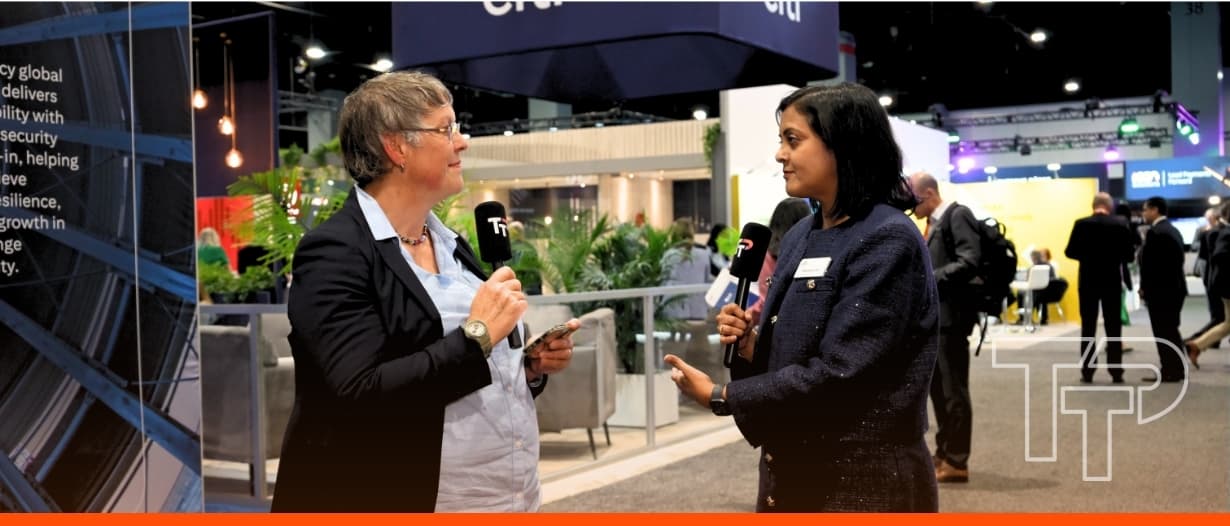
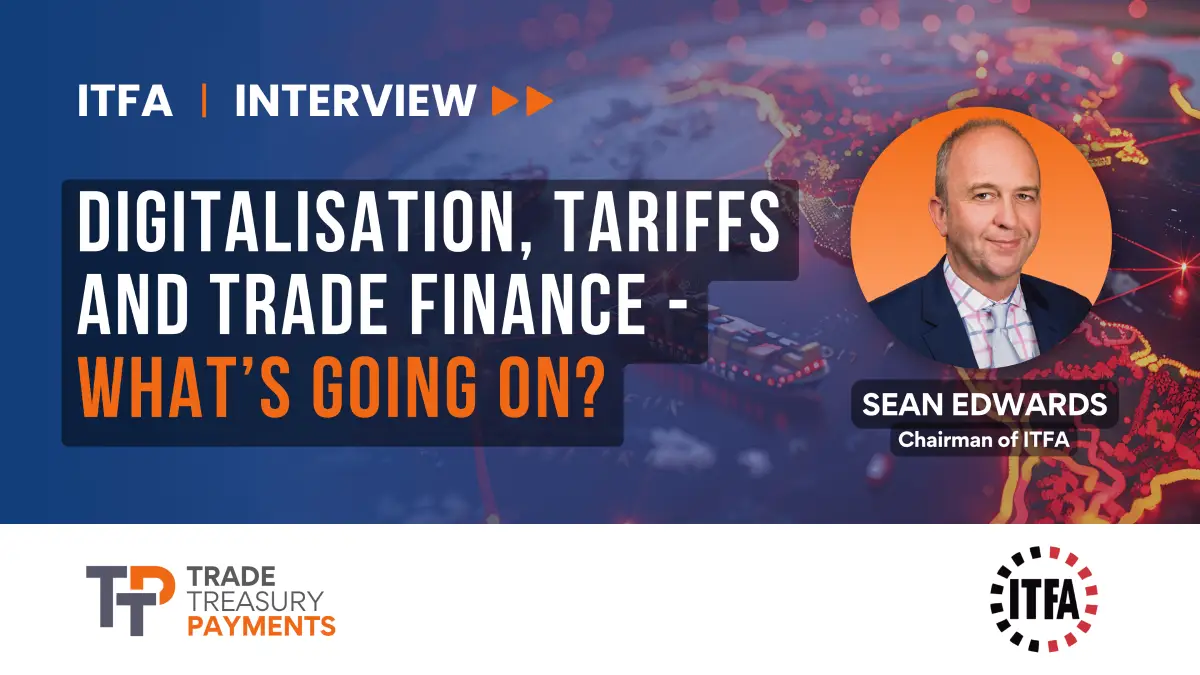
At the European Bank for Reconstruction and Development (EBRD) Trade Facilitation Program (TFP) event in London, Trade Treasury Payments (TTP) sat down with Sean Edwards, Chair of ITFA, to discuss the state of play in trade finance, ranging from tariff policy to digitisation and the legal shifts reshaping both.
On the question of tariffs and global trade friction, Edwards was cautious but not alarmist.
Edwards said, “There’s no panic. Nobody is saying this is the end of trade finance as we know it. It’s all going to be rewritten. What’s Trade Finance 2.0 going to look like? It’s wait and see.”
While the uncertainty has prompted financial institutions to re-examine client exposure and shifting supply chains, it has not, in Edwards’ view, led to any drastic pullback from trade. “Nobody is withdrawing lines, nobody is getting out of trade,” he noted.
Countries absorbing supply chain shifts may see increased export activity and infrastructure demand, but Edwards believes the long-term trajectory of trade remains intact. “When we look back in six months’ time, I think we’ll see this was one of those interesting historical events with some significant effects, but the global economy will likely return to something close to its previous path.”
Importantly, he sees one upside in all of this: a renewed focus on industrial policy, particularly in Europe. “It has made a lot of people think about how they can satisfy their own needs, how they can encourage their own industries. That idea of being a little bit more self-sufficient is actually a good one.”
When asked about the role of the United States going forward, Edwards said, “For defence, we’ll always need the US. For trade, we will still need the US dollar for the foreseeable future. That’s their most powerful tool.”
On the topic of digitalisation, Edwards struck a measured but optimistic tone. “It’s definitely accelerating, but from a low base,” he said. “The scale isn’t there yet, but it is scaling.” He pointed to the uptake in digital trade documents as a sign of progress. “If you look at things like electronic bills of lading, we’ve moved from sub-1% to something like 5% plus in container shipping. So that’s working, that’s scaling.”
ITFA’s own efforts to promote digital negotiable instruments are also bearing fruit. Edwards cited the example of the Bank for International Settlements (BIS) testing a proof of concept for digital promissory notes in collaboration with a multilateral development bank. While the use case was narrow, the initiative demonstrated feasibility and regulatory interest.
For smaller lenders and fintechs, these digital tools are proving useful in financing SMEs particularly because digitised instruments like bills of exchange are more attractive to non-bank investors. “They like something that looks like, acts like, and is cleared like a bond,” Edwards said. “Once they’re digitised, these traditional instruments become much more investable.”
Still, adoption remains slow relative to the perceived benefits. Trade associations like ITFA often highlight the promise of cost savings and new liquidity sources, but real-world implementation lags. “We get a bit frustrated that things aren’t happening more quickly,” Edwards admitted.
Much of that delay is rooted in legal and regulatory environments, which have only recently started to shift. “Just because you can do something doesn’t mean you want to do it, or that it makes sense to,” he said. “But increasingly, those benefits are being recognised.”
Looking ahead, Edwards believes the convergence of physical and financial supply chains, accelerated by technologies like AI, blockchain, and tokenisation, will be critical. “A lot of global trade is becoming digitised. The delivery of physical goods is becoming more digital too. The impact of digitisation on physical supply chains is significant.”
However, he remains focused on the need to better integrate this with the financial layer. “It’s always a little bit frustrating that we can’t link that much more directly or immediately with the financial supply chain,” he said. “But people are realising that the two do need to meet up, and technically, that’s now possible.”
While Edwards hesitated to predict when the industry might hit an inflexion point, he was confident in the trajectory. “It’s a marathon, not a sprint,” he said. “But we’re on the right path.”
Watch the video via Youtube.
Key Topics Covered
- The use of tariffs as a strategic policy tool
- Shifting global supply chains and trade patterns
- The gradual digitisation of trade finance
- Growing interest from non-bank investors
- The legal and regulatory groundwork for digital trade
Key Insights
Expert Analysis
Sean Edwards, Chair of the International Trade and Forfaiting Association, offers a measured perspective on the current landscape. He suggests that what we are seeing should not be viewed as a conventional trade war, but rather as a more calculated use of tariffs to achieve political and economic objectives, particularly by the United States. From the standpoint of trade finance, there has been no sense of panic. Banks and financial institutions are not pulling back, but instead taking time to understand how their clients may be affected. In some cases, there are even clear opportunities, as supply chains shift and production moves into new regions. This, in turn, creates demand for financing to support growth in those markets. Digitisation remains a key theme. While progress has been slower than many would like, it is moving in the right direction. Developments such as electronic bills of lading and digital trade instruments are beginning to scale, supported by improvements in legal frameworks and real-world testing, including initiatives led by international institutions. There is also a growing recognition that digitised trade finance assets can attract new sources of liquidity. By taking on characteristics similar to bonds, these instruments are becoming more accessible to institutional investors beyond the traditional banking sector. Overall, the direction is clear, even if the pace is gradual. Trade finance is evolving, shaped by technology, regulation and shifting global dynamics. It is not a sudden transformation, but a steady and meaningful one.— Sean Edwards
Key Findings
- There is no widespread retreat from trade finance despite ongoing uncertainty
- Supply chains are actively shifting, increasing demand for finance in new locations
- Digital instruments are gaining ground, though adoption is still uneven
- Collaboration across the industry is supporting gradual innovation
- The link between digital technology and trade finance will continue to strengthen
Implications
- Trade finance strategies will need to reflect a more politically driven trade environment
- New supply chain routes will bring fresh demand for financing in emerging regions
- Digital tools will become increasingly important in improving efficiency and access to capital
- Legal alignment across markets will be essential to support wider adoption
- A broader mix of investors will change how trade finance is funded
Industry Perspective
Featured Expertise
Key Takeaways
What You'll Learn
- Tariffs are now part of a wider strategic toolkit rather than purely economic policy
- The trade finance market remains stable and resilient
- Digitisation is opening up new possibilities, even if progress is gradual
- Supply chain changes are creating both challenges and opportunities
- Long-term transformation is underway, rather than immediate disruption