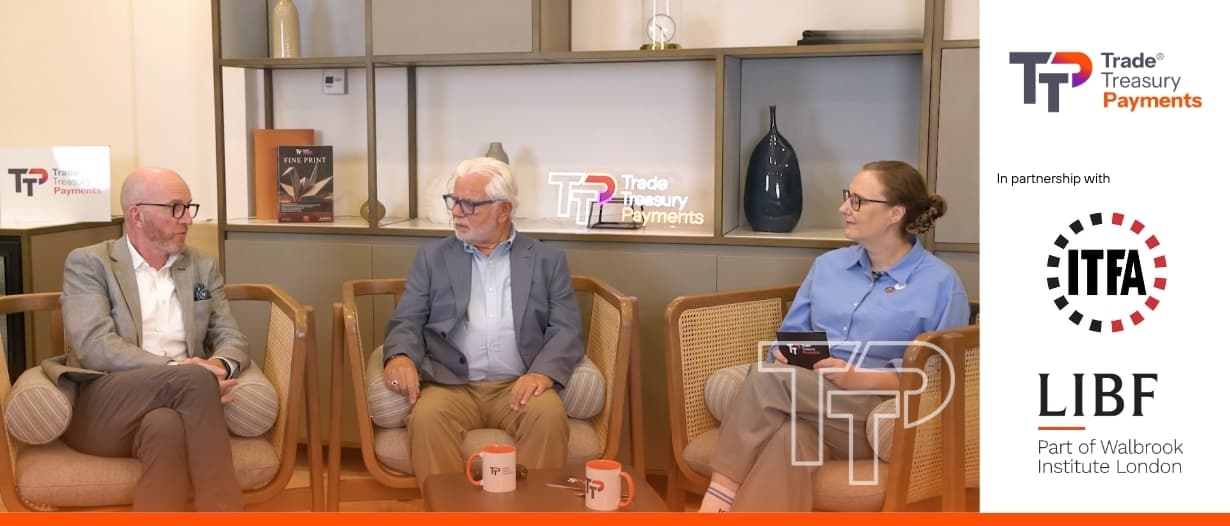
About This Vedio
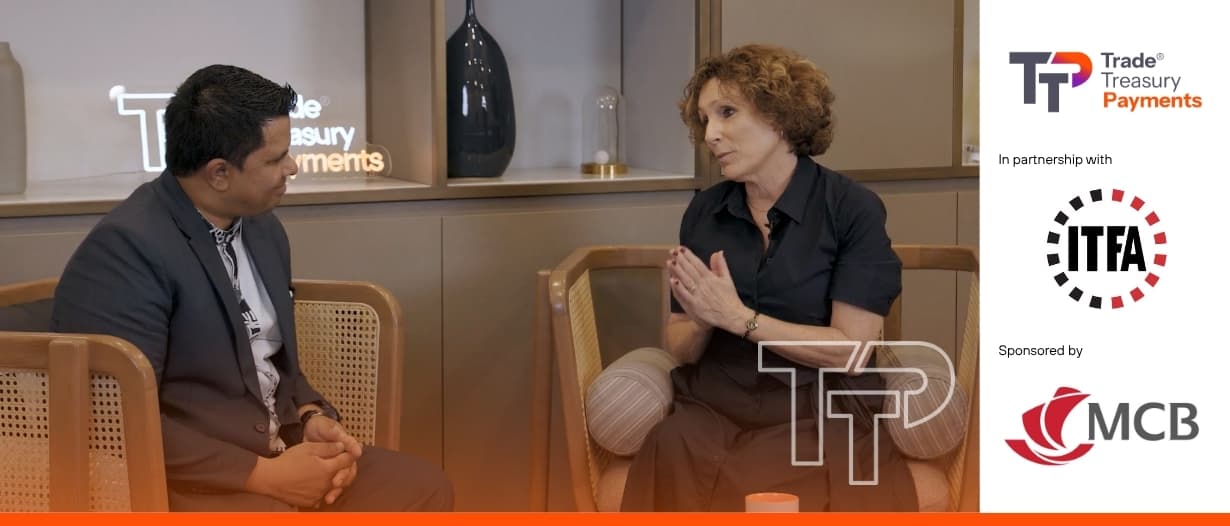
At the ITFA Americas Annual Conference in Miami, Trade Treasury Payments (TTP) spoke with Hernan Mayol, General Manager for Banreservas USA and Global Board Member at the International Trade and Forfaiting Association (ITFA), to discuss his efforts connecting Latin America to the broader trade finance community, and his personal mission to cultivate the next generation of talent in the industry.
Mayol said, “Miami has become a true global gateway. It’s no longer just a Latin American hub. You now have fund managers, technology companies, and even European corporates choosing to launch operations here instead of in the Northeast. It’s a cultural crossroads, and that’s exactly what makes it the right place to build connectivity across regions.”
As part of his role on the ITFA board, Mayol leads the newly established Latin America Committee, which has brought together leaders across the region—from Mexico to Brazil to the Southern Cone—to expand membership, host local events, and strengthen relationships between institutions. Initiatives around banking, fintech, and insurance are being led by local representatives who coordinate efforts to grow awareness and participation across the region.
Yet Mayol’s bridge-building extends beyond geography. For more than a decade, he has been quietly advancing mentorship in the industry through his global initiative, Apprentice Worldwide. Born from a single speaking engagement at the University of Miami, the platform now includes over 2,500 volunteers across 70 cities, matching experienced professionals with young people seeking careers in banking, finance, and beyond.
Mayol said, “Internships are harder to come by these days. So we started connecting students with professionals directly. The results have been incredible, both in terms of career acceleration, and in creating genuine long-term relationships that last well beyond a single job.”
Reflecting on the future of trade finance, Mayol pointed to shifting macroeconomic dynamics and the rise of technologies like artificial intelligence as turning points for the sector. What was once considered back-office logistics is now central to business strategy.
“Trade and tariffs are front-page news,” he said. “That puts our work in the spotlight. And AI is giving us visibility into documentation, movement, and global supply chains in a way we never had before.”
Mayol’s message to the next generation is to surround yourself with good people, invest in relationships, and never stop learning.
“If you network with the heart, not just to collect contacts, but to really know people, you’ll have a fulfilling career,” he said. “We’re all playing an infinite game. It’s about progress, not perfection.”
Key Topics
- Latin America’s growing role in global trade and finance
- Miami as an international gateway for business and investment
- Collaboration across regions through trade finance networks
- The importance of mentorship and talent development
- The impact of artificial intelligence and trade policy on the industry
Expert Analysis
Hernan Mayol, General Manager for Banreservas USA and a board member at ITFA, reflects on the growing relevance of Latin America within the global trade finance landscape. He points to Miami’s rapid evolution into a truly international business centre. What was once a regional hub has become a meeting point for capital, talent and companies from across the Americas, Europe and beyond. This shift has created new opportunities for trade, investment and collaboration. Through his work with ITFA’s Latin America Committee, Mayol describes a model built on regional leadership. By empowering representatives in key markets such as Mexico and Brazil, the organisation is able to build stronger local relationships while maintaining a broader strategic direction. Initiatives spanning banking, insurance and fintech are helping to deepen engagement across the region. Beyond institutional efforts, Mayol places significant emphasis on people. Drawing on his experience founding Apprentice Worldwide, he highlights the lasting value of mentorship. Creating genuine, long term relationships between experienced professionals and emerging talent not only supports individual careers but strengthens the industry as a whole. Looking ahead, he sees both opportunity and change. Trade policy, particularly tariffs, is pushing trade finance into the spotlight. At the same time, artificial intelligence is improving visibility across transactions and processes, allowing professionals to play a more informed and strategic role. Together, these forces are shaping a more connected and dynamic future for the industry.— Hernan Mayol
Key Findings
- Latin America is becoming more integrated into global trade finance through structured initiatives and partnerships.
- Locally driven leadership models are proving effective in building engagement across different markets.
- Collaboration between banks, fintechs and other institutions is helping to drive innovation.
- Mentorship programmes are delivering tangible benefits for both individuals and organisations.
- The role of trade finance is expanding as economic and technological changes bring it closer to the core of business decision making.
Implications
- Miami is likely to continue strengthening its position as a key gateway for international trade and finance.
- More coordinated regional leadership across Latin America should lead to deeper market participation and stronger networks.
- Ongoing investment in mentorship will be important in developing the next generation of trade finance professionals.
- Advances in artificial intelligence will improve transparency and support better decision making across the trade lifecycle.
- Changes in global trade policy will keep trade finance at the centre of commercial strategy.