
Can trade distribution unlock more capital in emerging markets?
In partnership with ITFA
Trade finance is one of the world’s most resilient asset classes. In the face of shifting geopolitical alignments, fluctuating tariffs, and global economic volatility, the fundamental mechanics of international trade endure. But beneath this stability lies a persistent structural issue; the ever-present elephant in the room: there is a global trade finance gap currently estimated at $2.5 trillion.
This shortfall is felt most keenly in emerging markets – while liquidity exists across the global financial ecosystem, matching capital with the regions and businesses that need it most remains a challenge. Combatting this challenge may require an evolution in trade distribution.
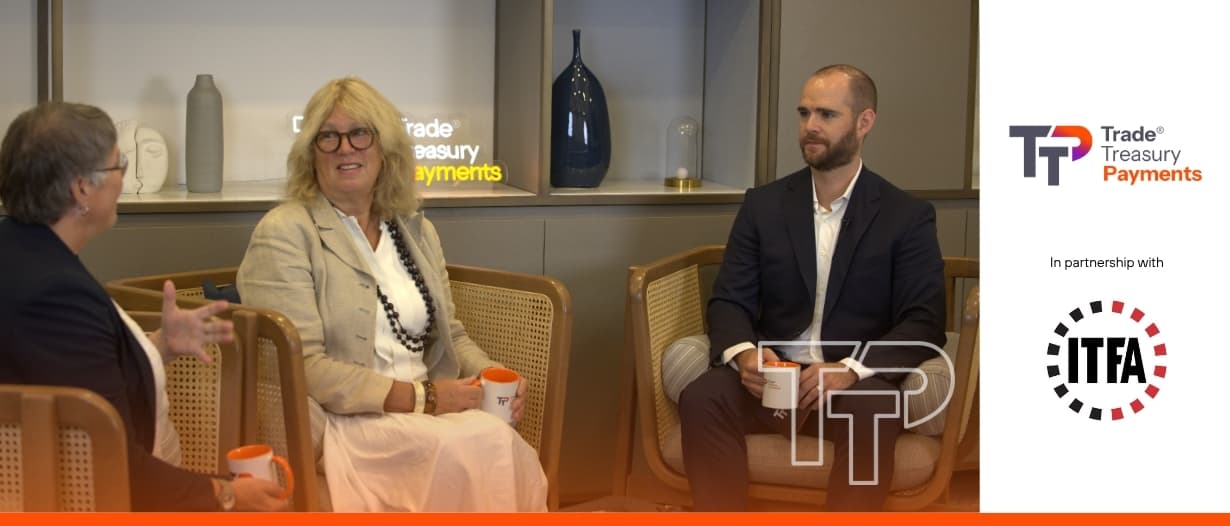
At ITFA’s annual conference in Split, Croatia, Deepesh Patel, Editor-in-Chief at Trade Treasury Payments, sat down with Boris Jaquet, Managing Director, Global Head – Distribution at Deutsche Bank, and Vipin Vashishtha, Managing Director, Global Head – Trade Asset Sales and Syndications, at Standard Chartered Bank. Together, they explored exactly what it might take to transform emerging market trade assets into a mainstream institutional asset class.
The anatomy of emerging market risk
Distributing trade assets within developed markets is a well-established and relatively straightforward process. As Vashishtha notes, it typically revolves around standard obligor risk. However, emerging markets demand a far more comprehensive approach to underwriting, he explains. “You’re not just underwriting the risk of that obligor; you’re underwriting… the broader ecosystem involved,” including regulatory regimes, currency convertibility, transfer risk, and sovereign risk.
Market pricing disconnects further compound this added layer of complexity. “The pricing for trade is one of the areas of concern because we still don’t see the pricing of trade consistently following the market pricing in comparable areas,” Vashishtha continues. This leaves banks and originators puzzled as to why identical risks are perceived so differently when framed as trade versus non-trade exposures.
For Jaquet, navigating the challenges – and opportunities – of emerging markets relies on three foundational pillars: a commanding knowledge of the market, a proven track record, and a matching of investor yield expectations with what trade actually pays out. “There is a lot of liquidity,” Jaquet notes, it’s a question of channelling it towards people that need it. “If you understand exactly where you want to put your risk, there’s always a market for you”.
Demystifying the asset class
Both Vashishtha and Jaquet agree that transparency and advocacy are the key to attracting institutional investors and bridging the distribution gap in emerging markets. Outside the core crop of transaction banks and trade specialists, institutional investors often view trade finance as a complex, opaque, or overly documentary-heavy realm. Education is crucial to separating fact from fiction and dispelling some of these industry myths.
Jaquet emphasises that trade assets carry an exceptionally strong credit profile that remains widely understated. “If you look at trade,” he explains “there are hardly any defaults. There are delays; there’s not that many defaults. Putting fraud aside, it’s an asset class that has been performing remarkably well despite the overall environment. But that needs to be broadcasted. That needs to be understood”.
Creating this understanding, however, is a two-way street. Originators need to adapt if they’re to expand the distribution funnel beyond traditional banks, Development Finance Institutions (DFIs), and insurers and tap into non-bank private credit.
As Vashishtha puts it, “we need to actually start talking their language so that they can understand us better”. He points out that unlocking even a fraction of the trillions of dollars in assets under management held by private capital could dramatically alter the trade finance landscape. This means repackaging traditional trade instruments into structured vehicles that fit the operational and regulatory mandates of institutional investors.
The role of technology
Technology and its real role were discussed, particularly as it relates to secondary market distribution. As digital transformation continues across the industry, technology is moving ever more from an operational back-office tool to a strategic enabler. However, both Jaquet and Vashishtha have a very pragmatic view on the subject.
Innovations like tokenisation undoubtedly offer unprecedented traceability and access, but as Vashishtha observes “tokenisation and other innovations of that same nature need much more than technology”. While tokenisation would be the “rails”, as he puts it, it cannot alter the nature of the underlying cargo – the trade asset and the way it is structured.
He also highlights how, while obviously a positive step, pilots are a long way from true market transformation. “Tokenisation at a bank level or an institutional investor level… is like taking a car out of your house,” he explains. “You need the roads to drive the car, and you need the interconnectivity… that ecosystem part is the bigger game and still work in progress”.
Jaquet also notes how digital solutions currently suffer from market fragmentation. There are platforms out there that address isolated segments of the trade lifecycle, but a seamless, end-to-end framework has still yet to emerge. Standardised, high-volume, lower-yield trade products are naturally likely to digitise first, while complex trades will continue to rely heavily on bespoke, human expertise.
He also acknowledges that banks must navigate the demands of strict regulatory compliance around external software. “Anything you externalise, it’s complicated because of the regulator,” he observes, with banks needing to ensure data integrity and control remain uncompromised. “We need to make sure that everything is controllable, that nobody can interfere”.
Regulation and risk framework
Unlocking real scale in emerging market trade distribution will ultimately require greater cross-border collaboration and changes to local infrastructure. “The legal and regulatory regime in many of these emerging markets does not yet work well from a distribution perspective,” explains Vashishtha. In many emerging economies, regulatory frameworks remain outdated, with basic distribution mechanics like risk participation not even legally recognised in certain jurisdictions.
To overcome such roadblocks, Vashishtha advocates that originating institutions shift away from a competitor mindset to one of collective action. “In some of these emerging markets,” he details, “if we collectively go together and move more towards a syndication model, I think that’s also going to be very helpful”. Combining collective intelligence makes local risks far more palatable to international capital.
At the same time, the trade credit insurance market is set to play an increasingly critical role. As global regulatory regimes like Basel rules evolve, insurance provides the vital risk mitigation needed to shield non-bank investors entering unfamiliar territories. In Jaquet’s view, Basel rules and other regulations should not be an excuse to get more cautious. “Trade is there. There will be parameters. It’s our job to make sure that we can still operate within the new parameters that we’ve been given”.
The path forward for trade distribution
It’s not a bold claim to state that there is a global appetite for resilient, yield-generating real-economy assets. Trade finance seems to possess all the necessary qualities to fit this bill. However, converting emerging market trade assets into a liquid, globally traded asset class requires a strategic, multi-faceted approach.
The road forward lies in demystifying risk profiles for non-bank investors by giving them a view of the data they need and structuring trade into forms they can digest. Standardised digital pipelines, industry advocacy, and regulatory modernisation can all help pave this road. The opportunities waiting to be accessed are vast, and the framework for accessing them seems to be taking shape.
Prefer to listen? The full conversation is also available as a podcast below.
Key Topics
- Emerging market trade assets face distribution challenges because investors often view trade finance as complex, opaque, or documentary-heavy.
- Underwriting emerging market trade risk requires assessing the broader ecosystem, including regulatory regimes, currency convertibility, transfer risk and sovereign risk.
- Technology such as tokenisation offers traceability and access but cannot by itself change the structure of the underlying trade asset.
- Regulatory frameworks in many emerging markets remain outdated, with some distribution mechanics such as risk participation not legally recognised.
Expert Analysis
Vashishtha argues that emerging market distribution needs a broader underwriting approach and a shift from competition to collective action. He notes that the legal and regulatory regime in many emerging markets does not yet work well from a distribution perspective, and that a move towards a syndication model could be very helpful. He also stresses that tokenisation needs much more than technology, with the wider ecosystem being the bigger challenge. Jaquet highlights the understated credit profile of trade assets and the need for education and transparency to attract institutional investors.
Key Findings
- The global trade finance gap is estimated at $2.5 trillion, with the shortfall felt most keenly in emerging markets.
- Trade assets have seen hardly any defaults, with delays being more common, excluding fraud.
- Pricing for trade does not consistently follow market pricing in comparable areas, so identical risks are perceived differently when framed as trade rather than non-trade exposures.
- Basel rules and other regulations are not a reason to become more cautious, according to Jaquet.
Implications
- Expanding the distribution funnel into non-bank private credit depends on originators adapting to investor needs and structuring trade into digestible forms.
- Unlocking scale in emerging market trade distribution will require greater cross-border collaboration and changes to local infrastructure.
- Trade credit insurance is likely to play an increasingly critical role as regulatory regimes such as Basel rules evolve.
- Banks will need to ensure data integrity and control when externalising software, given regulatory constraints.