
Trade education in the era of AI
Emerging AI seems to be touching every aspect of the trade finance ecosystem. Education is no exception. As technology takes over more and more of the rudimentary tasks associated with international trade, the nature of how professionals learn and gain experience is changing. Arguably, this only shines a brighter spotlight on the value of human judgement and real-world experience. Preserving this in an era underpinned by AI is crucial to the long-term health of the industry.
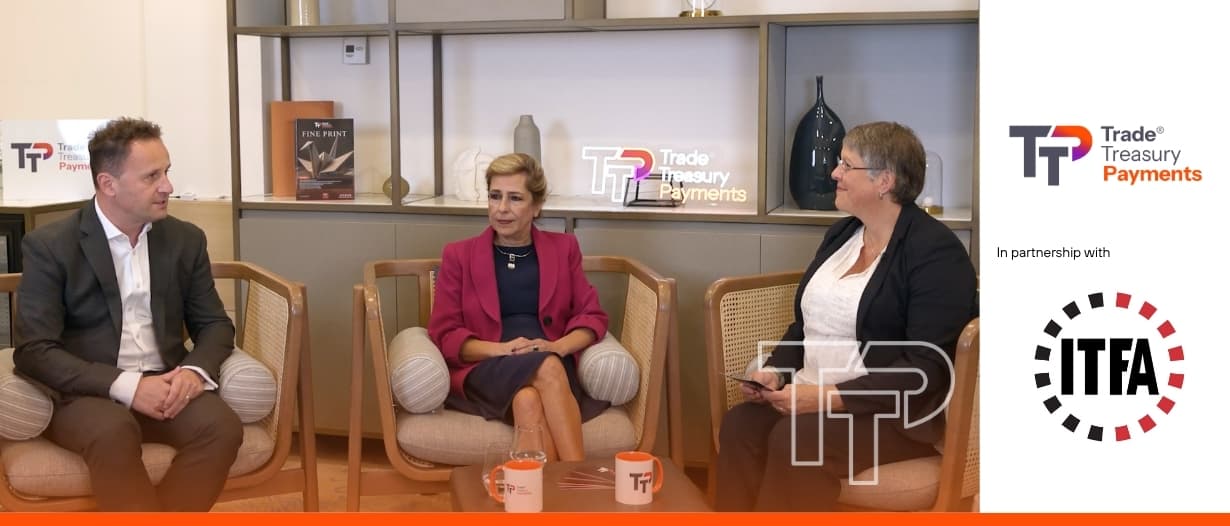
Eleonore Treu, Director of Trade Finance Week, ICC Austria and member of the TTP Editorial Board had the opportunity to sit down at the ITFA Annual Conference in Split, Croatia and discuss trade finance education with two seasoned industry experts: Alex Gray, Director of Trade and Transaction Banking at LIBF (The London Institute of Banking and Finance), and Geoff Wynne, Partner at Sullivan & Worcester UK LLP and Editorial Board Member for TTP. Together, they explored the shifting role of technology in trade and trade finance at large, along with the risks of over-reliance on automated solutions, the enduring importance of human judgement, and the crucial role of education in the future of the industry.
The demographics of trade finance learners
The professional pathways of both Wynne and Gray into the world of trade and trade finance mirrors that of many in the industry – they “fell into “it, in Wynne’s words.
The work of LIBF seeks to offer more structured training and education routes for those interested in trade finance. Demographic data provided by LIBF reveals an interesting story about who exactly is seeking formal education in trade finance today. The student base is largely split between two age brackets: 25 to 35, and 35 to 45.
This distribution captures individuals at two distinct stages of professional development. Gray has a theory as to why we are seeing this particular distribution. “You have two sort of groups of people,” he explains, “people who are learning from scratch earlier in life and then you have people later in life who have been already working there and they think ‘oh wait a minute I’ve been working for 15 20 years but how do I prove to somebody that I have this knowledge?’ and they would take the qualifications”.
Do these figures mirror a change in the industry?
This dynamic is perhaps also evolving alongside the operational nature of trade and the trade finance industry itself. Historically, trade finance was perhaps regarded as a back-office function or “a bit of a backwater”, as Wynne puts it. “You did it when you were young. You got put into the back office; you did what were relatively mundane tasks”. Repetitive tasks like checking letters of credit offered young professional the chance to learn, develop valuable institutional memory, and get an acute sense for identifying fraud that less experienced colleagues might overlook when viewing seemingly compliant documentation purely at surface value.
With AI automating many of these mundane tasks, this historic model of what work in trade finance actually means is being reshaped. Automating document checks and routine data matching are relieving trade desks of heavy administrative burdens but also stripping professionals of this opportunity to learn by doing. Hence perhaps the appetite for formal training in early career professionals.
The reality of day-to-day work being less document-heavy than in times gone by is perhaps also changing the perception of the industry and making it a more attractive one for professionals to get into. “I think we’ll see more people wanting to do it. We’ll see more people wanting to take the LIIBF qualifications,” observes Wynne.
The AI fallacy
Greater incorporation of AI automation has not made human oversight obsolete, however. Far from it; technological advances mean human judgement underpinned by training is more critical than ever. When asked about the notion of AI handling trade operations entirely autonomously, “that’s the fallacy,” responds Wynne. “The fallacy of believing that AI can do this 100% and will be 100% right seems to me that’s not today, and that may not be for years to come – if ever.”
One need only consider fraud. Fraudsters consistently adapt to new technological guardrails. Remove the human element, and they only need to beat the machine. Even if automated platforms achieve a 95% accuracy rate, that remaining 5% margin represents substantial financial and compliance risk. Without the requisite training in trade fundamentals, professionals will lack the baseline knowledge needed to interrogate AI outputs effectively and catch sophisticated irregularities.
Gray’s work with Complidata, an AI powered automated document checking and compliance tool, highlights the importance of trained human judgement and the role of AI as “assisted intelligence”, if anything. There is no conflict in his working for Complidata and LIBF as “the two things are so synergist”. The humans interacting with the AI tools need the knowledge that has potentially been lost with the loss of the “mundane” work the tools now carry out.
Trade and the attraction of something “real”
Both experts agree that the opportunity to physically work alongside colleagues and more experienced professionals is invaluable for training and upskilling. The moments of learning and discovery that come from an informal chat in the office over cup of tea are hard to replicate in an online training course. Indeed, the defining characteristic of the industry as a whole is its connection to the physical world.
“Trade is real”, concludes Wynne. Behind every letter of credit, supply chain programme, or structured facility lie physical goods being produced, moved, and sold across borders. “You may synthesise, you may secure, you may do all sorts of things but remember this is this is about ‘real’. If that doesn’t interest you, you’re probably not for trade”.
Gray echoes this sentiment, which is why he always tries to ensure his team understands the importance of their work. He talks about how a simple after work pint with colleagues highlights this importance, where he told them, “you know we did the guarantee to get the brewery machine in from Germany… if it wasn’t for us, we wouldn’t be having this beer”.
If he had one parting piece of advice for anyone looking to enter the trade finance industry, it is to be inquisitive and ask questions. “Be willing to be talking. Have that interaction with your colleagues, learn from them, and then even learn from colleagues in other banks that interact with them”.
As to the importance of investing in trade finance education as the trade ecosystem digitises and regulatory scrutiny grows, Treu concludes the conversation with a warning: “if you think education in trade finance is too expensive, try the cost of getting it wrong”.
Prefer to listen? The full conversation is also available as a podcast below.
Key Topics
- Trade finance education is changing as AI takes over the routine tasks that once trained junior professionals.
- Human judgement and experience remain essential for spotting fraud and interrogating automated trade finance outputs.
- Formal training routes are attracting early-career and mid-career professionals seeking to prove their trade finance knowledge.
- Trade finance remains anchored in physical goods moved across borders, which shapes how the industry is learned and valued.
Expert Analysis
Geoff Wynne argues that the idea of AI handling trade operations entirely autonomously is a fallacy, noting that AI being 100% right is not realistic today and may not be for years to come, if ever. Alex Gray frames AI as "assisted intelligence", stressing that trained human judgement is central to using these tools well.
Key Findings
- LIBF demographic data shows formal trade finance learners are largely split between the 25 to 35 and 35 to 45 age brackets.
- Automation of document checks and routine data matching is relieving trade desks of administrative burden but reducing early-career learning opportunities.
- Even an automated platform with 95% accuracy leaves a 5% margin that represents substantial financial and compliance risk.
Implications
- Professionals without grounding in trade fundamentals may lack the baseline knowledge needed to interrogate AI outputs effectively.
- The reduced document-heavy nature of trade finance work may make the industry more attractive to new entrants.
- Investing in trade finance education matters more as the ecosystem digitises and regulatory scrutiny grows.