
Beyond ESG: Mauritius Commercial Bank on SROI and the future of African trade finance at ITFA 2026
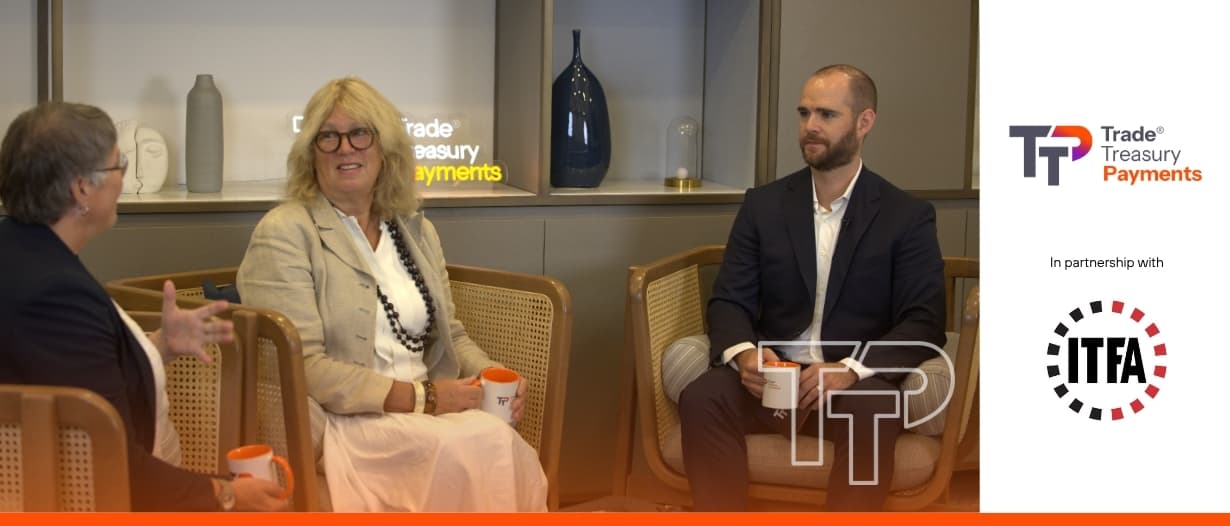
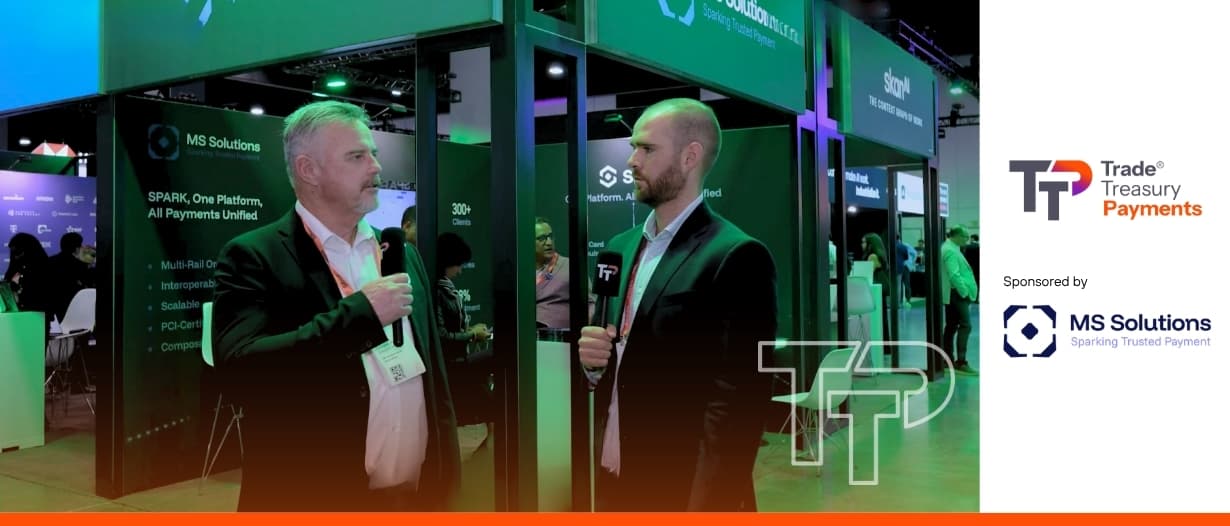
At ITFA’s 52nd Annual Conference in Split, Croatia, Dr Rebecca Harding, Trade Treasury Payments editorial board member, talked to Arnaud Levasseur, Head of Trade Finance at Mauritius Commercial Bank (MCB), to discuss the application of the principles-based Social Return on Investment model (SROI). Their conversation explored how a new tool could enable more trade finance towards emerging economies like African countries.
The SROI model for trade finance is designed to measure the impact of a transaction beyond customary balance-sheet metrics alone. SROI enables institutions to assess and benchmark the broader social, societal and security returns generated by their financing activities, while also supporting the assessment of the potential impact of future investments.
TTP previously spoke to Harding about the SROI model when it was initially launched in September 2025. At this year’s conference, MCB, Mauritius’s longest established bank, shared its initial experience of applying the SROI to a series of internal case studies, contributing to the wider discussion on how impact measures in trade finance can become more practical and scalable.
Why social return needs its own metric
Harding: For a long time, SROI has been captured purely as the social return one aims to create through an investment. We have applied this tool to trade finance to calculate social, societal, and security returns, including food, energy, water, economic, and defence security. This aligns banking transactions with the current geoeconomic and geopolitical environment, particularly in Africa. How has Mauritius Commercial Bank seen this as an opportunity to enable your transactions?
Levasseur: We see this as an opportunity to demonstrate the tangible impact our clients are creating across Africa. Financing trade from an African perspective is directly linked to economic prosperity. By enabling businesses to import, export and participate in regional and global value chains, trade finance enables company growth, creates employment opportunities, strengthens local industries and contributes to broader prosperity across the continent.
This broader contribution is central to our vision of ‘Success Beyond Numbers’, which recognises that our role extends beyond financing and delivering returns. Over the past several years, we have actively worked towards embedding this philosophy within the organisation and aligning our efforts with sustainable development objectives.
Harding: The compliance framework is changing. People are not as interested in or focused on Environmental, Social, and Governance (ESG) as they used to be, but they are interested in how to make their transactions as safe as possible and how to measure the impact they are making. Could you give us an example of how you have done that at MCB?
Levasseur: The foundations of ESG are closely linked to the Sustainable Development Goals. While considerable progress has been made in measuring environmental outcomes, far less progress has been made on the Social (S) side as it remains more difficult to define, quantify and report consistently.
Trade finance operates differently because unlike traditional project or capital expenditure financing, you are funding tangible goods and revolving flows, in turn supporting movement of goods through complex and often fragmented supply chains. Applying sustainability frameworks to these real world transactions can therefore be difficult in practice.
However, when you go on the ground, engage directly with clients and witness their real contribution to local economies and communities, it becomes clear that many traditional activities generate meaningful outcomes that are not always captured in traditional sustainability discussions. They support employment, strengthen local industries, facilitate access to essential goods and contribute to economic resilience.
For us, this is where SROI becomes valuable as it provides a practical way to identify and measure these outcomes using information that already exists within the transaction. We need to showcase this impact as it would inspire others. That was one of the reasons MCB joined this working group. We wanted to help develop a tool that is practical, scalable, and relevant to the realities of trade finance, particularly in Africa.
Putting the social pillar to work
Harding: African supply chains are often excluded from compliance frameworks because traditional data collection is so difficult. Environmental rules have become so complex that they actively militate against investing in Africa, leading many major banks to withdraw from the market. To address this, SROI is used, which is a low-cost tool that requires no additional data collection from the client. Instead, it uses hard data already present in the transaction itself to calculate a social, societal, and security return on investment, measuring a business’s contribution to intra-African trade, job creation, productivity, and essential sectors like food, energy, and water security. How is this tool currently being used within MCB?
Levasseur: Currently, we are using the tool primarily from an internal perspective to see how the industry reacts and adapts to it. We have tested it across several case studies, one that particularly stood out involved a transaction where our client was purchasing palm oil destined for Madagascar to be refined into edible oil. At first glance, you might question whether such a transaction should be considered sustainable. However, when you deep dive into the supply chain, you realise the ultimate benefit is for a country that critically requires it for food security, where local populations lack the purchasing power for alternative options. This is where you uncover the true social impact.
For us, the first angle was essentially to identify these flows, determine how to finance them, and establish structures that help bridge the trade finance gap for this company – solutions that can subsequently be scaled across other businesses.
The second angle involves rebalancing how we evaluate these benefits. Historically, metrics heavily favoured the Environmental (E) component of ESG, but elevating the Social (S) element allows us to push the narrative further on how we collaborate to make this framework widely accepted across the industry.
While it starts with our own balance sheet, industry-wide acceptance would allow us to leverage additional capital from Development Finance Institutions (DFIs) and Multilateral Development Banks (MDBs). MCB chose to lead on this path because the continent urgently requires greater access to financing. The African trade finance gap is currently estimated between $120 billion and $140 billion, representing a critical bottleneck as demographics expand.
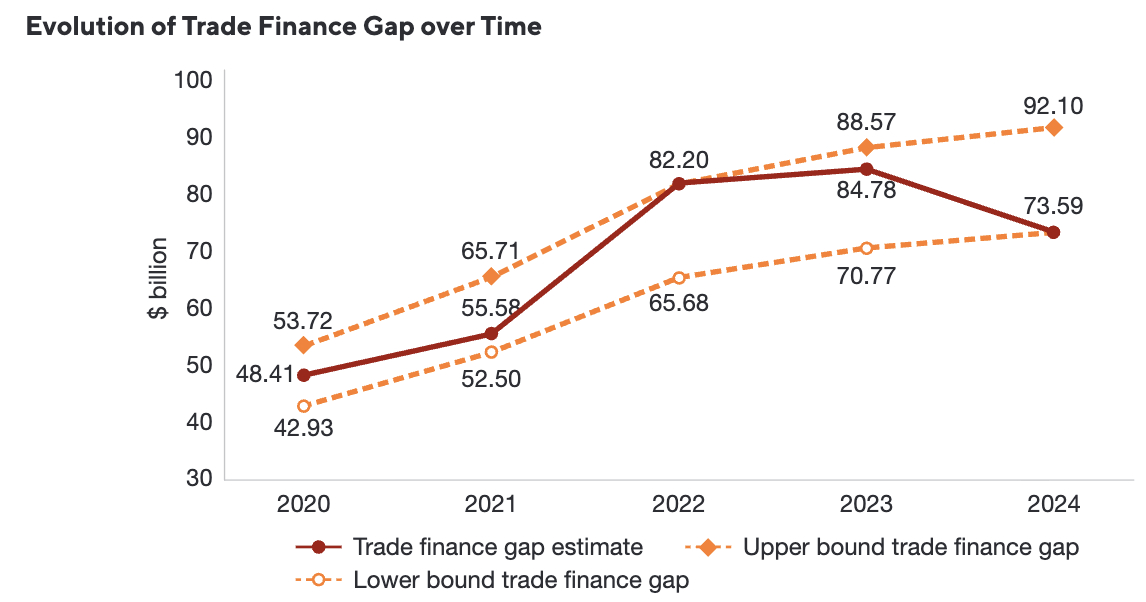
To put this into perspective, Africans represent roughly 18% of the global population, yet account for only 3.4% to 3.8% of world trade. Addressing this stark imbalance requires robust trade finance support, a position echoed by the World Bank, alongside commitments like Seville, which affirm that financing developing economies inherently constitutes sustainable finance given its direct impact on employment, prosperity, and economic growth.
By using these case studies, our goal is to demonstrate the viability of these tools and encourage other banks, institutions, and experts to adopt them, ultimately driving greater support for the continent.
Building more than a ship
Harding: That case study you shared at this event was genuinely inspiring, both in how you structured the deal and in the company’s contribution to African trade. So, please tell us about CNOI.
Levasseur: It all started in a meeting with a client who presented a project to us, and it was a big one. We deeply believe that for the continent to grow further, we need to move further up the value chain. Too often, as an African continent, we export raw commodities when we could be processing them to create more value. Equally, instead of importing finished goods, why not import and manufacture on the continent, generating employment and creating value there instead.
This particular project involved the construction of the Captain Arctic, a polar expedition vessel being built at CNOI in Mauritius for Selar Expeditions. The vessel incorporates the latest technologies including solar panels. That was the Environmental part of it. But what stood out to us was the much broader impact of the project. We also looked at the direct and indirect employment the build created and the knowledge transfer it brought, demonstrating that highly specialised marine engineering projects can be delivered from Africa.
When you have a project like that in front of you, you really go the extra mile to find solutions for the client because the impact extends well beyond the transaction itself, both directly and indirectly.
It is also another example of MCB’s commitment to advancing African trade finance. Most recently, the bank structured Africa’s first electronic bill of exchange under Mauritius’ modernised legal framework. This complements MCB’s dedicated US$1 billion financing envelope supporting intra-African trade, sustainable trade flows and development-focused transactions across the continent.
Prefer to listen? The full conversation is also available as a podcast below.
Key Topics
- Social Return on Investment (SROI) offers a practical way to measure the broader social, societal and security returns of trade finance transactions.
- Trade finance can support employment, local industry and access to essential goods across African economies, not only commercial returns.
- Environmental rules and fragmented data collection make it difficult to apply ESG frameworks to African trade finance.
Expert Analysis
Arnaud Levasseur, Head of Trade Finance at Mauritius Commercial Bank, said SROI enables institutions to demonstrate the tangible impact their clients create across Africa. He argued that trade finance is directly linked to economic prosperity, as it enables company growth, employment and stronger local industries. He also said that, while trade finance is harder to assess against sustainability frameworks than project finance, SROI provides a practical way to identify and measure outcomes using information that already exists within a transaction.
Key Findings
- Mauritius Commercial Bank has applied the SROI model to a series of internal case studies, sharing its initial experience at ITFA's 52nd Annual Conference in Split, Croatia.
- The African trade finance gap is estimated at between $120 billion and $140 billion.
- Africans represent roughly 18% of the global population but account for only 3.4% to 3.8% of world trade.
- MCB structured Africa's first electronic bill of exchange under Mauritius' modernised legal framework.
Implications
- Industry-wide acceptance of a common impact framework could allow banks to attract additional capital from Development Finance Institutions and Multilateral Development Banks.
- Trade finance transactions that already contain hard data may be assessed for social impact without adding client reporting burdens.
- Greater use of impact measures may help banks justify continued engagement with African markets despite complex environmental rules.