

Passing a law to allow electronic trade documents is a significant step, though getting businesses to use them requires cooperation well beyond the borders of the country that passed it. The UK’s Electronic Trade Documents Act (ETDA) opened the door to paperless trade, but Lord Christopher Holmes of Richmond believes governments have more work to do to truly capitalise on all the benefits that such change promises to bring.
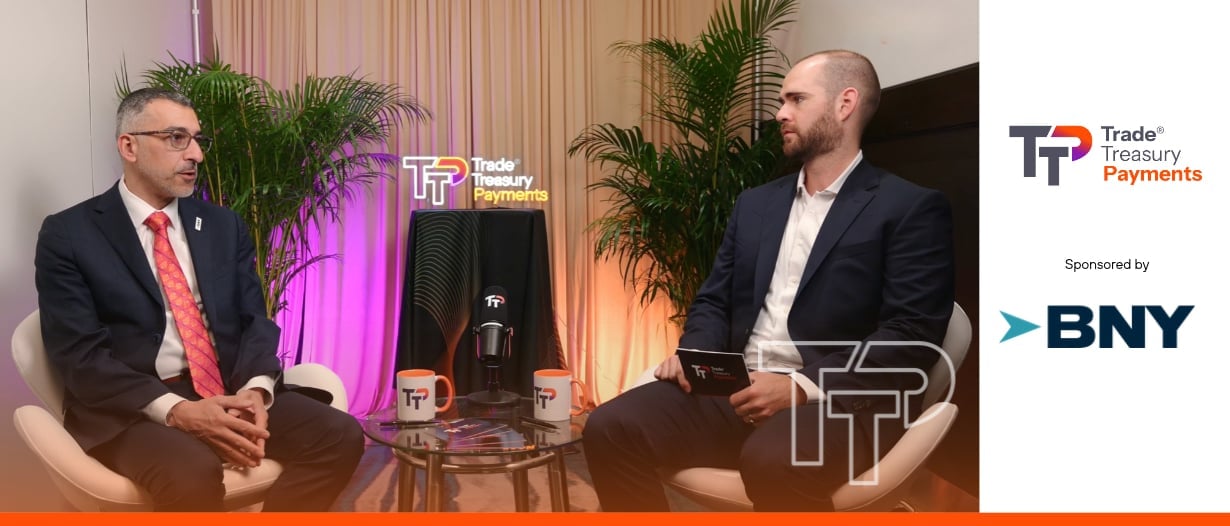
At the ICC Banking Commission’s autumn meeting at Mansion House in London, TTP spoke with Holmes about the progress that has been made around digitalising the nation’s trade since the ETDA passed in 2023, as well as how banks should approach artificial intelligence and his report on employment opportunities for blind and partially sighted people.
Paperless trade depends on international cooperation
According to Holmes the UK’s ETDA is “the most important act that no one had ever heard of”. Its purpose was to enable trade documents previously held and transacted on paper to be used in digital form, and to do so without prescribing any particular technology.
Given how much international trade takes place under the laws of England and Wales, Holmes sees considerable opportunity in the UK being at the leading edge of the digital trade transition. However, he argued that successive governments have not done enough to work with other countries on making electronic documents more widely usable.
If the countries involved in a transaction take different approaches to recognising electronic documents, businesses can find themselves continuing to use paper, which limits the benefits of the legislation for companies trading across those borders.
But it goes further than that. “It’s not just a question of the efficiency, the speed, the reliability of the electronic trade documents,” Holmes said. “It’s the economic impact, it’s the environmental impact.” Frustratingly, those benefits are nearly impossible to realise when one trading partner recognises electronic trade documents and the other does not. “You don’t have a halfway house,” Holmes said. “You have to just stay tragically papery, and all that entails.”
Overcoming that mismatch requires governments to keep working together after passing their own legislation, so businesses can use electronic documents across their trading relationships. “Ultimately,” Holmes said, “We need nations to really be connected, to have the conversation, to enable that global electronic trade documents ecosystem.”
The need to support adoption also extends to the other technologies banks are exploring, particularly AI.
Responsible AI starts with human leadership
Keeping up with the conversations around AI can seem like a full-time job in itself, but at the moment it is focused much more on systems that can carry out tasks more independently. When it comes to assessing where to use such systems in trade finance, Holmes advocates keeping human judgement firmly involved.
“[AI systems] are extraordinarily powerful, but they are technologies. We need humans to lead them,” he said.
That involves understanding how the technology works and putting appropriate safeguards around its use. Holmes pointed to legislation, regulation, standards, risk management, and resilience as familiar areas that should continue to guide institutions as they adopt AI. “We know how to do this,” he said. “But that means that we do have to ensure that we do do it.”
Alongside those safeguards, he wants attention directed towards places where finance is difficult to access, which includes a number of emerging and developing markets, as they may have opportunities to move quickly because they have fewer legacy systems to adapt or replace.
For Holmes, financial and digital inclusion should help determine where technology is deployed. That focus on access also runs through his work on employment, where technology can either help people into a role or create another obstacle.
Closing the blind employment gap starts with access
Holmes has explored these barriers in his report, Out of Sight – Out of Work, which examines why so many blind and partially sighted people remain excluded from employment. Drawing on existing RNIB research and official labour market statistics, it cites an employment rate of just 27 per cent among working-age people registered blind or partially sighted, compared with 83 per cent among non-disabled people.
Published in July, the report pulls together these statistics with insights gathered through interviews and roundtables with people with sight loss, as well as employers and specialist organisations. Among the findings are that recruitment systems are often difficult to use with screen readers, there can be considerable delays in employment support, and that many staff must start jobs without the assistive technology they need to thrive in the role.
These present real problems that employers need to address as they work towards updating their systems to accommodate the latest wave of technological change. The report also warns that AI recruitment tools can reinforce exclusion if accessibility is overlooked. Its recommendations include clearer standards for recruitment technology, better training, and a government task force led by the Department for Work and Pensions to coordinate improvements.
Holmes sees an economic opportunity in enabling more people to contribute. While being good corporate citizens remains important, the purpose of inclusion reaches further.
“It’s about enablement, empowerment of all the talent that exists in all of our societies,” he said.
Prefer to listen? The full conversation is also available as a podcast below.