

Banks that want export growth need to catch trade at the source
At Sibos in Miami, Mitigram and Lloyds explained how banks can miss trade finance opportunities long before an exporter approaches them, and what they can do about it.
Most of Egypt’s export oranges grow in the desert. According to the US Department of Agriculture’s latest citrus report from Cairo, published in December 2025, they come from “commercial farms established on reclaimed desert land over the past 30 years”. Egypt now exports more oranges by weight than any other country.
So when Joshua Kroeker, chief executive of Mitigram, reached for an example at Sibos in Miami last month, it made sense that it involved citrus. Companies come to the platform, he said, and say: “I used to import my oranges from Florida, but because of tariffs, I’m now looking at Egypt… I need to find a fruit supplier in Egypt. How do I do that?”
Talking to TTP’s Deepesh Patel afterwards, he put it more broadly. “Trade is almost like water,” he said. “It finds a way to flow to where it goes.” Global trade has held up, in his view, but “it definitely flows in different directions”, and he is more interested in who is doing it.
Banks usually meet trade near the end of its journey
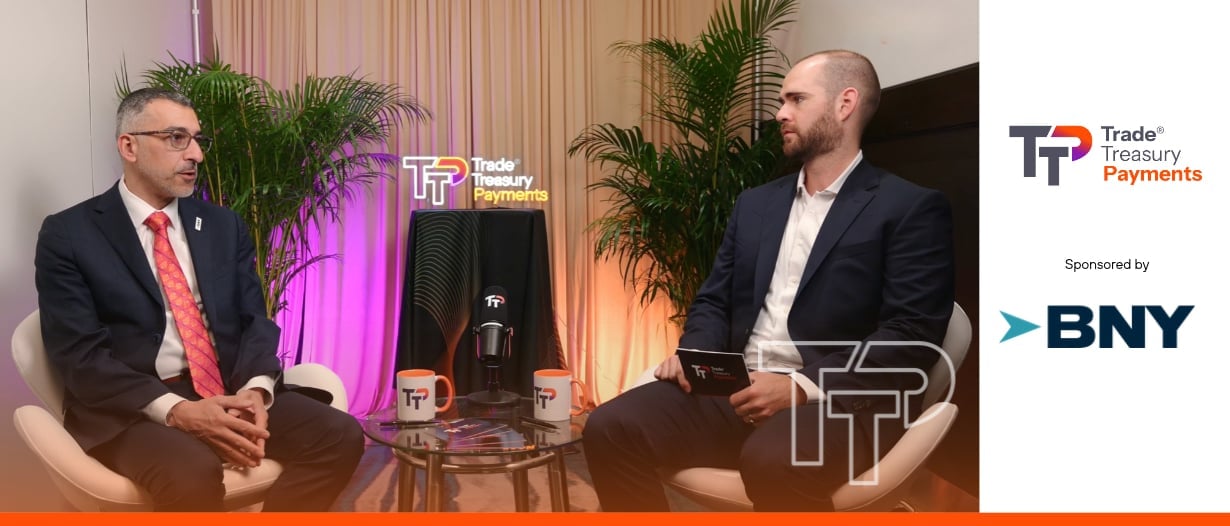
The panel, on the Sibos Discover Stage on 30 September, was called “Growing Trade in Uncertain Times”. Its starting point was the International Trade Centre’s estimate of $11 trillion in untapped global export potential. Kroeker sat alongside Dac Nguyen, head of transaction banking product delivery at Lloyds, with Merisa Lee Gimpel, founder of Digital Trade Works and a member of Mitigram’s advisory board, in the chair.
Kroeker, who spent most of his career in banking, said the industry starts looking too late. “You always think of trade starting at the transaction, when really that’s very close to the end of the transaction.” Trade begins when a company that has been selling at home wonders where to go next. Which markets import its goods? What payment methods are the norm there? “That isn’t a finance question,” he said.
Nguyen brought numbers from Lloyds’ research with the British Chambers of Commerce, published in February. Of the businesses surveyed, 45 per cent named customs procedures and documentation as a barrier to exporting, and only 10 per cent said they faced no barriers at all. He called it “a cumulative set of friction”.
A deal in Mauritius showed Lloyds the cost of arriving late
Nguyen said exporters “can become visible too late in the process, typically when a financing request emerges”. By then the commercial decisions have been made. He told the room about a transaction that would have been Lloyds’ first digital letter of credit involving Mauritius. “By the time the trade [was] visible to us, the beneficiary had already shipped and prepared a presentation, and at that point opportunity was lost.”
Kroeker said the options can close even earlier, when the contract is drafted. A clause allowing transshipment “to a sketchy port” can rule out a bank’s risk products before anyone has asked for them, and the company “has no idea that this is ever going to have an impact”. Mitigram is using AI to help identify potentially problematic clauses, giving companies an opportunity to address them early.
[H2] Eleven years of trade finance demand, captured in data
Kroeker said Mitigram came upon its data “almost by accident”. Founded in Stockholm in 2014 as a marketplace linking corporates with banks, it now holds eleven years of records showing where corporates need banks to take on risk. “There’s more demand in Bangladesh for bank risk than there is in Germany,” he said. “Maybe that’s not a huge surprise to anybody, but having the numbers to back it up is really, really important if you want to change behaviour.” Banks, he said, now use Mitigram “more as a data source than as a platform”.
The bank can see an exporter’s next move
In July, Mitigram bought eexpand, a Paris company founded in 1989 that serves more than 50 financial institutions, including Lloyds. Its platform provides smaller businesses with market research and help finding partners abroad under the bank’s own brand. Nguyen said Lloyds’ International Trade Portal is “underpinned by Mitigram”.
The bank keeps the data. Kroeker described the next call between a relationship manager and a client: “Hey, we see you’ve been exploring markets in MENA or in Africa or in Asia.” In Nguyen’s words, that lets a bank identify exporting intent “perhaps months before the actual transaction even needs to be executed”.
Asked on stage why banks should get involved so early, Kroeker answered with a question. “Why do banks give student loans?” he asked. “They need the money,” came the reply. Kroeker’s point was that relationships start young. As he said earlier in the session, “Today’s SMEs will be tomorrow’s mid-market corporates, and they will be the next generation’s multinationals.”
The fintech behind the bank
Starting early also means starting without paper. Kroeker said smart banks are looking at the next generation of exporters and asking, “How do we make sure that they never get introduced to paper?” So when those firms first meet trade finance, “paper’s never mentioned.” Lloyds says its electronic documentary trade transactions grew fourfold between 2024 and 2025.
Kroeker’s last answer at the panel was about getting out of the way. “The best thing I can do as a small Swedish fintech is to be invisible. You have a great brand. I’m more than happy to sit behind it.” Gimpel replied: “Let’s get smaller. Let’s get invisible.”
If Mitigram gets its way, trade finance becomes what Kroeker called “an afterthought”, settled long before the shipment, somewhere around the moment a buyer first wonders who indeed grows oranges in Egypt.
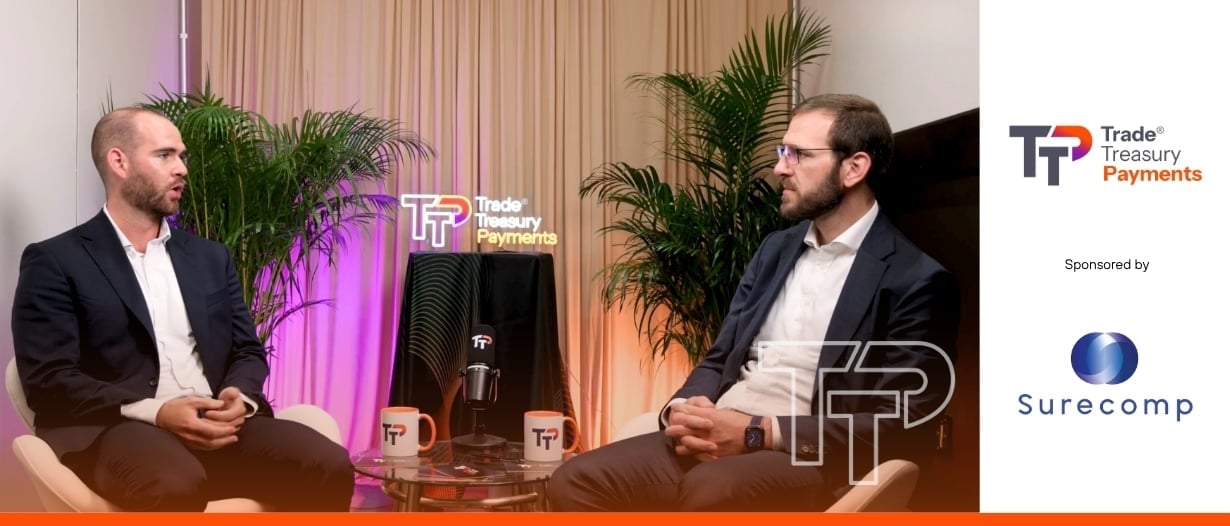
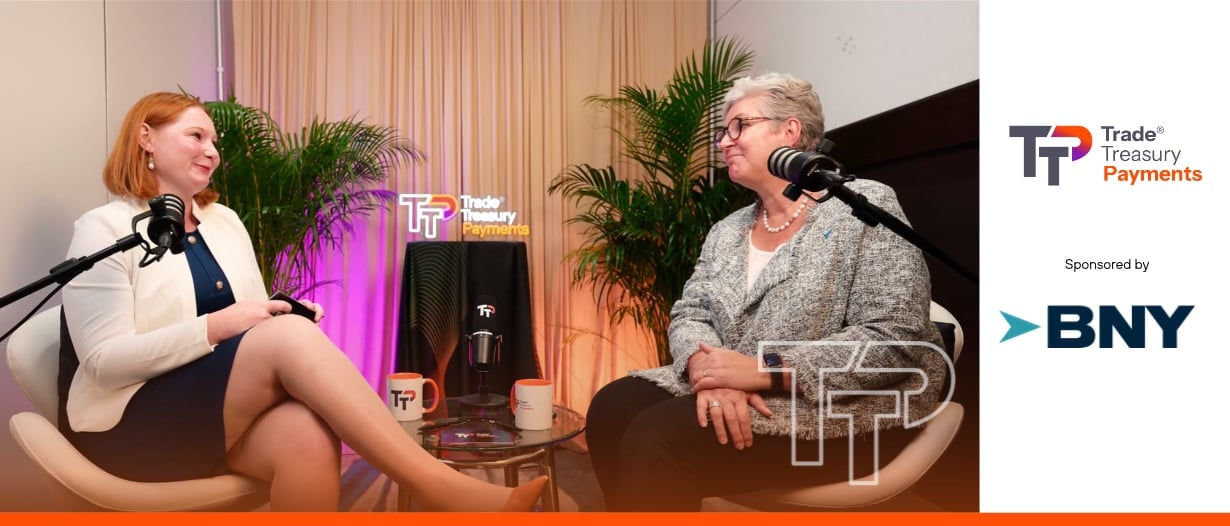
Prefer to listen? The full conversation is also available as a podcast below.
Key Topics
- Banks can miss trade finance opportunities long before an exporter makes a financing request, because the commercial decisions have already been made.
- Corporate data on where companies need banks to take on risk can help lenders understand and shape trade finance demand.
- Tariffs and changing trade routes are prompting exporters to look for new suppliers and markets.
- Digitising trade finance from the start, without paper documents, is a route to winning the next generation of exporters.
Expert Analysis
Joshua Kroeker, chief executive of Mitigram, argued that banks start looking at trade too late. He said trade begins when a company that has been selling at home wonders where to go next, and that questions about which markets import its goods and which payment methods are normal there are not finance questions. He also said that having numbers to back up demand is important if banks want to change behaviour.
Key Findings
- Of businesses surveyed in Lloyds research with the British Chambers of Commerce, 45 per cent named customs procedures and documentation as a barrier to exporting.
- Only 10 per cent of surveyed businesses said they faced no barriers to exporting at all.
- Lloyds' electronic documentary trade transactions grew fourfold between 2024 and 2025.
- Mitigram's eleven years of data show more demand in Bangladesh for bank risk than in Germany.
Implications
- Banks that engage with companies only when a financing request emerges may already have lost the opportunity, as commercial decisions are made earlier.
- An exporter's market research and search for overseas partners can give a bank early signals of exporting intent, perhaps months before a transaction needs to be executed.
- Relationships formed with smaller exporters early may carry through as they grow into mid-market corporates and multinationals.