




C-Suite insurance series: Atradius bets on connectivity to transform credit insurance
As the credit insurance industry celebrates its centennial, all eyes are on the future. The sector is actively charting a course for the decades ahead – a period that looks set to be defined by rapid disruption.
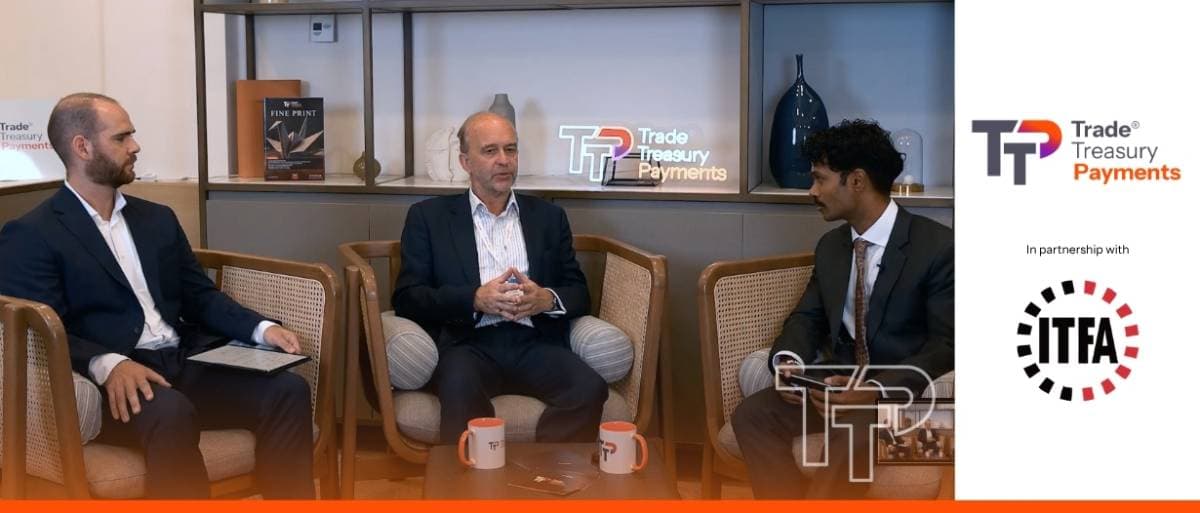
Eleanor Hill, Treasury Editor at TTP, discussed the future of credit insurance with Andreas Tesch, Chief Risk Officer at Atradius. While the tools of the trade may be evolving, the core mandate of credit insurance remains the same in his eyes: to stay positioned as a trustworthy partner for risk mitigation.
An evolving industry
Speaking at the ICISA 100th Annual General Meeting, with Tesch himself recently celebrating 25 years in the industry, there was a chance for historic reflection. But this was less a reverie and more a way to frame what the next 10 years of credit insurance and beyond looks like. “There’s no future without history,” Tesch notes.
Historically, credit insurance operated within fairly predictable economic patterns – cycles of growth followed by contraction. Today, these static models of the past have been replaced by a reality characterised by rapid change. This environment of disruption arguably only makes the traditional role of the credit insurer more critical than ever, if the industry can adapt.
Tesch is confident the sector is ready to meet these evolving challenges. “So, the industry exists for more than 100 years, and I think has proven that it can reinvent itself,” he says.
The rise of AI
Technology will be a major driver in any such reinvention. The necessity for speed and precision in an environment of disruption brings the role of Artificial Intelligence (AI), in particular, to the forefront. But as Tesch notes, AI isn’t exactly a revolutionary newcomer to the sector. “Credit insurers have deployed all different sorts of AI for numerous years in their automatic underwriting processes,” he explains. It is a tool the industry is well accustomed to, so it does not have to “start from zero,” as Tesch puts it, compared to other industries.
The challenge for the sector moving forward is therefore not to simply begin embracing new technology, but to look strategically at how it can be better deployed. In Tesch’s view, this means expanding the application of AI beyond underwriting. “I think where we need to improve is when it comes to commercial processes, when it comes to central functions. That’s also where we at Atradius see the biggest opportunity for improving efficiency”.
Regulation: a scaffold for sustainability
Technological transformation dominates the contemporary conversation across virtually every industry, but regulatory changes are just as significant a concern for C-suite leaders. Tesch’s view: “There’s a lot of merit in regulation.” He acknowledges that while regulation is often perceived as an administrative burden, it provides the essential scaffolding upon which a sustainable and trustworthy industry can be built. “Of course, we’re battling with the regulators on some details, but in general, we as a trade very much welcome a high degree of regulation because it also forces us in our own governance to stay on top of things”.
Tesch anticipates that in future, regulatory requirements for the industry will become even more stringent, much as how banking regulations have become stricter. This is a good thing and only makes sense in his view. “Credit insurance and banking have gone hand in hand for a long time, and to align both regulations is, I think, going to be the theme going forward”.
Technology beyond AI
AI is the technology dominating discussions the world over, but as Tesch believes, it is only one component of a much broader technological shift. A critical, but perhaps overlooked, factor in future-proofing the credit insurance industry is connectivity. Specifically, insurer systems need to be directly integrated into the ERP systems of their clients. “That’s going to be a key thing,” he explains: “how we as insurers can integrate our systems better into our clients’ systems”.
Such integration is vital. It streamlines the product, making it far easier for clients to handle and far simpler for them to ensure they comply with policy conditions and report critical risk data like overdues. But the efficiency of any such systems is fundamentally limited by the quality of the information provided. “AI can only be as good as the data that feeds into it,” Tesch notes. “Having a proper data management strategy is also of utmost importance”.
Rigorous data management strategies are a competitive imperative forming a crucial part of the “new universe of technologies that will influence our business going forward,” as Tesch describes it. As the industry becomes more digitised, it also stewards more and more sensitive data. Security must therefore be foundational, ensuring that systems are immune against potential attacks to preserve trust.
The enduring human element
While there is a rapid shift towards automation and model-driven decision-making, Tesch argues that the human element remains invaluable. In his view, the industry will require a workforce with a hybridised mix of talents. “I think it’s going to be twofold,” he explains. “On the one hand, we will need technical experts; people that are very savvy in developing models, improving models, in deploying the technologies that we’ve just spoken about.”
But even as the industry adopts advanced technologies like agentic AI, the core of credit insurance remains a people-driven business built on relationships with brokers, reinsurers, and clients. “So, you’ll need people on the one hand with very strong social skills that are able to use AI and those technologies”.
The goal industry-wide is not to replace human decision-making with machines, but rather to use technology to empower human professionals. By automating the routine, labour-intensive tasks, talented people can be freed up to focus on the high-value, complex interactions that define the value of credit insurance. As we march forward into a world increasingly defined by volatility and rapid change, it is this balance of sophisticated technology underpinning nuanced human judgement that will determine which organisations thrive in the coming decades.
Prefer to listen? The full conversation is also available as a podcast below.
Key Topics
- The credit insurance industry is leveraging artificial intelligence strategically to improve efficiency in commercial and central functions beyond traditional underwriting.
- Direct system integration between credit insurers and their clients' ERP systems is essential for streamlining operations and enabling better risk data reporting.
- Rigorous data management and cybersecurity are foundational competitive imperatives as the credit insurance sector becomes increasingly digitised.
- Credit insurance will require a hybrid workforce combining technical experts in AI and model development with relationship-focused professionals skilled in complex client interactions.
- Strengthened regulatory frameworks aligned with banking standards will support the long-term sustainability and trustworthiness of the credit insurance industry.
Key Insights
Expert Analysis
Andreas Tesch, Chief Risk Officer at Atradius, argues that credit insurance will thrive by expanding AI beyond underwriting into commercial and central functions, whilst maintaining strong human expertise in client relationships. The industry's 100-year history demonstrates its capacity to reinvent itself. Tesch emphasises that direct system integration with client ERP platforms, underpinned by rigorous data management and cybersecurity, are critical competitive imperatives. He contends that stronger regulatory alignment with banking standards will strengthen industry sustainability, and that the future workforce must combine technical talent in AI development with relationship-driven professionals capable of handling complex interactions that define credit insurance value.
Key Findings
- Credit insurers have been using AI in automatic underwriting for years, enabling the sector to deploy advanced technology more strategically than many other industries.
- System integration between insurer platforms and client ERP systems is a key opportunity for improving operational efficiency and ensuring policy compliance and risk data reporting.
- Data quality directly limits AI effectiveness, making proper data management strategies a foundational component of competitive advantage as the industry digitises.
- Regulatory frameworks, particularly those aligning credit insurance with banking standards, are essential for building sustainable, trustworthy industry practices rather than obstacles to be minimised.
- The credit insurance industry will require a hybrid workforce balancing technical experts in AI and model development with professionals possessing strong social skills and relationship-building capabilities.
Implications
- Credit insurers that fail to expand AI deployment beyond underwriting into commercial and central functions risk losing competitive advantage to early movers in operational efficiency.
- The quality of data management and cybersecurity infrastructure will increasingly differentiate market leaders, as poor data quality directly undermines AI effectiveness and client trust.
- Organisations must invest in hybrid talent strategies, developing both technical AI expertise and relationship-focused capabilities to sustain value creation in an automated environment.
- Closer regulatory alignment between credit insurance and banking standards will reshape compliance requirements, demanding proactive governance modernisation from industry participants.
- Client expectations for seamless system integration and real-time compliance reporting will escalate, making ERP connectivity a baseline requirement rather than a competitive differentiator.
Key Takeaways
- Technology will drive credit insurance transformation, but success depends on strategic expansion of AI beyond underwriting and robust system integration with client platforms.
- Data quality and cybersecurity are foundational to competitive advantage; AI effectiveness is limited by the quality of information feeding it.
- The industry's future workforce must combine advanced technical capabilities in AI development with strong human skills for managing complex client relationships.
- Regulatory frameworks provide essential infrastructure for trust and sustainability; stronger alignment with banking standards should be embraced rather than resisted.
- The credit insurance industry's 100-year track record of reinvention positions it to navigate current disruption by balancing technological innovation with the human relationships that define core business value.