
C-Suite insurance series: Coface Group CEO on pushing AI agentic to its limit
The credit insurance sector – a cornerstone of global commerce – stands at a critical juncture. The traditional models of risk management are being tested by the exponential acceleration of emerging technologies and a geopolitical shift towards regionalisation.
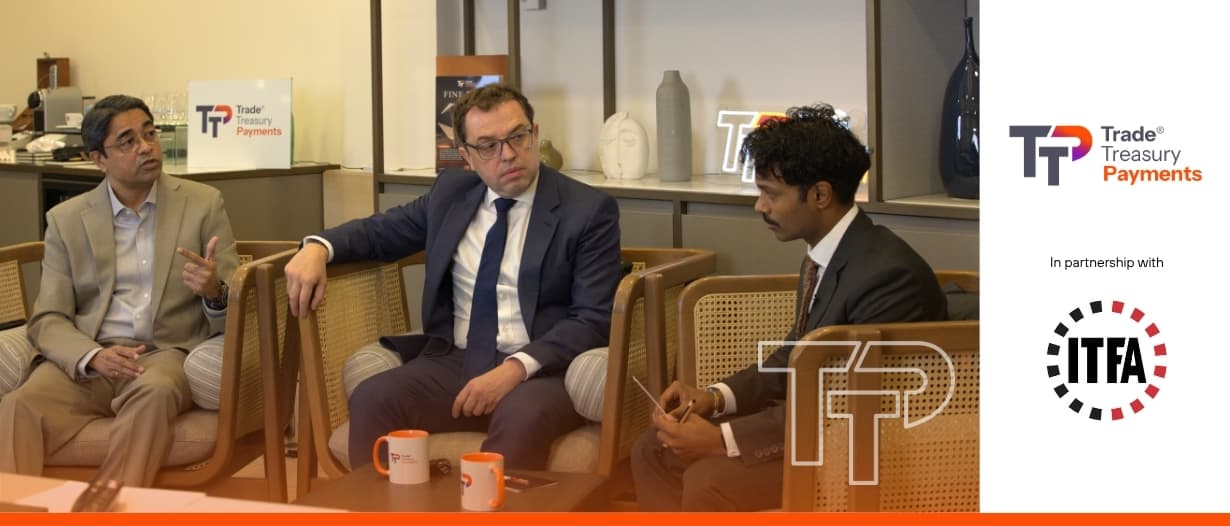
At the landmark 100th Annual General Meeting of ICISA in Vienna, Deepesh Patel, Editor of Trade Treasury Payments (TTP), spoke with Xavier Durand, Group CEO of Coface, to discuss how the industry can tackle these contemporary challenges.
AI: disruption or evolution?
There is a delicate balance to be found between investing in human capital and investing in technologies like artificial intelligence (AI). This is nothing new in Durand’s eyes, but rather the latest chapter in a long history of technological evolution within the industry. As he notes, when he began his career, “we didn’t have cell phones and neither did we have laptops, nor did the internet exist”.
With AI specifically, this is a transition that actually began years ago for Coface – long before the current AI boom – with the establishment of a dedicated data lab to harness AI-based models. But, as Durand acknowledges, the pace of progression in this technological field has since seen an exponential acceleration. Within such an environment, if you stand still, you get left behind. Everyone across virtually every industry is investing in AI, but the differentiator for firms moving forward will go beyond simple investment to how efficiently and strategically they can deploy these resources.
AI is changing the competitive landscape of credit insurance. It has the potential to drive the emergence of new, agile competitors while also giving the “incumbents”, as Durand puts it, the ability to strengthen what they have already built. Established players like Coface can use AI alongside their deep industry knowledge, historical data, and established brand identity to accelerate internal development and fortify their position.
“It’s a race,” says Durand, “and the sector, like literally every industry, is going to evolve and is going to invest”.
New ground to be broken
Durand also points to significant opportunities for the expansion of the credit insurance industry into the vast, untapped “white space”, as he puts it, of small and medium-sized enterprises (SMEs) and emerging markets. “It’s outside of Europe and it’s around the world on the smaller company side,” he explains. Large corporations have long relied on credit insurance as a staple of their risk management strategies, but it is a product that remains underutilised in many parts of the world.
Durand estimates that the entire credit insurance industry covers only a small fraction of total worldwide receivables, perhaps 5% to 7%. There is a gap to be bridged there, but doing so requires more than simply offering existing products to new clients; it’s about making credit insurance accessible and affordable.
The challenge, as Durand sees it, lies in demystifying the product for these untapped businesses that have historically lacked the knowledge to effectively use it. For a segment that has remained relatively small in terms of its global employment footprint, breaking this new ground and the opportunities for growth that it provides is perhaps a necessary evolution as we look towards the next century of credit insurance.
Trade finds a way
Global trade is shifting. Supply chain diversification and the regionalisation of trade flows is rising, leading some to question whether there may be a long-term decline in the appetite for trade credit insurance. Durand doesn’t have such concerns, and his apparent optimism is deeply rooted in the historical resilience of commerce. “Trade is like water; it finds a way,” he said.
Durand acknowledges that while there may be fluctuations in the speed of global trade growth due to barriers, sanctions, tariffs, and taxes, the fundamental demand for exchange continues. As trade always inherently carries risk, there is always going to be demand for mechanisms like credit insurance to mitigate that risk. What form that demand takes and how to satisfy it is the question for Coface and its peers.
The industry in the next century
As the credit insurance industry’s association enjoys its centennial celebrations and looks to the future, there appears to be a dual mandate. There must be a proactive pursuit of new technologies to maintain an edge in a world of sophisticated, data-driven risk assessment, but alongside this should be an effort to broaden the industry’s reach to the SMEs and emerging economies that seem to be the next frontier of global growth.
Organisations like Coface, under the leadership of experienced professionals like Durand, appear cognisant of these challenges and well positioned to capitalise on the opportunities presented. Technological development is firmly positioned as a strategic discipline rather than a fleeting fad, and there is an acute awareness of what the industry has to offer in the modern global landscape. As global trade continues to flow, finding new ways to facilitate and protect this flow will always be a primary focus for businesses.
Ultimately, the future of credit insurance appears to rest on the industry’s ability to effectively prove its value proposition to small businesses in emerging markets. The multinational conglomerates already know this value, as credit insurance has been helping to provide some certainty in an uncertain world for a century and counting.
Prefer to listen? The full conversation is also available as a podcast below.
Key Topics
- AI and technological evolution in credit insurance
- Expansion into SME and emerging market segments
- Shifts in global trade flows and long term resilience
- Industry outlook for the next century
Expert Analysis
Durand’s perspective reflects a pragmatic understanding of both technological acceleration and market gaps. His emphasis on AI as an evolutionary step rather than a rupture aligns with the sector’s long history of adapting to new tools. At the same time, his focus on SMEs and emerging markets signals where the next century of credit insurance growth will be found. As he notes, “Trade is like water; it finds a way,” underscoring the enduring need for risk mitigation even as global patterns shift.
Key Findings
- AI investment is now universal across industries, but strategic deployment will differentiate winners.
- Only an estimated 5 to 7 percent of global receivables are covered by credit insurance, revealing significant room for expansion.
- Large corporates already understand the value proposition, but future industry growth hinges on smaller businesses worldwide.
Implications
- Credit insurers must treat AI as a strategic discipline, not a trend, to remain competitive.
- Growth will depend on simplifying credit insurance for SMEs and emerging markets that lack familiarity with the product.
- Despite geopolitical barriers, risk in trade persists, ensuring continued relevance for credit insurance solutions.