




C-Suite insurance series: Swiss Re’s Chief People Officer, on closing the skills and talent gap
The trade credit insurance and reinsurance industry is at a significant workforce turning point, from legacy practices to a future underpinned by the exciting opportunities and brand-new challenges presented by sophisticated emerging technologies.
Fundamentally, it seems to be a time to reevaluate exactly what it means to be a professional in a sector defined by complex risk, accumulated individual experience, and client-centric decision-making.
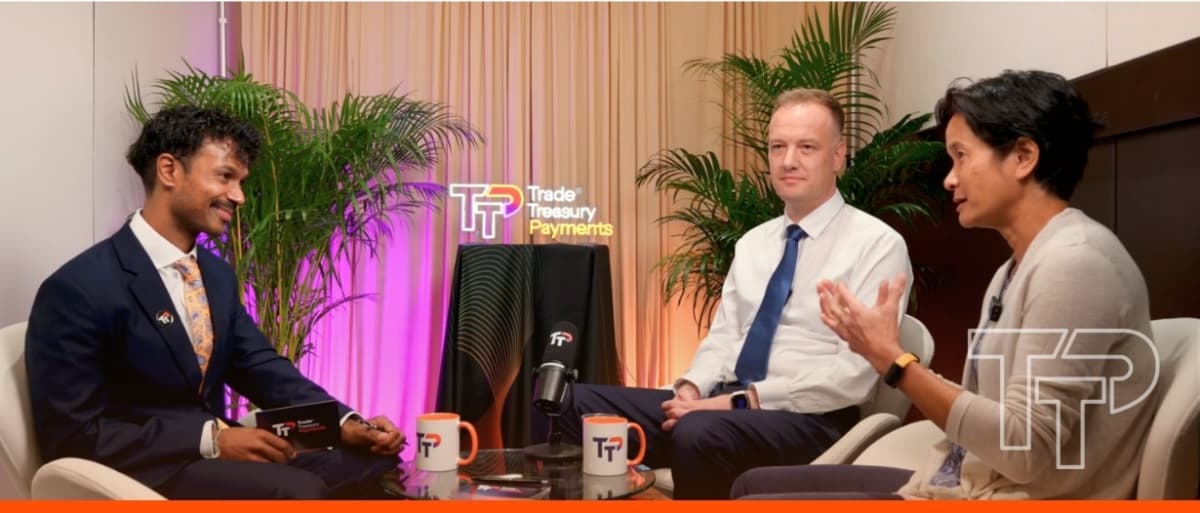
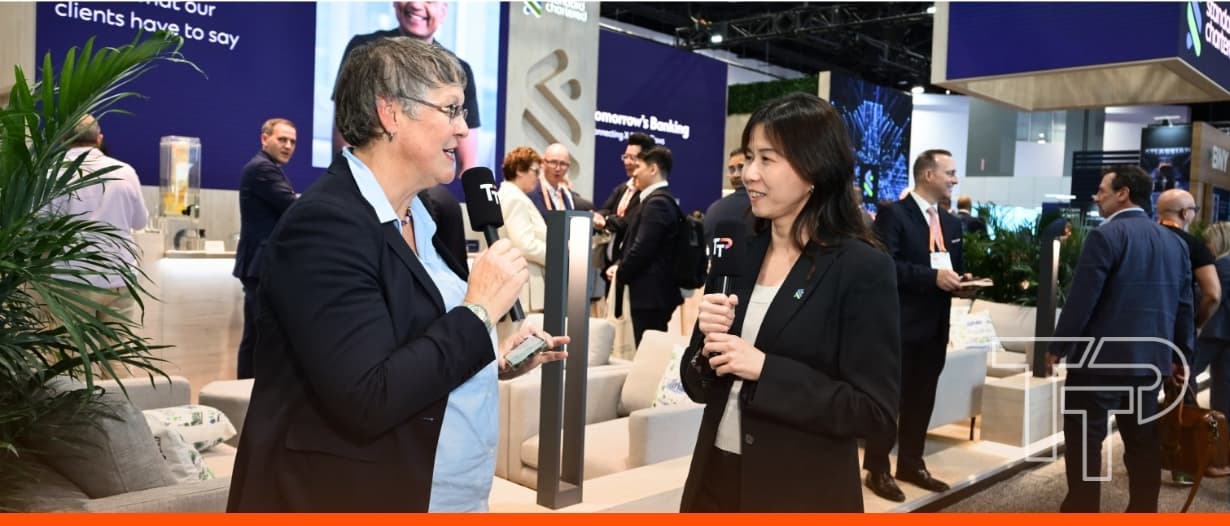
Eleanor Hill, Treasury Editor at Trade Treasury Payments (TTP), sat down with Nicole Pieterse-van der Velde, Global Chief People Officer at Swiss Re, during the International Credit Insurance & Surety Association (ICISA) 100th-anniversary celebrations in Vienna, to discuss this intersection of human talent and technological disruption within credit insurance and reinsurance.
The fluidity of the modern professional
Career progression within the credit insurance and reinsurance industry has historically been underpinned by a steady accumulation of institutional knowledge and experience built up over years – decades, even. But that is changing. Increasingly, AI is handling the heavy lifting of routine tasks, data processing, and other fundamental activities, which is altering the very nature of the work of individuals in the industry.
“I do think work [has] chang[ed] faster, … at least in recent history,” Pieterse-van der Velde observes. “The jobs are no longer that sort of clearly defined, so the work is more fluid. The world is also more complex, so it’s more decentralised, and therefore there is a lot more fluidity in how we work today.”
The transition represents a move away from how job roles themselves are categorised and defined. The focus is more on outcomes than tasks – it is no longer a question of what people do, but more a strategic question of what decisions they can be trusted with to make. As automation increasingly takes over the rudimentary ‘donkey work’, the human element is less about repetitive execution and more about high-level judgement and accountability.
A narrative gap
One persistent contemporary challenge faced by credit insurance and reinsurance is attracting (and retaining) younger talent. Those within the field understand the rewarding intellectual rigour and strategic importance of the work, but the perception from outside perhaps fails to capture its dynamism.
“I think we somehow have lost a little bit the narrative of explaining what the job is actually all about,” notes Pieterse-van der Velde. Capturing the imagination of the next generation and attracting the best talent possible is a case of positioning the industry not as a legacy sector, but as a truly forward-thinking one that is actively leveraging modern technology to solve global economic challenges.
AI is absolutely the overriding exemplar of ‘modern technology’ driving industry change. Within credit insurance and reinsurance, the goal is to use it as an accelerator for growth and development rather than a replacement for human talent. Automating time-intensive tasks allows firms to provide junior employees with a more clear, faster path to developing the judgement and knowledge that previously took decades to cultivate.
This accelerated development, however, comes with a caveat – the industry needs to be aware that the next generation values a balance of technology-driven efficiency that does not dehumanise work. They are seeking environments that, while supported by advanced technologies, are fundamentally, deeply human and inherently collaborative. With credit insurance and reinsurance being such a client-centric industry, it is potentially highly attractive to younger talent if the narrative gap between the perception of the industry and the reality of the profession can be bridged.
Coachability is key
On the other side of this, there are certain traits that employers most value. As the industry pivots towards emphasising the strategic importance of roles, the skill sets prioritised must also evolve. Beyond technical expertise, an ability to effectively navigate change is paramount. Pieterse-van der Velde highlights one critical, often overlooked attribute that may be of the greatest importance in people moving forward: coachability.
“It remains a very sort of client-centric, judgment, decision-made industry that’s quite intense on experience and depth of experience,” she explains. “I do, however, think that the fluidity and the need to be more focused on the priorities that are constantly shifting require people to have learning agility.”
In a decentralised, AI-augmented modern workspace, being genuinely open to feedback, embracing a 360-degree view of professional challenges, and continuously questioning established paradigms in order to grow and progress are essential traits for success. The challenge for leaders lies in fostering a culture where feedback is genuinely viewed and implemented as a growth mechanism rather than a critique, ensuring that teams remain resilient in the face of near-constant change and evolution.
The cognitive load, social contract, and realities of the future
The immediate benefits of AI, though continuously being discovered, are well reported on. Often underreported, under-appreciated, and indeed under-researched is the challenge of the cognitive load placed on professionals in successfully assimilating the new tools available to them. As technology like AI accelerates the pace of output, the time available to digest information and make high-stakes decisions is often contracted. This has the very real potential to lead to stress and burnout.
Looking to the future, the industry must grapple with broader questions regarding the social contract between employers and employees in a world where AI is creating increasing expectations for near-instant turnaround on tasks to be the norm. There are evolving discussions to be navigated involving things like the ethical deployment of technology and the human capacity to handle the increased velocity of work, and at what point expectations become unrealistic and potentially damaging.
“I think with those kind of things, when people are getting a little bit doom and gloom, I can only say it’s in our own hands,” says Pieterse-van der Velde. “We can let the doom and gloom happen or we can try to avoid it, right? It’s on us.”
The future of the industry will not be determined by technology alone, but rather by the collective capacity of professionals to harness this technology responsibly. The human element is as important as ever, if not more so. By prioritising human judgement in the strategic execution of job roles, fostering a culture of continuous learning, and maintaining a clear, engaging narrative to attract new talent, the industry is well-positioned to thrive in its next century as we take a moment to celebrate the previous one.
Prefer to listen? The full conversation is also available as a podcast below.
Key Topics
- The shift from task‑based roles to outcome‑driven professional judgement
- The industry’s narrative gap in attracting younger talent
- Coachability and learning agility as core future skills
- Managing cognitive load and expectations in an AI‑accelerated workplace
- The evolving social contract between employers and employees
Key Insights
Expert Analysis
The conversation with Pieterse van der Velde underscores a pivotal moment for credit insurance and reinsurance. The sector’s competitive edge has always rested on human judgement, accumulated experience and client‑centric decision making. AI now offers a chance to accelerate development and free professionals from routine tasks, but it also raises expectations and cognitive demands. Her reminder that “We can let the doom and gloom happen or we can try to avoid it” captures the essence of the challenge: the future will be shaped not by technology alone, but by the industry’s ability to maintain a strong human core while embracing new tools responsibly.
Key Findings
- AI is transforming the nature of work, not replacing human judgement.
- Younger talent seeks technologically advanced yet deeply human workplaces.
- Coachability is emerging as a core differentiator in a fluid, decentralised industry.
- Cognitive strain is an under recognised risk as decision cycles accelerate.
- The industry’s future strength depends on responsible, human centred adoption of technology.
Implications
- Redefining career pathways
- Rebuilding the industry’s external narrative
- Embedding coachability into talent strategies
- Safeguarding wellbeing in an AI‑enabled environment
- Rebalancing the employer employee social contract
Key Takeaways
- The industry must articulate a clearer, more compelling talent narrative.
- Human judgement remains central even as automation expands.
- Coachability and learning agility are essential future skills.
- Managing cognitive load is critical to sustainable performance.
- The future depends on responsible, human centred technology adoption.