
Responsible AI in trade finance: From buzzword to baseline
Video not playing? Watch via Youtube.
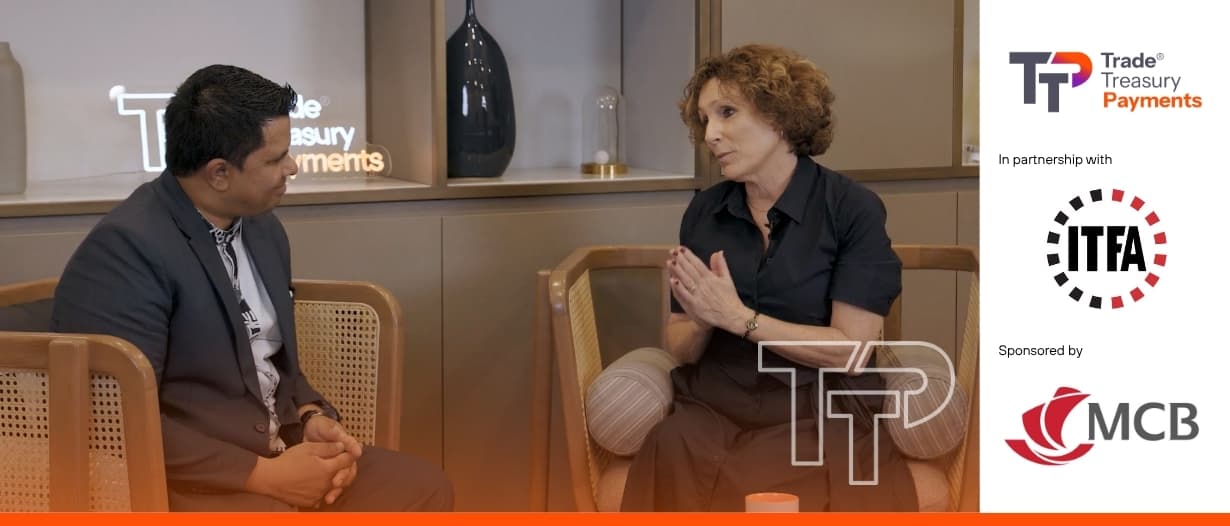
At the ITFA Americas Annual Conference in Miami, Trade Treasury Payments (TTP) spoke with Mo Hasan, Founder and CEO of Intupower, to explore the ethical, institutional, and operational frontiers of artificial intelligence in trade finance.
Hasan, who has spent over two decades training executives at global organisations including the World Bank and Inter-American Development Bank, pointed to a shift in how AI is being discussed at the policy and boardroom level. “Eighteen months ago, conversations were filled with fear and confusion about data, privacy, and the unknown,” he said. “Now, AI is squarely on the agenda. It’s a mainstream topic for banking leaders.”
That growing familiarity, however, hasn’t eliminated misconceptions. According to Hasan, one of the biggest is the belief that AI must be purchased off-the-shelf and adopted as-is. “Institutions often don’t realise that they can build highly tailored AI solutions that reflect their own policies, their institutional knowledge, and their specific use cases,” he said. “You don’t need to settle for a generic tool, you can develop a competitive advantage from your own data.”
The conversation also touched on the ethics of automation. Hasan argued that AI should be viewed as an opportunity to realign business goals. “Are you pursuing a project just because it makes money? Or can AI help you do more, with less impact, better governance, and more benefit to people and the planet?”
Hasan’s new book, The Last Human Generation, expands on this philosophy. Framed as a guide to surviving (and thriving) in the AI revolution, the book lays out a practical methodology for engaging with AI tools, particularly large language models. “We are the last generation of humans that will operate alone,” Hasan said. “AI is not here to replace us, it’s here to join us.”
As the trade finance sector continues to digitise, we have a chance to shape the tools that we will need to learn to work alongside.
Key Topics
- The growing role of artificial intelligence in global finance and trade
- How institutions are rethinking policies and internal processes
- Building tailored AI solutions as a source of competitive advantage
- Balancing automation with workforce and ethical considerations
- Using AI to support sustainable and purpose driven business
Expert Analysis
Mo Hasan, Founder and CEO of IntoPower, describes artificial intelligence as a turning point rather than a simple upgrade in technology. In his view, most institutions are not yet managing or balancing AI adoption. They are still at the stage of asking fundamental questions and reassessing how they operate. He points out that automation has always played a role in business, helping organisations improve efficiency, reduce costs and grow. AI is a continuation of that journey, but with far greater potential. The responsibility now sits with business leaders to apply it thoughtfully and make decisions that benefit not only their organisations but also society more broadly. One of the most important challenges he highlights is the belief that organisations must rely on standardised tools. He argues that this way of thinking limits progress. Instead, institutions should draw on their own knowledge and experience to build solutions that reflect how they actually work. Hasan also notes a clear shift in attitude over the past year. Conversations that were once dominated by uncertainty and concern have become more open and forward looking. As AI becomes easier to implement, the barrier to entry is lowering. Those who act early and with clarity are likely to benefit most. Ultimately, he sees AI not as a threat, but as a way to bring together economic progress, human values and environmental responsibility.— Mo Hasan
Key Findings
- Most organisations are still in the early stages of AI adoption
- Misunderstanding and uncertainty continue to hold back progress
- Advances in technology have made AI easier and faster to implement
- Institutional knowledge remains an underused asset in building effective solutions
- AI has the potential to reshape how success is defined, moving beyond profit alone
Implications
- Wider adoption of AI is likely to reshape operations across banking and trade finance
- Institutions will need to revisit governance, risk and policy frameworks
- Bespoke AI solutions will become a key source of competitive strength
- Leadership will play a central role in ensuring responsible use of technology
- The impact of AI will extend beyond efficiency into social and environmental outcomes