
About This Video
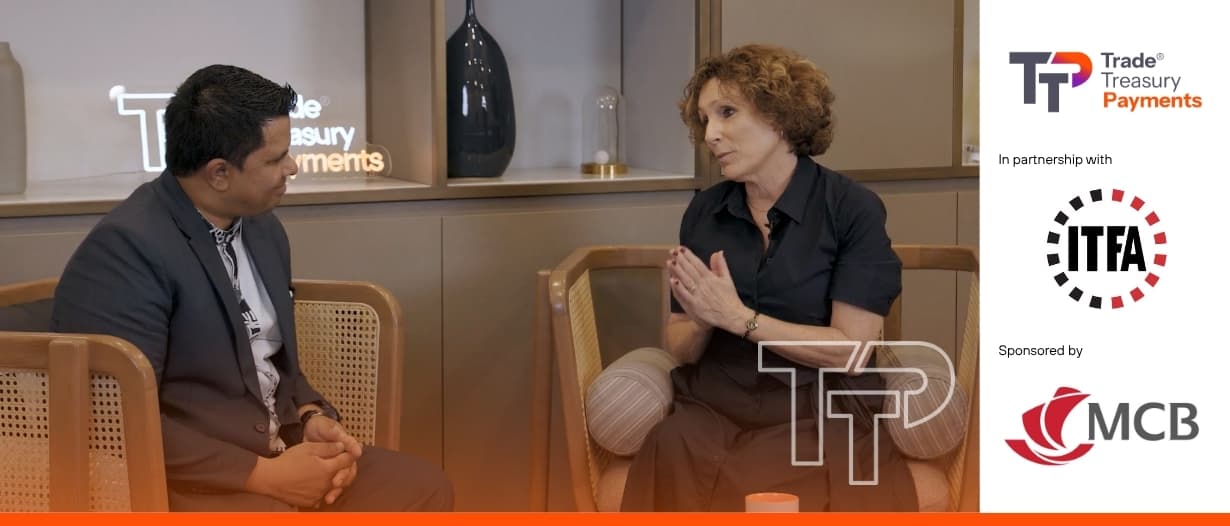
At the ITFA Americas Annual Conference in Miami, Trade Treasury Payments (TTP) spoke with David Cooperman, Head of Business Development for the Americas and Global Head of Partnerships at Complidata, to discuss how technology is reshaping compliance and sanctions processes, and where the biggest risks still lie.
Cooperman said, “If you go back fifteen or twenty years, sanctions and compliance checks were largely manual. People were highlighting names on paper, feeding those into screening engines, and working from experience and intuition. It was difficult to scale, and difficult to replicate.”
Today, the expectations are much higher. Regulators demand more scrutiny, faster decision-making, and a consistent application of rules across institutions. In that context, automation has become indispensable, but not as a replacement for people.
Cooperman said, “What technology enables is better risk decisions. Not necessarily by removing people from the process, but by allowing experienced staff to focus on complex cases and helping newer staff learn faster. The system can guide them to the right questions, what to flag, where to dig, why something matters.”
One of the most overlooked compliance risks, he argued, is human inconsistency.
“People get tired. They get sick, go on holiday, have a bad day. A computer, when built correctly, doesn’t have those fluctuations. It’s consistent. It’s repeatable. That’s why it can be such a powerful complement to a human-led process.”
From a policy perspective, sanctions and financial crime are under renewed scrutiny as geopolitical risks rise. At the conference, one issue in particular dominated the agenda.
Cooperman said, “Tariffs came up in every single conversation. If we’d had this conference last year, I doubt the word would’ve been mentioned once. That just shows how quickly the world is changing.”
Key Topics
- The changing nature of trade finance compliance
- How technology supports sanctions and compliance processes
- The shift from manual work to automation in banking operations
- Approaches to managing financial crime risk
- The growing influence of tariffs and geopolitics on trade
David Cooperman, who leads business development for the Americas at CompliData, describes how trade finance compliance has evolved into a far more complex and demanding discipline. In the past, much of the work relied on manual processes, from reviewing paperwork to entering data into screening systems. This approach was time consuming and difficult to scale. Today, banks are making greater use of technology to support sanctions screening and compliance checks. These systems can take on much of the routine work, allowing experienced professionals to concentrate on more complex transactions where judgement is required. They also provide a useful framework for training newer staff, helping them understand what risks to look for and how to assess them. A key challenge, however, is finding the right balance. If systems are too sensitive, they generate large numbers of false positives, which require time and effort to resolve and can delay transactions. More refined approaches can reduce this burden while maintaining the same level of risk control. Cooperman also points to the human element as a persistent weakness. People can be affected by workload, stress or inconsistency, whereas well designed systems offer more reliable and repeatable outcomes. At the same time, wider geopolitical developments, particularly the growing focus on tariffs, are becoming an increasingly important part of the conversation around trade finance.— David Cooperman
Key Findings
- Trade finance compliance has moved away from heavily manual processes
- Increasing regulation is driving greater complexity across operations
- Automation helps improve both efficiency and quality of decision making
- Human factors can introduce inconsistency and risk
- More advanced systems can reduce delays and support better outcomes
Implications
- Greater use of automation will continue to reshape compliance functions
- Banks will need to strike the right balance between human judgement and system driven processes
- Faster and more efficient reviews can improve the overall client experience
- Technology will play a growing role in training and supporting new talent
- Geopolitical developments will have a stronger influence on trade and compliance decisions