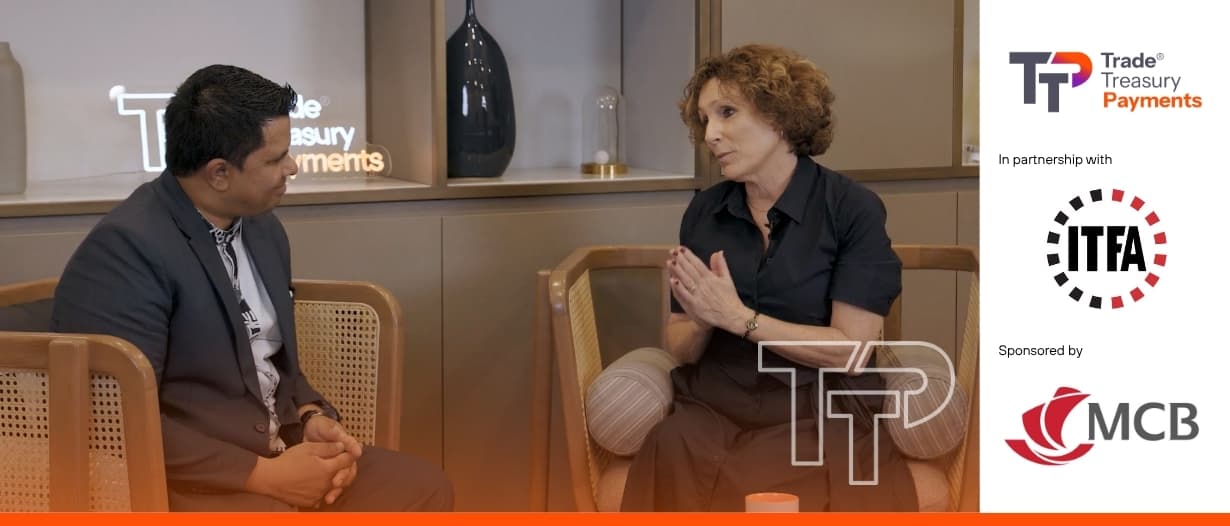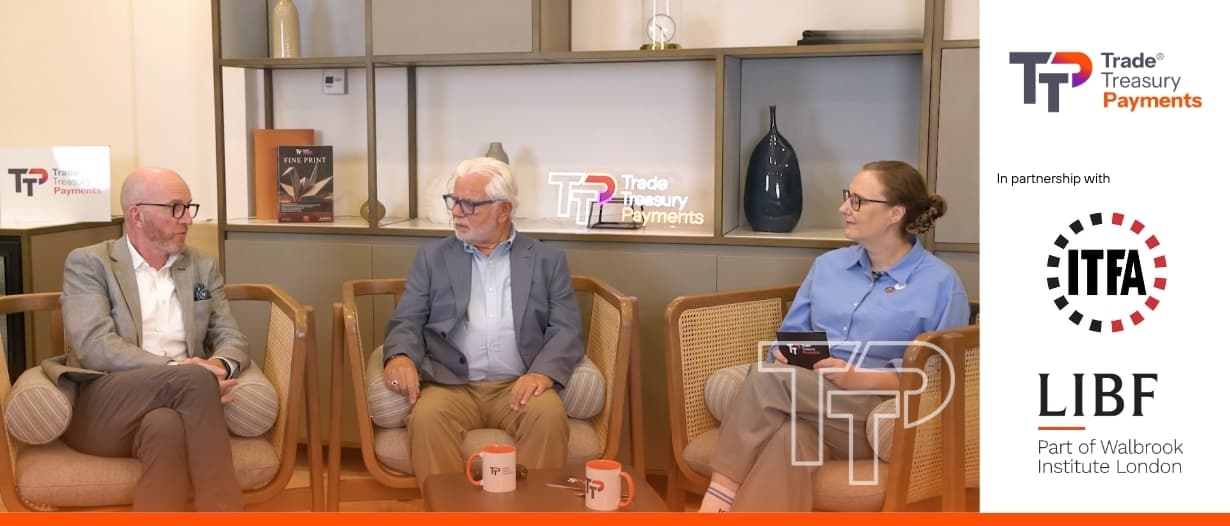

In conversation with Odile Renaud-Basso
Expanding into Sub-Saharan Africa: Trade as a growth catalyst
Deepesh Patel (DP): Madam President, thank you for joining us at Trade Treasury Payments. It’s been just a few weeks since the EBRD’s annual meeting in London. Let’s begin with a landmark development: the ratification of Article 1, which enables the Bank to operate in Sub-Saharan Africa. What strategic role do you see for trade and trade finance as the EBRD enters this region, and how might that approach differ from your work in existing EBRD economies?
Odile Renaud-Basso (ORB): Thank you very much for having me. The ratification of Article 1 is a significant milestone, and we’re excited to begin operations in Sub-Saharan Africa. We’re starting with Côte d’Ivoire and Nigeria, with Senegal, Kenya, and Ghana expected to follow.
Trade is a major challenge but also a key opportunity for the region. The African Continental Free Trade Area (AfCFTA), for instance, aims to increase intra-African trade from 15% to 25% by 2040. To achieve this, regional trade must become a driver of growth, and trade finance will be a vital enabler.
In many ways, our approach in Sub-Saharan Africa will build on what we’ve done in other regions – supporting SMEs, helping them access export markets, and partnering with local banks to strengthen trade finance capacity. We anticipate that trade finance will be one of the first areas in which we launch projects in the region. Many of our partner banks in other markets, such as Morocco, are already active in Sub-Saharan Africa, so we’re well-positioned to scale up quickly and meaningfully.
From crisis response to long-term resilience
DP: Let’s turn to the Trade Facilitation Programme (TFP), which is often described as a “day one” response tool in moments of crisis. Given the growing pressures on global trade – be it conflict, sanctions, or supply chain shocks – do you see the TFP evolving into a broader instrument for long-term resilience and reconstruction?
ORB: Absolutely. Trade finance is often one of the few tools that can be deployed quickly and effectively in crisis settings. Long-term infrastructure or private sector projects can be difficult to launch under such conditions, but trade finance remains viable – sometimes it’s the only thing you can do.
For example, in the West Bank, we’ve ramped up trade finance with local banks to support SMEs through a very difficult period. In Ukraine, since the start of the war, we’ve facilitated €1.6 billion in trade through the TFP. These are short-term instruments, but they address immediate needs, helping economies absorb shocks and maintain critical flows of goods.
Over time, trade finance can also build long-term resilience. It strengthens the capacity of local banks, supports the private sector, and ensures continuity in supply chains. So while the TFP is indeed an emergency response tool, it’s also a foundational mechanism for economic recovery and development.
Strengthening connectivity across regions
DP: Let’s move from stabilisation to transformation. With global trade routes being redrawn and regional supply chains gaining prominence, what role does the EBRD see for itself in shaping new trade corridors – particularly between Europe, Africa, Central Asia, and the Southern Mediterranean?
ORB: This is a top priority for us. Geopolitical disruptions have highlighted the need to diversify trade routes and develop new infrastructure to support them. For instance, we’ve done a detailed study on the Central Asia-Europe corridor, which became especially urgent in light of the war in Ukraine. There’s a clear need for alternative routes to keep trade flowing.
We support these corridors through investment in infrastructure – railways, ports, roads – and through policy engagement on issues like customs digitalisation and trade facilitation. Our role spans both the financing and reform dimensions, ensuring that physical and regulatory connectivity improve together.
We see a similar opportunity in linking the Southern Mediterranean with Europe and, increasingly, Sub-Saharan Africa. Many North African ports are already key nodes, and improving their connectivity to Europe (and eventually further south) will be essential for regional integration and growth.
Advice for future leaders in finance
DP: Finally, as the first woman to lead a multilateral development bank, what advice would you offer to women entering the fields of finance, banking, trade, and development?
ORB: My advice is simple: trust yourself. This is a field where women can thrive and lead. You can build a meaningful and fulfilling career in finance, trade, or development – just as in any other sector.
What matters is confidence and conviction. If you enjoy the issues you’re working on, and you’re committed to your goals, you’ll find your path. Big organisations need diverse perspectives, and women have a lot to contribute.
DP: Madam President, thank you again for your insights. It’s been a pleasure speaking with you, and we look forward to seeing you at next year’s meeting in Riga.
ORB: Thank you very much. See you in Riga.
Key Topics
- Trade finance as a crisis-response and resilience tool
- Expansion of multilateral development banking into Sub-Saharan Africa
- Regional trade integration and AfCFTA implementation
- Trade corridors and supply chain reconfiguration
- Development finance support for SMEs and local banking systems
- Infrastructure, policy reform, and trade facilitation alignment
Expert Analysis
Renaud-Basso frames trade finance as one of the most effective tools available to multilateral development banks in times of crisis, highlighting how short tenor instruments have supported economic continuity in Ukraine and the West Bank when longer term investment was constrained. She also signals a strategic shift in the EBRD’s mandate as it expands into Sub Saharan Africa, where trade finance capacity local bank partnerships and SME access are central to unlocking regional integration under AfCFTA. Her comments underline that successful trade corridors require coordinated progress across finance infrastructure and regulation positioning MDBs as system builders rather than simply providers of capital.— Odile Renaud-Basso
Key Findings
- Trade finance remains one of the few instruments that can be deployed immediately in crisis environments.
- The EBRD sees trade finance as a first-entry tool for its expansion into Sub-Saharan Africa.
- Regional trade integration under AfCFTA is central to Africa’s growth potential.
- The Trade Facilitation Programme has evolved from emergency response to a foundation for long-term resilience.
- New trade corridors require simultaneous investment in infrastructure and regulatory reform.
Implications
- Trade finance will continue to serve as a frontline stabilisation mechanism in conflict and fragile markets.
- MDB expansion into Africa will prioritise banking sector capacity and SME access over large-scale projects in early phases.
- Regional trade agreements like AfCFTA increase demand for scalable, bank-led trade finance solutions.
- Trade corridors are becoming strategic assets, not just logistical routes, requiring coordinated finance and policy support.
- MDBs are increasingly positioned as long-term system builders rather than short-term crisis financiers.