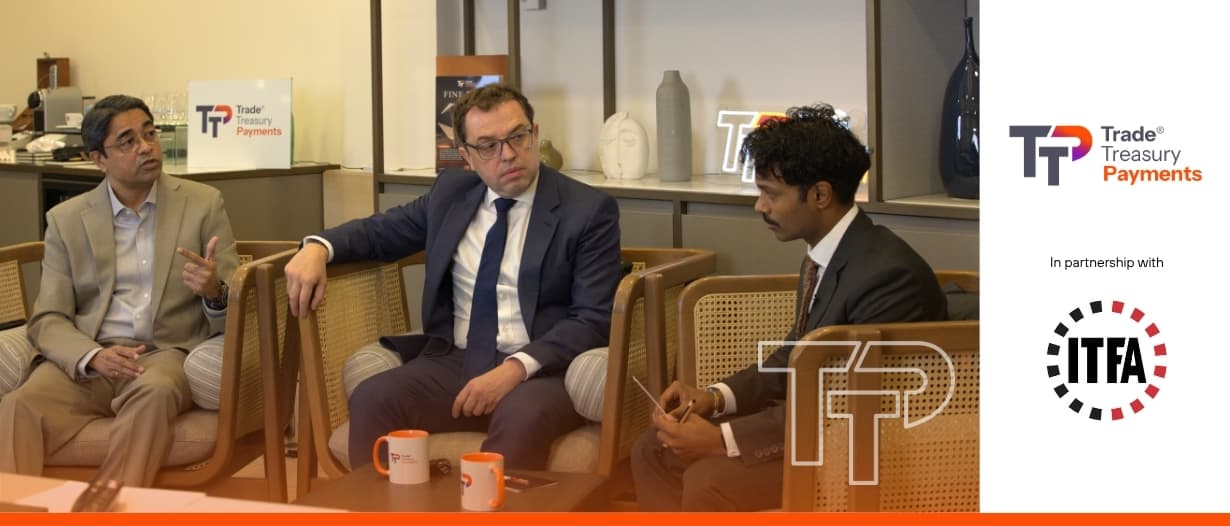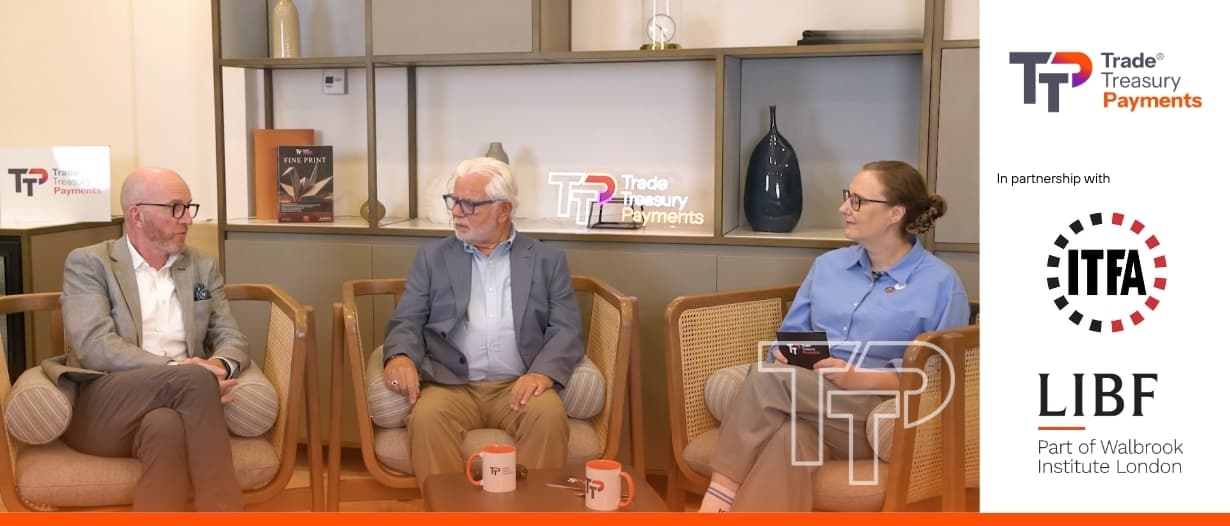

Kais Zuhaika of Quds Bank on how EBRD partnership is expanding trade finance access, strengthening correspondent banking links and supporting SME growth in Palestine.
At The European Bank for Reconstruction and Development’s (EBRD) Trade Facilitation Program’s (TFP) Trade Finance Forum in Cairo, Trade Treasury Payments (TTP) spoke with Kais Zuhaika, Head of Financial Institutions and Investment at Quds Bank, to discuss how the bank is expanding access to trade finance and liquidity support in Palestine through its partnership with the EBRD.
Quds Bank first engaged with EBRD in 2019 to help strengthen its correspondent banking network. Operating in what global institutions often classify as a higher-risk jurisdiction has historically made it more challenging for Palestinian banks to establish new international relationships. Zuhaika said, “Engaging with EBRD and being onboarded under the trade facilitation programme really held the essence of facilitating. It opened up a lot more relations with our correspondent banks, giving them comfort when we approached them for new business.” That continuity proved particularly important during periods of disruption, from the pandemic to recent geopolitical tensions, where EBRD remained active in supporting the bank.
On the product side, Quds Bank leverages EBRD support to facilitate traditional trade finance instruments, including letters of credit and documentary collections, helping clients import essential goods into Palestine. Liquidity is also a key consideration in the Palestinian banking environment. Zuhaika noted that trade loans have enabled the bank to balance liquidity needs while providing post-shipment finance to SMEs. Further work is underway with EBRD and local regulators to introduce more structured tools such as factoring and reverse factoring, which could expand access to working capital for small businesses.
Looking ahead, the partnership is also supporting longer-term development priorities. Quds Bank has recently participated in EBRD’s Green Economy Financing Facility and Women in Business programmes to direct financing to projects with measurable economic and social impact. “There is a lot of potential in Palestine,” Zuhaika said. “With the right technical support and regulatory frameworks, we can continue to serve businesses that are creating value locally and globally.”
Key Topics
- Trade finance access in Palestine
- Correspondent banking and de-risking
- EBRD Trade Facilitation Programme
- Liquidity management and trade loans
- SME and MSME financing
- Structured finance development (factoring, reverse factoring)
- Green and inclusive finance
Expert Analysis
“Quds Bank’s partnership with the EBRD shows how international support can unlock trade capacity in markets that face structural constraints. Consistent access to risk sharing, liquidity tools and structured programmes enables banks to maintain trade flows even in periods of heightened uncertainty.”— Kais Zuhaika
Key Findings
- EBRD onboarding has enhanced correspondent banking access and strengthened global confidence in Quds Bank.
- Traditional trade finance tools and trade loans remain essential for importing goods and supporting liquidity in Palestine.
- Structured finance products, including factoring and reverse factoring, are being developed to expand working capital solutions for SMEs and MSMEs.
- Green and inclusive finance programmes are supporting long term economic and social impact across Palestine.
Implications
- Development finance institutions can play a critical role in markets where risk perceptions restrict access to global banking networks.
- Liquidity support and post shipment finance are important to strengthening SME resilience in constrained environments.
- Introducing structured finance products can materially improve access to working capital in Palestine.
- Combining trade facilitation with green and inclusive finance strengthens long term development outcomes and supports economic diversification.