
Trade-based money laundering and the role of AI in tackling compliance silos
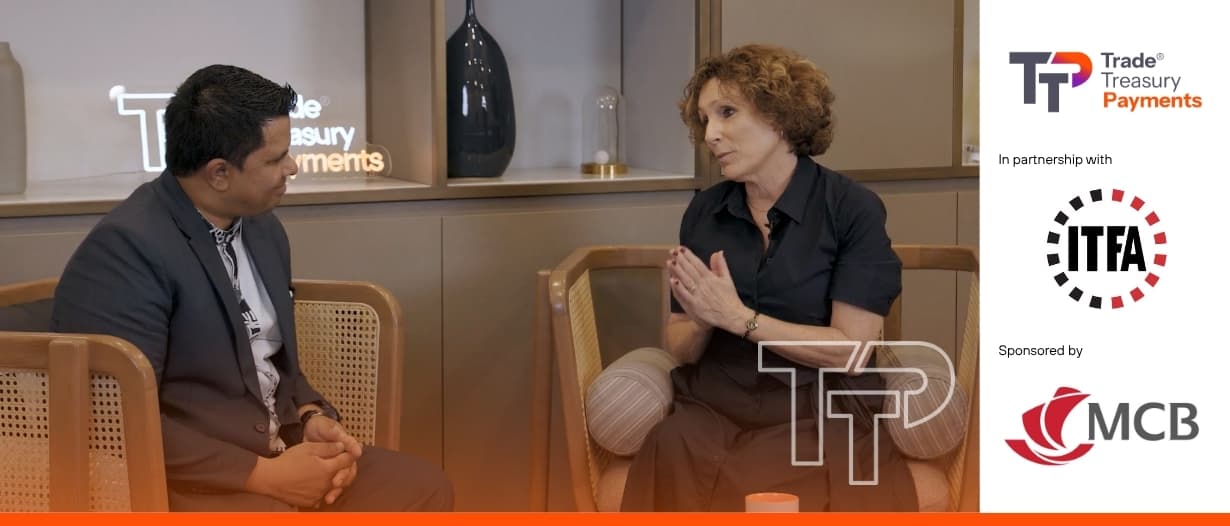
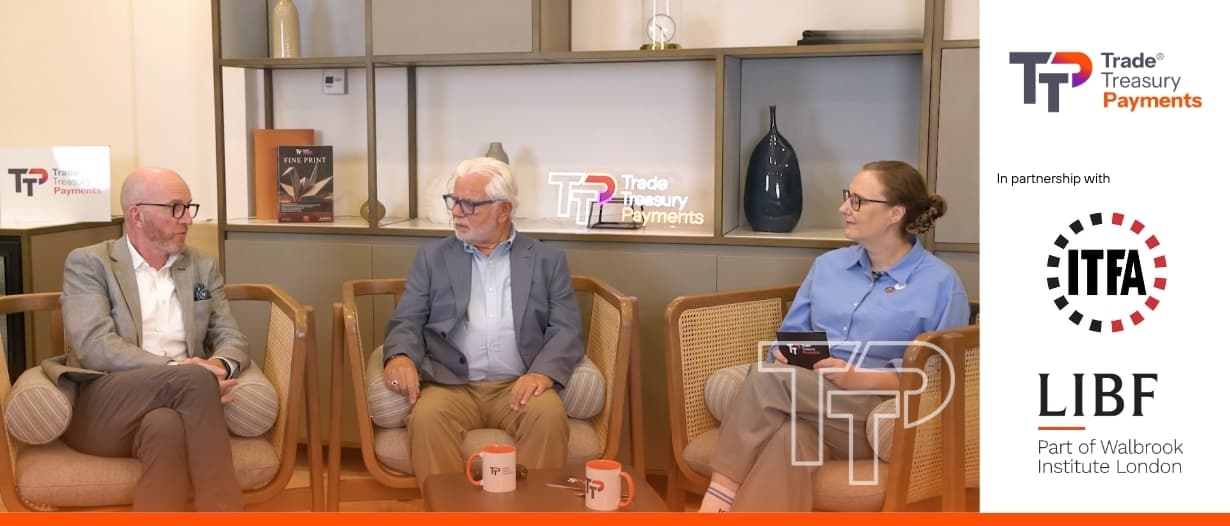
At the BAFT International Trade and Payments Conference in Jersey City, USA, Deepesh Patel, Editor-in-Chief at Trade Treasury Payments (TTP) spoke with Mariya George, CEO and co-founder of Cleareye, about why trade-based money laundering (TBML) continues to be such a persistent challenge for banks and how new technologies may help address longstanding weaknesses in the system.
According to George, one of the core issues is that institutions have not historically treated TBML as an intelligence challenge that requires a more holistic view of trade transactions. George said, “Trade finance does not happen in silos. There are counterparties, there are multiple documents, multiple jurisdictions. So if you treat trade-based money laundering in a silo, the problem is not going to go away.”
Those silos exist between institutions, but also within them. George said, “You have different teams within the banks that are still operating in silos. So compliance team, AML team, operations team, they’re not using one system… those teams don’t talk to each other. And unfortunately, the bad actors know that.”
Why TBML is difficult to detect
Cleareye recently released a report examining the evolving landscape of TBML, and one of the findings that stood out most during the research was the way suspicious activity often appears in relatively small increments rather than in a single obvious transaction. George said, “It’s not one huge issue that’s causing a problem for a bank. It’s a set of things that are small things that banks are overlooking that are happening at a certain scale.”
This means that risk can accumulate gradually across many low-value transactions that individually appear routine. Because they do not trigger traditional red flags, such patterns can be difficult to detect using legacy monitoring approaches.
Shifting trade routes and new economic partnerships may also introduce fresh compliance challenges. As countries forge new agreements and supply chains evolve, banks must quickly adapt their controls to new jurisdictions and regulatory frameworks. George said, “When new jurisdictions come in, silos happen more because regulations are changing. People are trying to figure out the EU-India deal… institutions are not yet ready to figure out how to apply their current regulations to something like this.”
For globally active banks, the difficulty lies in the variation between regulatory regimes. Even when institutions deploy a single technological solution, the underlying compliance requirements may differ significantly from one jurisdiction to another. George said, “What works in the US or in the UK is very different from what needs to be done from a regulatory point of view, even for the same global bank in some APAC countries.”
How AI is changing trade compliance
Another long-standing issue is the sheer volume of unstructured data within trade finance. George explained that advances in large language models (LLMs) are beginning to help with this by allowing systems to both extract information and, more importantly, to understand the context and intent within trade documentation.
George said, “You look at an LC. You have the 45, 46 sections in an LC, which has the terms and conditions. This is human-type text… Now with LLMs, with intelligence coming in, we can understand the intent of the sentence written in the LC.”
That deeper level of understanding enables institutions to assess risk more accurately and identify potential issues that might previously have gone unnoticed.
The growing role of artificial intelligence in trade finance has been a major theme across the industry, and George believes AI should be viewed primarily as an enabling technology rather than a threat.
George explains, “When you talk about AI in the context of trade finance, think of it like there are three buckets.”
The first layer, she explained, is intelligent process automation, which helps streamline routine tasks such as document checking. The second layer is large language models that can help interpret and reason through complex text. The third emerging layer is agentic AI, which can take action and execute tasks based on those insights.
George said, “LLM is your brain… it helps you think, makes your decisions. Agentic AI is your hands and limbs… It’s executing things for you.”
Together, these technologies have the potential to significantly improve how banks manage trade compliance and identify suspicious activity. However, the benefits will only be realised if institutions break down the internal silos that have historically separated these functions.
Key Topics
- Trade based money laundering in global banking
- Internal data silos across banking functions
- Challenges of unstructured trade documentation
- The role of artificial intelligence in trade finance
- Regulatory complexity across international trade corridors
Expert Analysis
Mariya George, Chief Executive and co founder of ClearEye, explains that trade based money laundering remains difficult for banks to manage because the issue is often treated as an operational challenge rather than a problem of intelligence and data visibility. Trade finance transactions rarely occur in isolation. They involve multiple counterparties, several documents and frequently span a number of jurisdictions. Yet within many banks, compliance, AML and operational teams continue to work through separate systems. This fragmentation limits oversight and creates gaps that can be exploited. George notes that TBML rarely appears as a single large event. More commonly it develops through patterns of smaller transactions taking place repeatedly over time. Because each individual transaction may appear relatively low risk, warning signs can easily be missed. Another challenge lies in the nature of trade documentation. Letters of credit and other trade instruments contain detailed narrative clauses that historically have been difficult for systems to analyse effectively. This has created blind spots within compliance monitoring. Recent advances in artificial intelligence are beginning to address these limitations. Technologies such as large language models are capable of interpreting complex trade documentation and identifying potential risks more accurately. When combined with automation and improved data integration, these tools have the potential to strengthen both operational efficiency and financial crime detection. George emphasises that technology alone will not solve the problem. Greater collaboration between operational teams and compliance functions will also be essential if banks are to improve their ability to detect and prevent trade based money laundering.— Mariya George
Key Findings
- Many banks still approach TBML primarily as an operational issue rather than an intelligence challenge
- Internal data silos continue to limit visibility across trade finance processes
- Smaller transactions carried out at scale can conceal financial crime risks
- Advances in artificial intelligence now allow deeper analysis of trade documentation
- Combining technology with stronger internal coordination can significantly improve TBML detection
Implications
- Banks need stronger integration between compliance, AML and operational systems
- Monitoring approaches must focus on patterns across many smaller transactions
- Greater capability is required to interpret complex trade documentation
- Artificial intelligence is likely to play an increasingly important role in compliance processes
- Institutions will need to adapt their frameworks as trade routes and international agreements evolve