







Tod Burwell on the future of correspondent banking and unlocking the full potential of ISO 20022
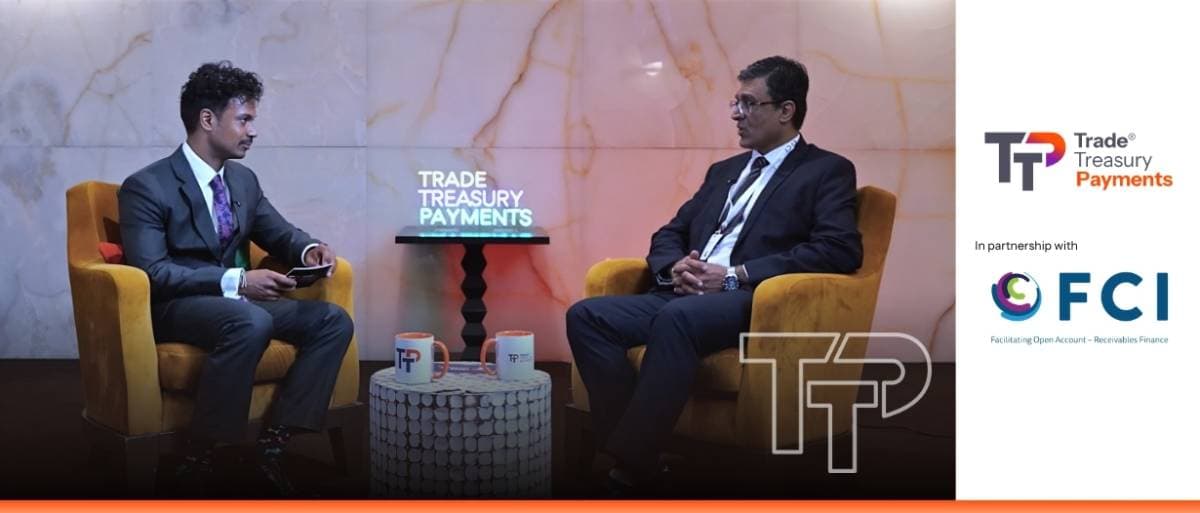
Trade Treasury Payments (TTP)’s Joy Macknight spoke with Tod Burwell, President and CEO of BAFT (Bankers Association for Finance and Trade) at Sibos 2025. Hw talked about the continued relevance and importance of correspondent banking as a trusted method for moving value globally .
While newer, faster, and more innovative payment methods are becoming increasingly popular for small transactions, traditional correspondent banking remains essential for safe, reliable cross-border payments.
Burwell also talked about ongoing challenges, including the adoption of ISO 20022 standards. He stated that although migration rates were around 80% last year, current figures have settled closer to 70-75%, shifting the focus from achieving migration to optimising its use.
The main question now is how businesses can effectively use ISO 20022. They need to decide whether to improve their products, manage risks better, or adjust them to fit their specific business models. Burwell pointed out that the true challenge is to customise ISO implementation for different organisations while maintaining the trusted network that supports global financial transactions.
TTP is proud to be a media partner of Sibos Frankfurt 2025.
Key Topics
- Correspondent banking remains the most resilient and trusted channel for moving value globally.
- Newer, faster payment methods are beginning to converge with traditional wholesale rails.
- With ISO 20022 migration largely achieved, the focus now shifts to extracting business value from richer data.
Key Insights
Expert Analysis
Tod Burwell underscores that correspondent banking has not been displaced by emerging payment technologies instead, it is evolving alongside them. As global mandates push for greater speed and transparency, the industry is exploring how to integrate modern payment channels with long standing wholesale networks. With ISO 20022 migration now largely complete, institutions face a new strategic question, how to turn richer data into tangible business value. Whether through enhanced compliance, improved risk management or better customer insight, the next phase will depend on how effectively banks align these capabilities with their operational models and communicate the benefits to clients.— Tod Burwell
Key Findings
- Correspondent banking remains relevant due to its resilience and trustworthiness in global value transfer.
- The industry is responding to global expectations for faster, cheaper and more transparent payments.
- ISO 20022 adoption has reached a critical mass, shifting the conversation from migration to optimisation.
- Banks must tailor ISO 20022 opportunities to their own business models and client needs.
Implications
- Banks must determine how ISO 20022 aligns with their specific business priorities, whether in compliance, risk management, operational efficiency or customer analytics.
- Institutions will need to communicate clearly with clients to ensure both sides benefit from enhanced data and improved processes
- The convergence of new payment rails with correspondent networks may reshape how cross‑border value is moved in the coming years.
Key Takeaways
- Correspondent banking remains a cornerstone of global payments due to its resilience and trust.
- The sector is moving towards a blended model that incorporates both traditional rails and modern payment innovations.
- ISO 20022’s true value lies not in migration but in how institutions use the data to strengthen their business.
- Clear communication with clients will be essential as banks refine their ISO‑driven strategies.