






About This Video
🔥#hottopicsofsibos, featuring Eric Li, Global Head of Banking Research at Crisil Coalition Greenwich
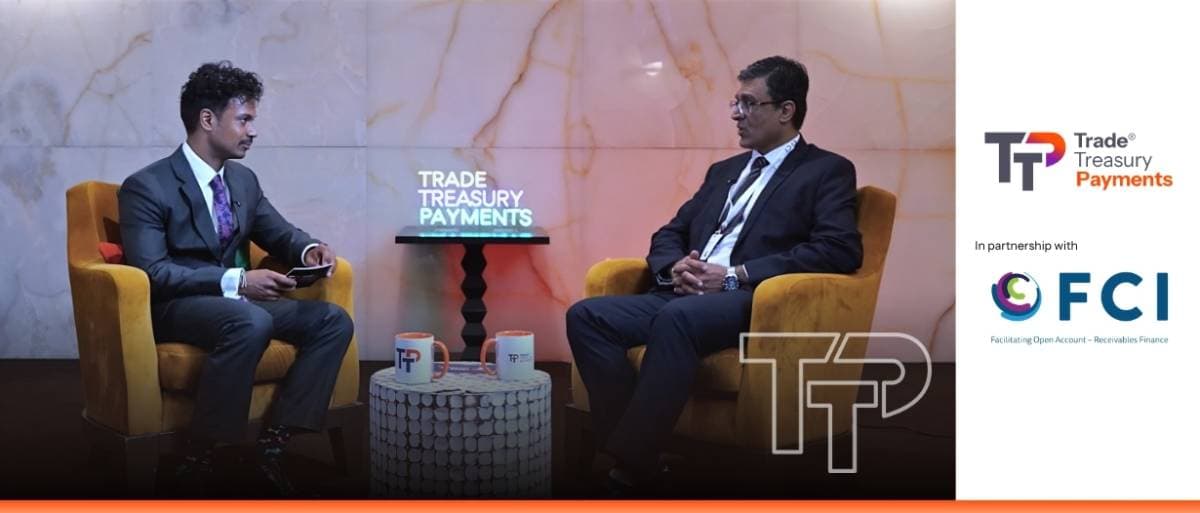
Eric Li, Global Head of Banking Research at Crystal Coalition Greenwich, provided an overview of the prevailing trends in Transaction Banking at Sibos 2025 in conversation with TTP’s Joy Macknight. He pointed out that tariffs are the main issue affecting the industry. Corporates have been front-loading inventories, which has increased their financing needs and led to the development of new trade corridors. Concurrently, many corporates are reducing capital expenditures across various markets due to ongoing uncertainty.
Li noted that at Sibos 2025 in Frankfurt, two dominant narratives surfaced. The first focuses on macroeconomic uncertainties, particularly the impact of tariffs and the role of banks in helping clients navigate these challenges. The second focuses on the new frontier of finance, characterised by the rapid adoption of artificial intelligence as institutions seek to address complex business problems.
Additionally, blockchain and digital assets remain significant topics of discussion, maintaining their relevance as foundational elements of the future of transaction banking.
#Sibos2025
Key Topics
- Corporates are frontloading inventories due to tariff uncertainty, increasing demand for financing
- Cash management volumes remain strong, with financial institution flows rising sharply after April.
- AI, blockchain and digital assets are now central themes at Sibos alongside ongoing macro concerns.
Key Insights
Expert Analysis
Tariffs continue to influence corporate behaviour, driving both financing demand and strategic shifts in supply chains. Cash management remains resilient, supported by strong corporate activity and a notable rise in financial institution flows. Meanwhile, the industry’s focus is expanding beyond short term uncertainty to the technologies that will define its future. AI is emerging as a practical tool rather than a distant concept, and blockchain and digital assets are now firmly embedded in strategic conversations. Together, these forces illustrate a sector navigating volatility while preparing for a more digital and data driven era.— Eric Li
Key Findings
- Corporates are simultaneously building inventory buffers and reducing capital expenditure in other markets.
- New trade corridors are forming as firms diversify supply chains
- Blockchain and digital assets have moved from experimental to mainstream discussion at industry events.
Implications
- Banks must support clients navigating tariff related volatility and shifting supply chains.
- Cash management strategies will need to adapt as fee income becomes more prominent in a lower rate environment.
- Institutions that invest early in AI and digital asset capabilities will be better positioned as these technologies mature.
Key Takeaways
- Tariffs remain a defining factor in corporate financing and supply chain decisions
- Cash management performance is increasingly shaped by fee income and financial institution flows
- AI, blockchain and digital assets are now core components of strategic planning across the industry.