
Tunisia’s trade transformation: Unlocking capital and growth through digitalisation
Tunisia relies upon international trade as a cornerstone of its economic stability. The nation is proactively open to the rest of the world, with a significant portion of its GDP derived from import and export activities. But the modern logistical and administrative challenges of moving goods across borders are putting Tunisia’s commerce and the pace of its economic growth to the test.
At a recent landmark event in Tunisia, co-organised by the European Bank for Reconstruction and Development (EBRD), the ICC Digital Standards Initiative (DSI), and ICC Tunisia, 210 participants from across the nation’s trade ecosystem gathered to chart a path forward for the North African nation.
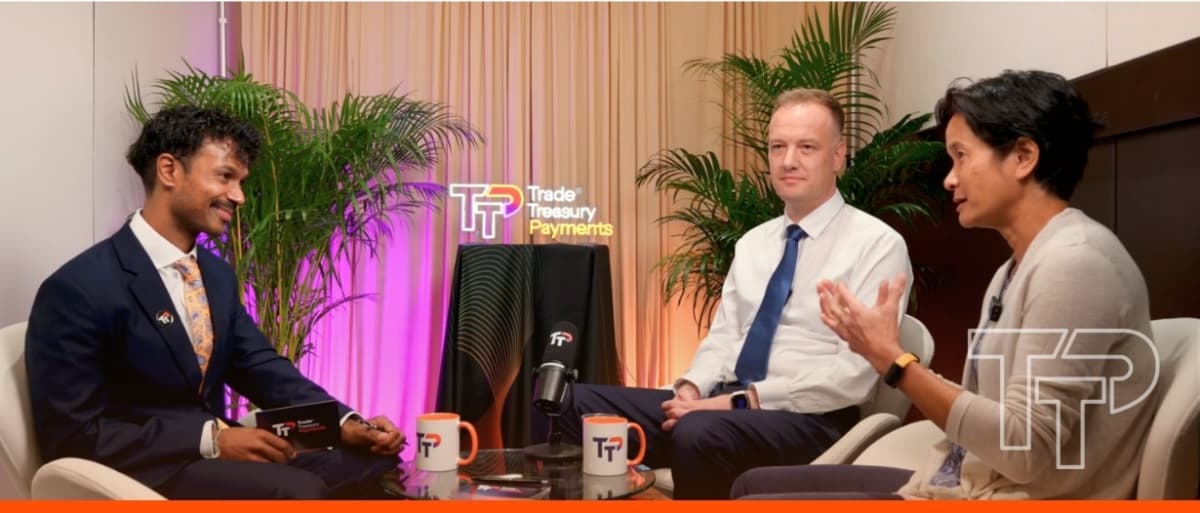
Trade Treasury Payments (TTP) spoke with a number of these experts about the challenges and opportunities faced by Tunisian enterprises in the modern global economic landscape to get a living, ground-level portrait of a nation at a pivotal juncture.
An inevitable shift
For Tunisia, the digitalisation of trade finance, a key recurring theme during the conversations, is becoming a necessity to ensure the country’s economic health and global competitiveness. It is inevitable the world over, notes Sonia Belhaj, Central Director of International Operations at BH Bank and Chair of the Banking Commission at ICC Tunisia, and Tunisia must join this global movement to enjoy the full potential of its import and export activities.
This sentiment was echoed by Lamia Riabi, Head of Trade Finance and Consulting at Attijari Bank, who points to the momentum surrounding initiatives like the Model Law on Electronic Transferable Records (MLETR). With key trade and finance partners like France having already incorporated MLETR into domestic law, the timing is right for Tunisia to join these processes with similar fervour.
But shifting the nation’s economy from its legacy, paper-based workflows to a new digital ecosystem requires more than simply installing new software. As Belhaj describes, the digitalisation of Tunisian trade and trade finance is an extensive, long-term undertaking that will require regulatory shifts alongside technological ones. There are also significant cultural changes needed for a country that has a deep-seated reliance on physical paper trails and manual sign-offs within both corporate habits and public administrations.
The cross-border challenges for SMEs
Mourad Ben Hassine, President and Director General of the Export Promotion Centre (CEPEX), notes that change is taking place at higher levels. This can be seen with the introduction of e-commerce laws, for example, but there is also an urgency to this digital transformation due to the friction that Tunisian businesses, particularly small- and medium-sized enterprises (SMEs), currently experience.
SMEs and micro-enterprises form the backbone of Tunisia’s domestic economy. Currently, there are approximately 6,000 Tunisian exporting companies that need to be supported and guided through the digitalisation process and have their capacities strengthened. Without digitalisation, there are multi-faceted systemic barriers faced by Tunisian SMEs daily when navigating international trade.
For one, these smaller international players face challenges securing trade finance due to rigid risk profiles and heavy documentation requirements, meaning they are frequently locked out of the liquidity they need in order to trade. They also have a severe lack of negotiating power when dealing with larger international counterparts, which drains their limited internal resources.
But the most exhausting friction for Tunisian SMEs occurs at the administrative level. Belhaj describes an obstacle course of disjointed compliance and logistical checkpoints they must navigate to finalise a single import or export. Business owners must tackle different government administrations and regulatory authorities just to gather the paperwork to keep them legally compliant, clearing a dense maze of complex customs procedures, foreign trade formalities, international banking protocols, and more.
Time is money: delays compound costs
The reality of modern global supply chains is that any friction can quickly lead to direct financial loss. As Belhaj reminds us, time is money – and delays represent an existential threat for resource-constrained SMEs. Digitalisation of international trade documentation can massively offset these challenges. Processing current paper-based documentation carries higher courier costs, greater capacity for manual data entry errors, and more risk for physical loss of documentation compared to their digital counterparts.
Digital documentation is also logistically more efficient. Riabi notes that it is not uncommon when trading with European nations for goods to arrive in port ahead of their trade documents, forcing the goods to sit idle and incur costs for days while waiting on the physical paperwork so they can be released.
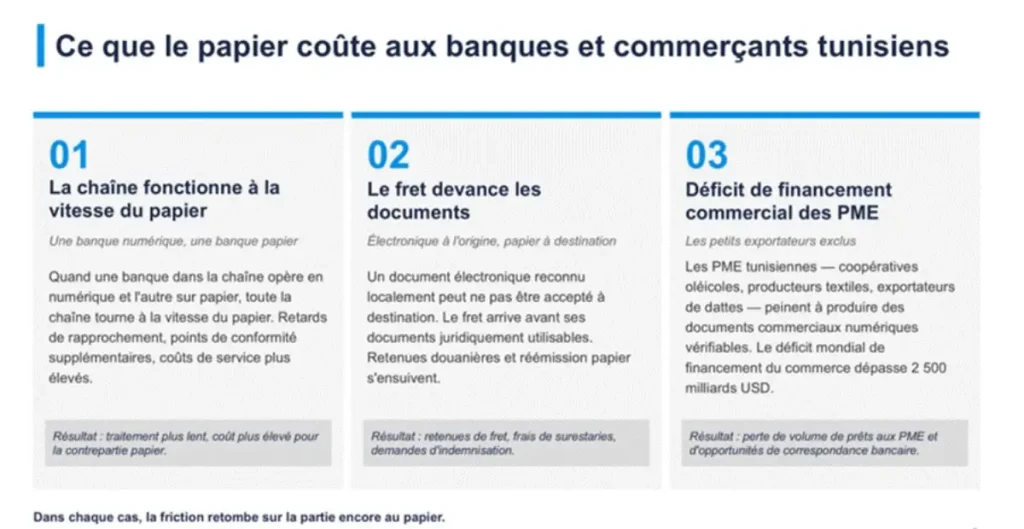
Belhaj also notes a more insidious cost alongside the logistical bottlenecks – the opportunity costs. In a fast-moving global marketplace, if a Tunisian business spends weeks clearing manual administrative hurdles, it potentially misses out on seasonal market windows or simply sees its business picked up by nimbler international competitors who can guarantee faster delivery timelines free of these hurdles.
A legal foundation is the next step
While the country has taken steps and digitised parts of its customs and banking operations, digital trade transactions among its businesses remain well below OECD and Asian averages.
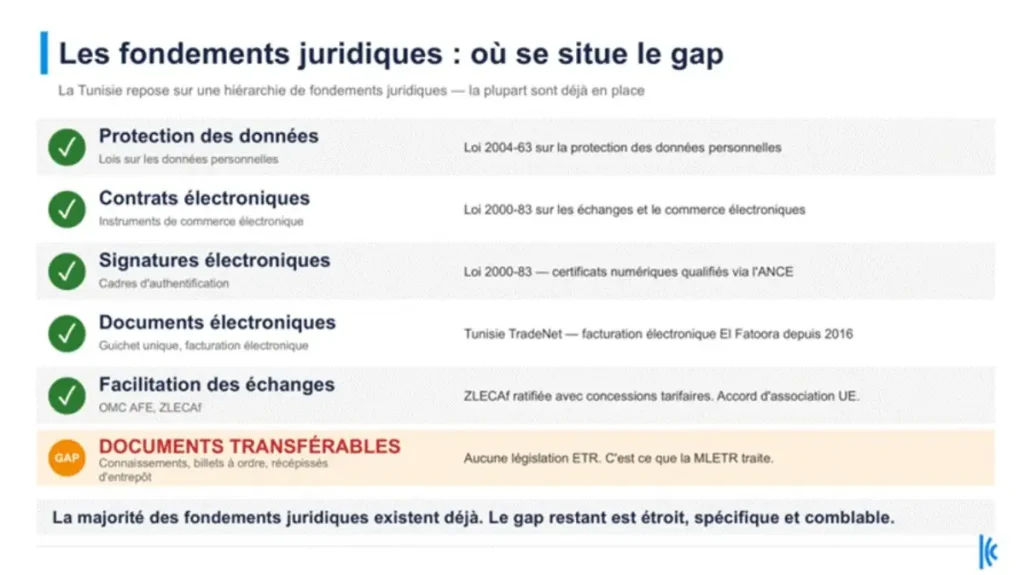
The missing link currently is a comprehensive legal framework that explicitly recognises electronic transferable records, like the electronic bill of lading – the beating heart of documents of international trade, as Riabi puts it. This cornerstone document is a proof of receipt, a contract of carriage, and a document of title. Without clear recognition of its digital equivalent, true end-to-end digitalisation cannot occur, and processes will be fundamentally bound to paper.
Realising Tunisia’s potential
Digitalisation, in an effort to make trade more predictable and accessible for Tunisian businesses, is a top priority for ICC Tunisia, according to Khelil Chaibi, the organisation’s President. The ultimate goal is to allow domestic businesses to compete globally on equal footing, and Chaibi views it as the final element needed to unlock the unique advantages the country enjoys.
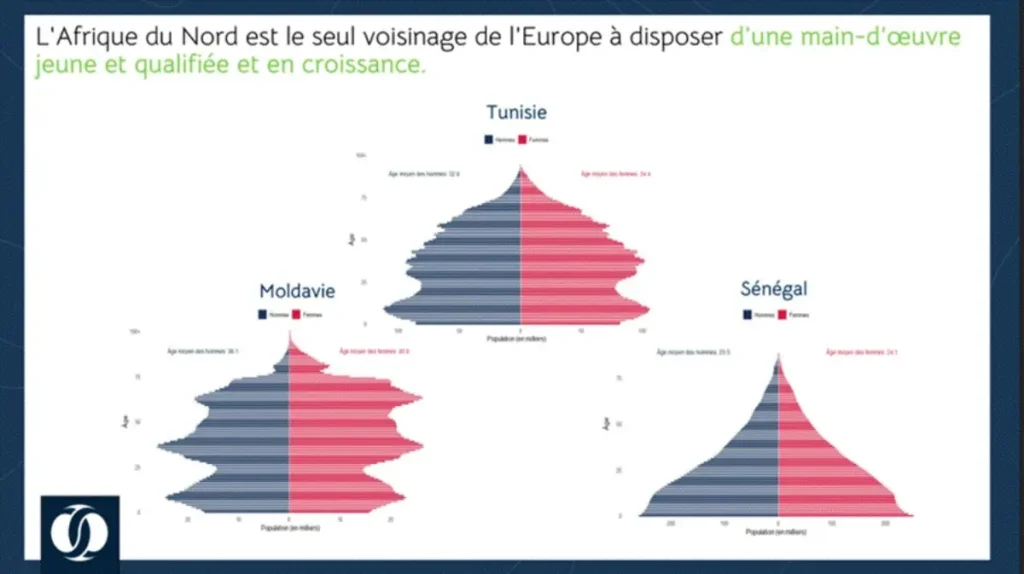
Tunisia has a geographical advantage, sitting at the crossroads of Europe, Africa, and the Mediterranean, but it also has three other key advantages: a solid industrial capacity already integrated into European value chains, a skilled and multilingual workforce, and strong connectivity potential.
There is a clear opportunity, in his eyes, for Tunisia to play a bridging role between Europe and Africa.
There are opportunities waiting to be taken if legacy logistical challenges can be overcome. Digitalisation will be key, and the financial sector is engaged and institutions willing.
The strategy now is to tackle Tunisia’s regulatory and cultural hurdles to transform administrative friction into a competitive catalyst and fully open Tunisian industry to the rest of the business world.