By: James Dorman and Deepesh Patel
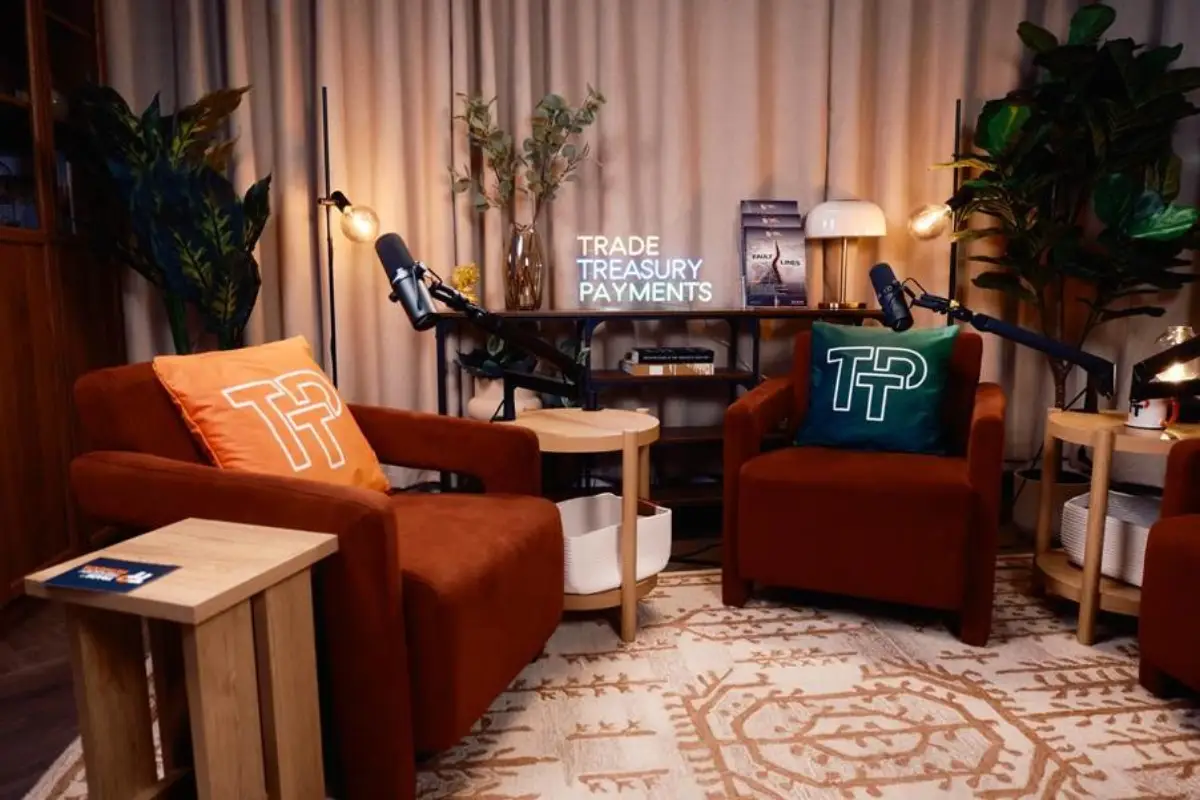
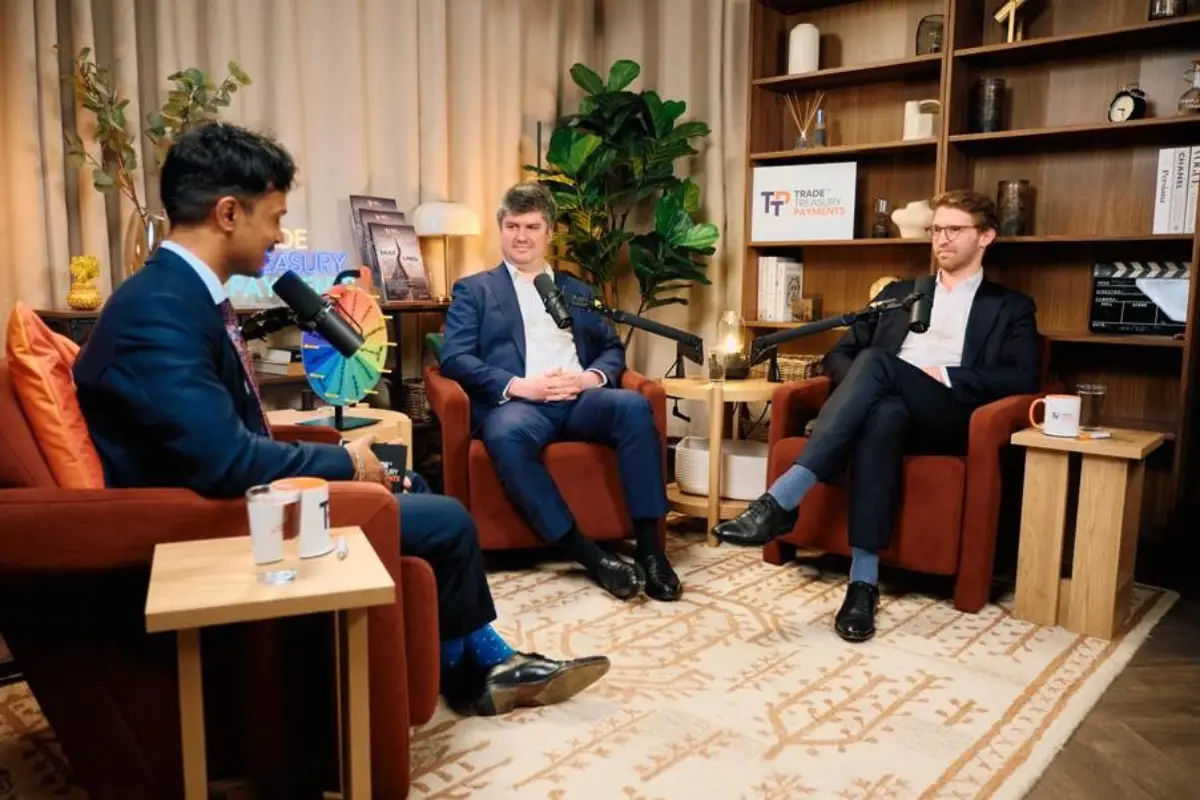
A comfortably-furnished room under the railway arches of Central London with two plush armchairs and a handful of potted plants – about as far from a traditional newsroom as you can get – is a new haven where transaction banking has a voice and those in trade finance can give the real stories. This is the home of TTP Studios.
Real-economy finance is a serious subject deserving of serious media, not coverage that has all-too-often blurred the lines between journalism and promotion. This is a problem we saw with finance media and one that the people doing the actual work – in banking, insurance, multilaterals, policy making – noticed too. So, we built our operation, governance, editorial board, and IPSO regulations to draw that line clearly and hold to it.
We also made TTP Studios for the CFO sat at her desk in Nairobi – awaiting a letter of credit that has been sat at a compliance desk in a correspondent bank for nine days, FX hedge expiring Friday – who has read three articles that week “explaining” what is happening to global trade, achieving only the insight that there is “uncertainty” in an “evolving landscape”. We made it for the corporate treasurer working through what ISO 20022 migration actually means for his cash forecasting once the coexistence window closes; for the policymaker finalising a trade agreement under Basel 3.1 who has the power to move something, but no clear idea what they are moving against.
The work coming out of that cosy room under the railway arches is a concentrated expression of a journalistic approach rooted in integrity, independence, and actionable insights for those in trade, treasury, and payments.
That work went live on 12 March 2026. Three months on, we want to take you behind the scenes and show you what goes into a TTP Studios production.
The room where it happens
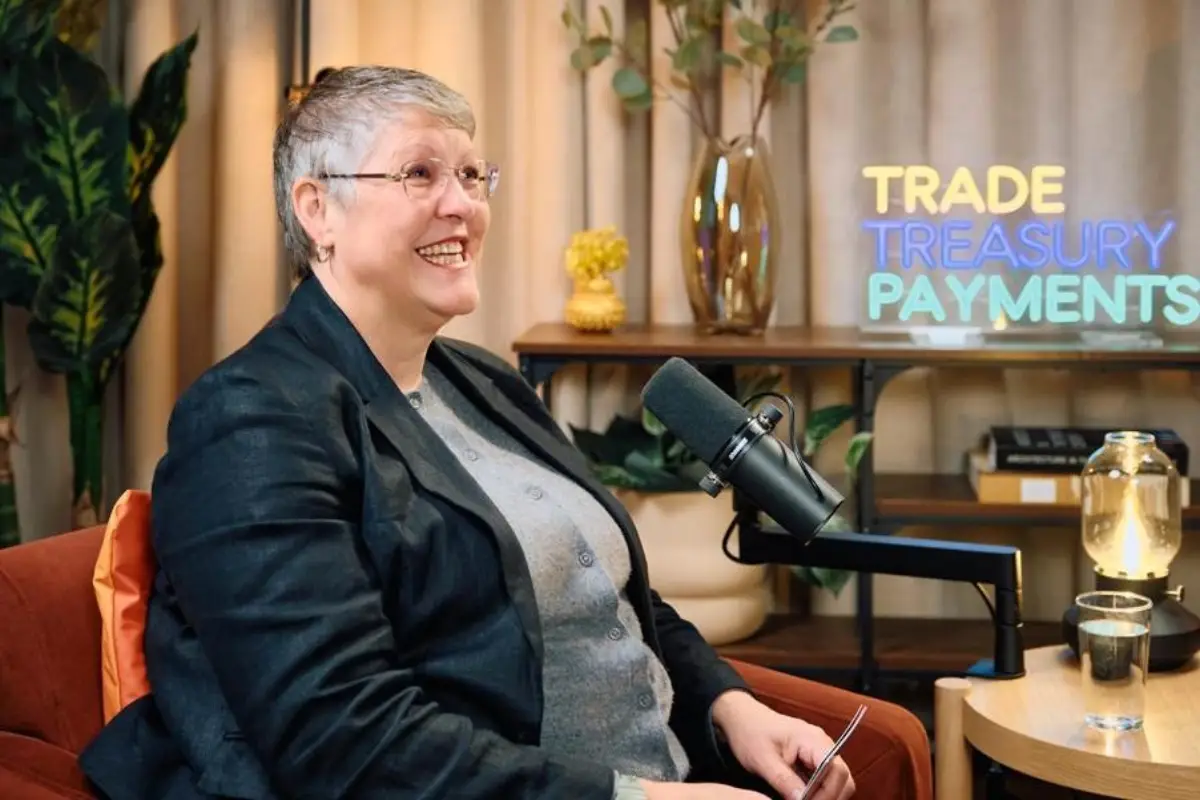
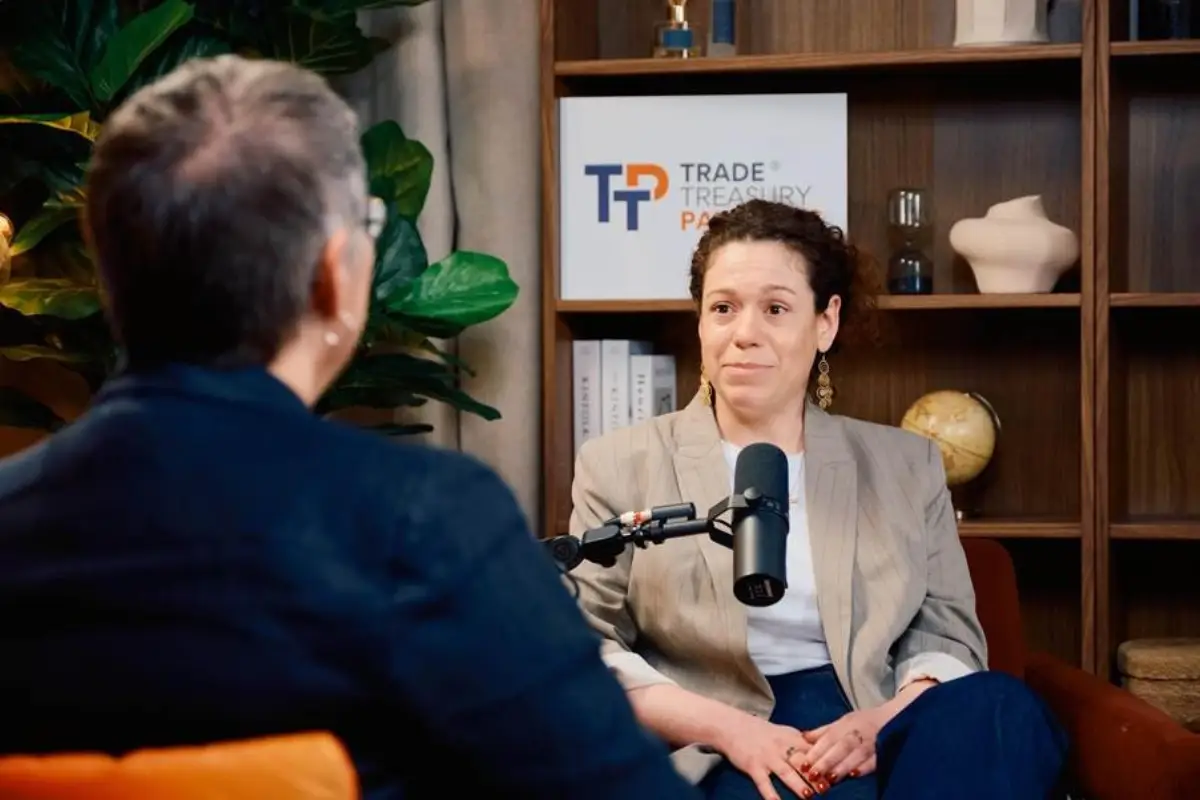
Step into the interview suite, and you’re greeted by something that looks more like a living room than a recording studio. Inviting chairs wait for the interviewer and interviewee, coloured with the signature TTP Persimmon deep orange hue that accents the whole studio (#F16814, for those who are interested). We’ve truly nested here and made the space our home – TTP-themed container ships adorn the bookshelves (our salute to containerism), the globes on display are all turned to the markets we will cover (we’re all about the little details), and the Chinese money tree in the corner brings us luck (we always gratefully accept a bit of good fortune). Oh, and to all potential guests – dogs are always welcome! Just keep them away from the avocados…
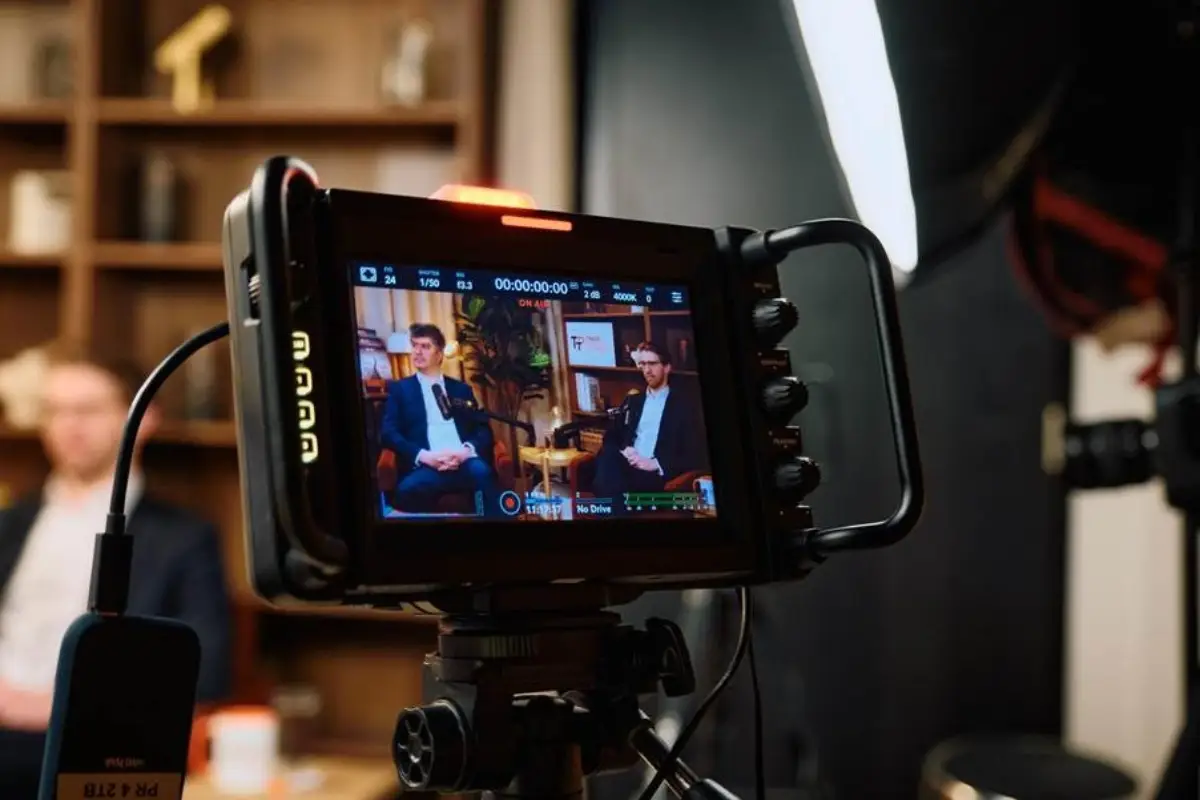
All this is done so that the equipment – the 4k cameras, Shure SM7Bs microphones, and full lighting control that allow a two-person crew to handle a vodcast interview – disappears as soon as our guests get comfortable. There is no feeling of performing, and instead we can just talk in an inviting, finance-focused space. Trite soundbites give way to off the cuff responses and as the discussion flows, maybe an insight or opinion that someone has been thinking for 10 years but never said on the record is offered. We create a space that invites the real conversations that can only happen in rooms like this, not studios.
Making a vodcast
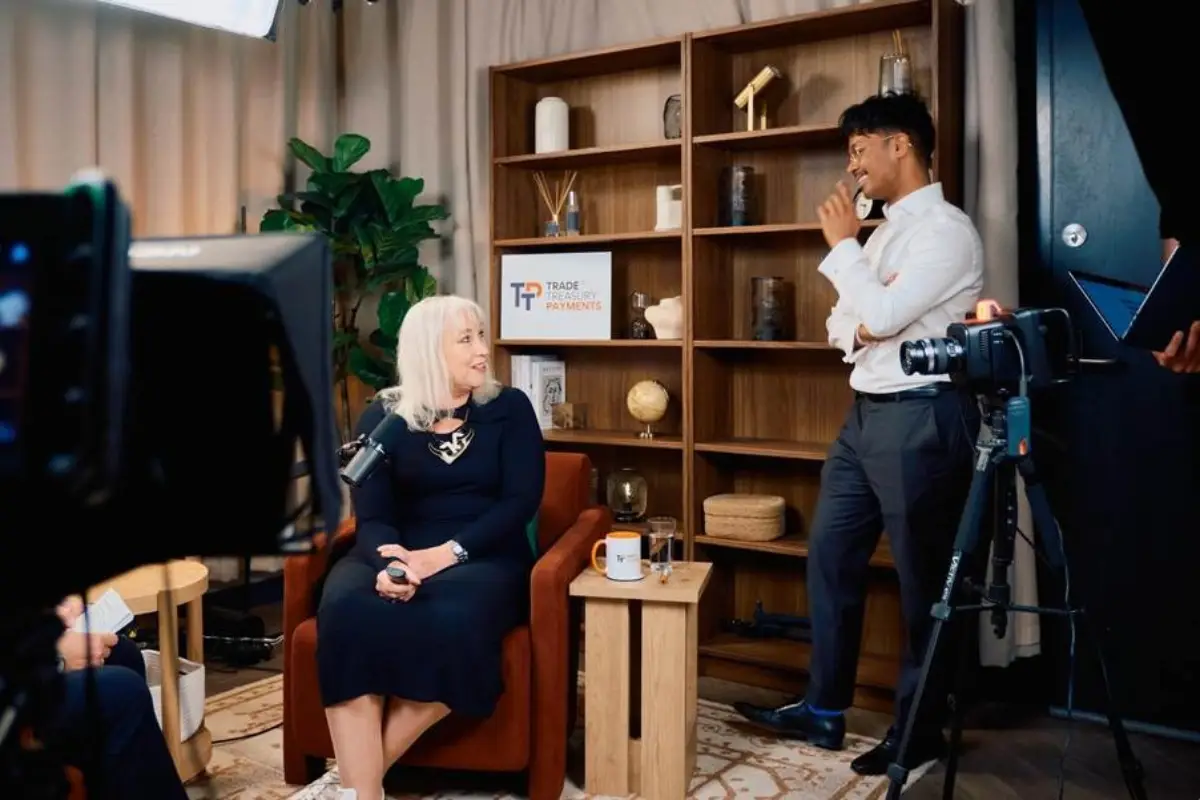
But every one of our interviews starts long before anyone sets foot in this room. Our editors spend hours researching each guest, learning their background, their story, and the strategic positioning of their organisation. Each quarter, we have a broader market story we are trying to tell – we map their profile against this story.
With this legwork done, we hold a pre-call with the guest and our dedicated producer to really nail down and agree exactly what it is we are trying to get on the record with this interview. What we do not agree, however, is to avoid anything. Once we are in that living room-come-studio, we will be having a living, breathing conversation, and we will allow it to take us where it may.
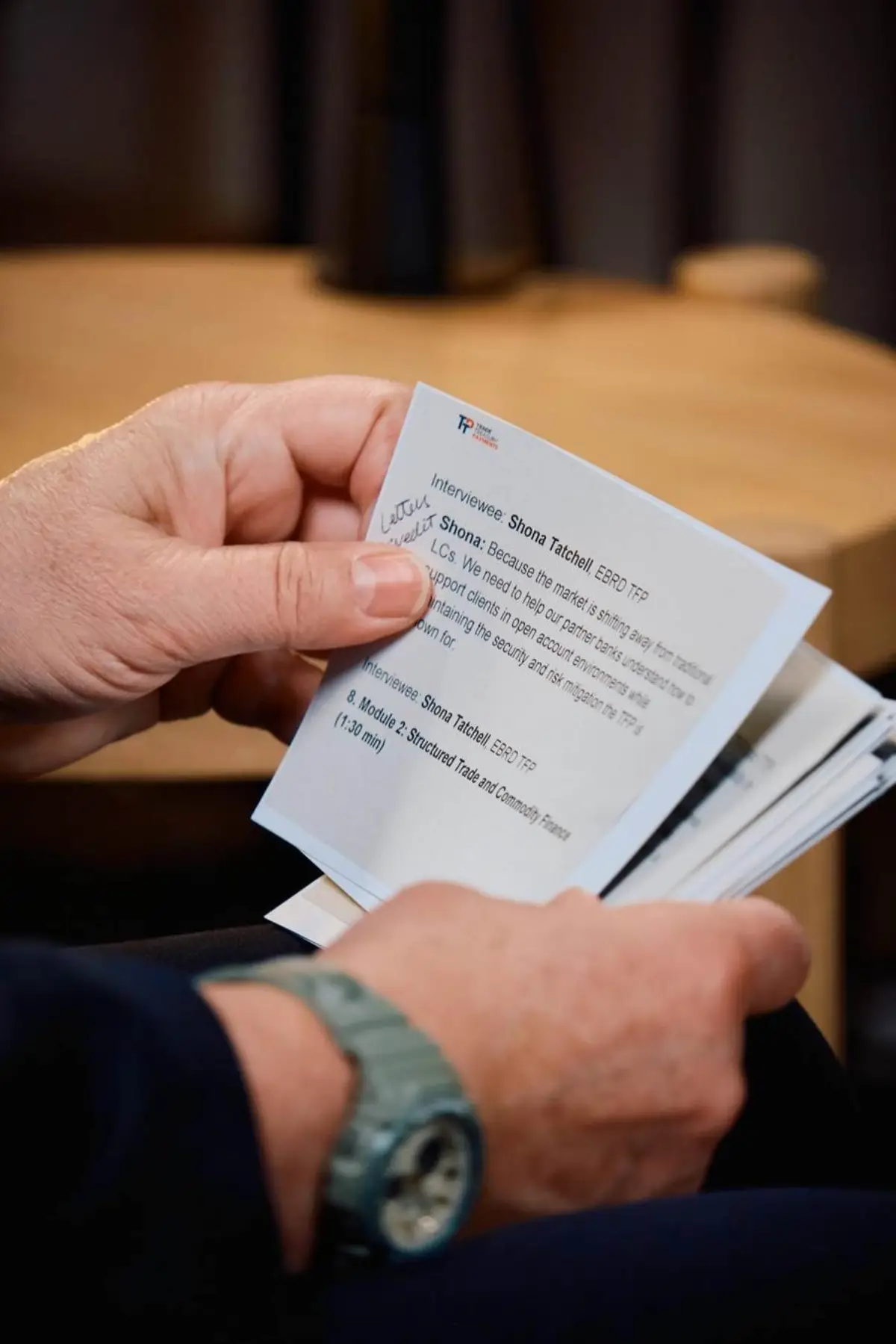
Our vodcasts are hosted by one of the editors at TTP: Deepesh, Eleanor, Joy, or Carter. Between them, they have 42 years of editorial experience and the knowledge to curate a conversation of real value with our expert guests. With the discussion recorded, the raw footage is sent to our dedicated video editor in Manila for a full edit, social cutdowns, audiogram, thumbnail, branded title card, and every other aspect of a 27-part workflow that allows us to get these insightful interviews out to our audience.
A separate TTP editor writes a long-form article to go alongside the 15-minute vodcast, distilling the interview into the key topics, findings, implications, and takeaways for a reader who is interested in the topic, but only has three minutes to spare.
Finally, our marketing team reviews each frame, still, and caption to ensure it’s ready for release. The bar we set ourselves is to only publish material if we would be happy to defend every word on stage in front of the guest and the guest’s regulator.
If that seems like a lot for a podcast pipeline, that’s because that’s not what we see it as; we see TTP Studios as a documentary unit. We’ve built the operation this way because we believe the conversations we are having are worth this level of care and attention.
The conversations
Our debut episode was an in-house collaboration between our editor-in-chief, Deepesh Patel, and treasury editor, Eleanor Hill. The subject was one that dominates virtually every corner of global discourse: AI. No longer a topic for conference panels, it was becoming something corporates were quietly building in-house to interrogate their own bank fees. Stablecoins – until recently a dinner party joke for treasurers – were now in pilot at tier-one corporates for cross-border settlement. It was a fascinating and illuminating discussion that resulted in Eleanor putting forward an argument that has lingered long after that first recording ended: that the people who manage liquidity for the real economy are exhausted, and the system they work inside is built for a world that no longer exists.
And just like that, we were off to the races. Next, Eleanor sat down with Richard Wulff, executive director of ICISA and a member of our own editorial board, to mark a hundred years of trade credit insurance. She also recorded with Neh Thaker of HedgeFlows on the FX blind spots compressing mid-market margins long before they appear in reporting. After that Joy Macknight, our payments and transaction banking editor and the former editor of The Banker, recorded with the IFC’s Makiko Toyoda on a McCormick supply chain finance programme in Vietnam, where the share of women suppliers rose from 9% to 51% in three years.
These early conversations immediately captured exactly what we were striving for with our TTP Studios output. These were not recorded press releases; they were insightful discussions. They were arguments from global experts. We were making the content that needed to be made.
TTP Studios on the road
We can’t always bring our guests to the studio – sometimes we have to bring the studio to them. In April, we took our show on the road to Paris with our partners at the International Chamber of Commerce, recording inside Société Générale’s headquarters during the Banking Commission’s Annual Meeting. This one trip gave us the chance for many fascinating conversations.
Marie-Laure Gastellu, SocGen’s global head of trade services, spoke of the “interoperability Everest” that sustainable trade finance and digital trade still have to climb. Dominique Honoré, global head of global trade and commodities at Crédit Agricole CIB, walked us through where agentic AI is already in production inside her bank. Florian Witt, the new chair of the ICC Banking Commission, quantified the industry’s hidden wiring, noting that UCP 600 alone saves global trade billions of dollars annually. While in Paris, we also recorded an interview with Marilyn Blattner-Hoyle of Swiss Re, Vice Chair of the ICC Banking Commission, on cooperation in a fragmented world.
Then, to Lisbon and the IFC Global Trade Partners Meeting, where Joy sat down with Dorothy Tembo of the International Trade Centre to discuss the missing middle for women-led SMEs, and recorded with Neema Mori of the University of Dar es Salaam on the rise of women-led businesses across Tanzania, Burundi and DR Congo.
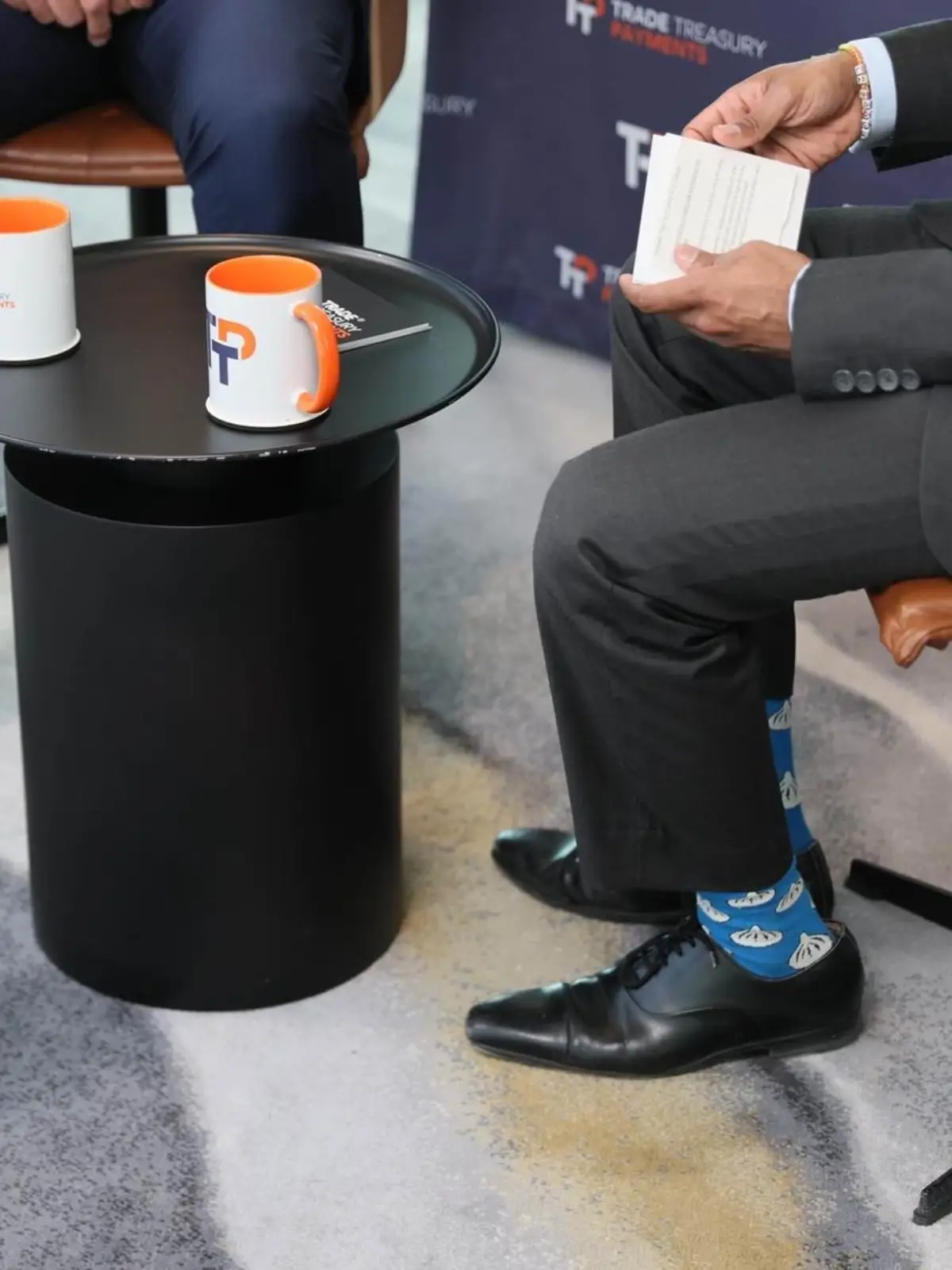
Next was Tbilisi for the ICC Georgia Conference, a five-way session with EBRD, the ICC Digital Standards Initiative, Bank of Georgia, Enterprise Georgia and ICC Georgia. The bridge between Asia and Europe is being built in real time as the older routes lose viability; Georgia’s 2026 factoring law, expected to host transactions equivalent to 3% to 5% of GDP over the next decade, is the kind of structural reform story the wider trade press has barely registered.
But we registered it. Fady Asly, Chairman of ICC Georgia, crystallised the impact of digitalisation for us in her conversation: under paper, documents take 15 days to a month. Under digital, hours.
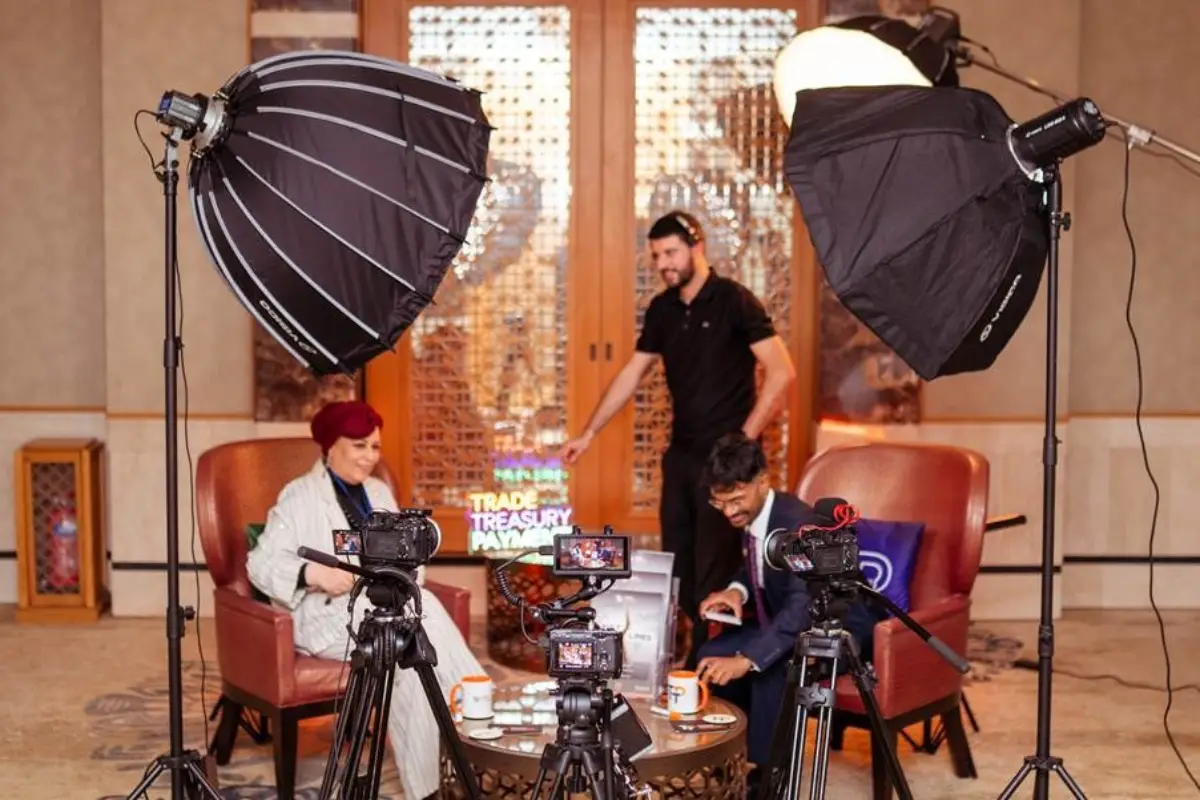
Most recently, we were in Tunis for the EBRD-ICC Digitalisation of Trade Finance event. We had the opportunity to discuss Tunisia’s digitalisation journey with many experts, including Sonia Belhaj, Central Director of International Operations at BH Bank and Chair of the Banking Commission at ICC Tunisia and Catherine Bridge Zoller, Legal Counsel within the Legal Transition Programme at the EBRD. The consensus time and again in these discussions was that digitalisation has shifted from luxury to necessity, and that largest challenges for Tunisia in making this transition lie in cultural shifts and legal infrastructure over technology.
Free of spin
We’ve told you what you will see in a TTP Studios session, here’s what you won’t see – sponsor proxies, rented hosts, or anything else that might compromise our autonomy. It is important to us that the journalism at TTP is truly ours.
We are regulated by the Independent Press Standards Organisation and adhere to the Editors’ Code of Practice and the ICC Advertising and Marketing Communications Code. Our editorial standards are governed by a board made up of industry experts: Tod Burwell of BAFT, Emmanuelle Ganne of the WTO, Rebecca Harding of the Centre for Economic Security, Alan Koenigsberg of Koenigsberg Insights, Catherine Lang-Anderson of A&O Shearman, Pamela Mar of the ICC Digital Standards Initiative, Gwen Mwaba of Afreximbank, Eleonore Treu of ICC Austria, Geoffrey Wynne of Sullivan, Richard Wulff of ICISA, and our own Eleanor Hill.
Editorial control rests solely with the TTP team; sponsors have no approval rights over editorial content, tone, or timing, and we do not accept payment in exchange for favourable coverage. Any use of AI is supervised, disclosed where material, and logged. Any complaints run through a formal two-stage process ending with IPSO.
None of this is particularly glamorous and doesn’t look good on a thumbnail, but it’s the vital backbone of the work we do. It’s what allows us to put a Société Générale executive on camera at Société Générale’s own headquarters during an ICC meeting and get real journalistic content rather than superficial sound bites. And this commitment to true journalistic integrity is why more and more guests are saying yes to invitations to sit in our TTP Persimmon chairs and chat.
Work with purpose
We reach more than 57,000 monthly readers and have reported across 46 markets. We have 12,000 newsletter subscribers, and over 108,000 monthly social impressions. We have partnerships with ten-plus major international financial institutions and multilateral development banks. With the studio now distributing across Spotify, Apple Podcasts, and YouTube alongside our own platform, every episode is available in more than 180 markets.
These are the numbers. They’re good numbers, they’re important, and we’re proud of them, but they are not the point of what we’re doing. The point is that real-economy finance is harder than it has been in a generation. Costs are up, liquidity is tighter, and geopolitical risk is no longer a chapter at the end of the strategy deck. Compliance is heavier. Margins are thinner. And the people doing the work are tired.
When systems are under strain, the unspoken voices have the most to say and the smallest platforms on which to say it. Our studio was built to give them a new platform. Long-form, on the record, in their own words, edited by journalists who know the difference between conditional and absolute payment, and between a real story and a recycled press release.
This is what we mean when we say editorially led, premium, real-economy finance for liquidity and risk. The industry deserves a media operation that takes this seriously, and that is the standard we hold ourselves to.
What’s next for TTP Studios?
Well, we might need to buy a few more chairs! This summer, we’ll be bringing TTP Studios across the pond. This exciting North American expansion for our media operation takes us into a market where transaction banking coverage has historically been split between trade publications, treasury publications and payments publications – all speaking past each other, and none speaking to the CFO in Nairobi desperately looking for real insight.
Trade Treasury Payments is so named because we believe that liquidity and risk management is one subject, not three. TTP Studios will allow us our first sustained chance to really test this philosophy in North America and we’re beyond excited to see what fascinating conversations come out of it.
So that’s a little peek behind the curtain at the first three months of TTP Studios. We’re incredibly proud of the quality journalistic content we’re able to bring you. It’s hard to believe it’s only been three months – we’ve done so much already. But we’re only just getting started.