
About This Video
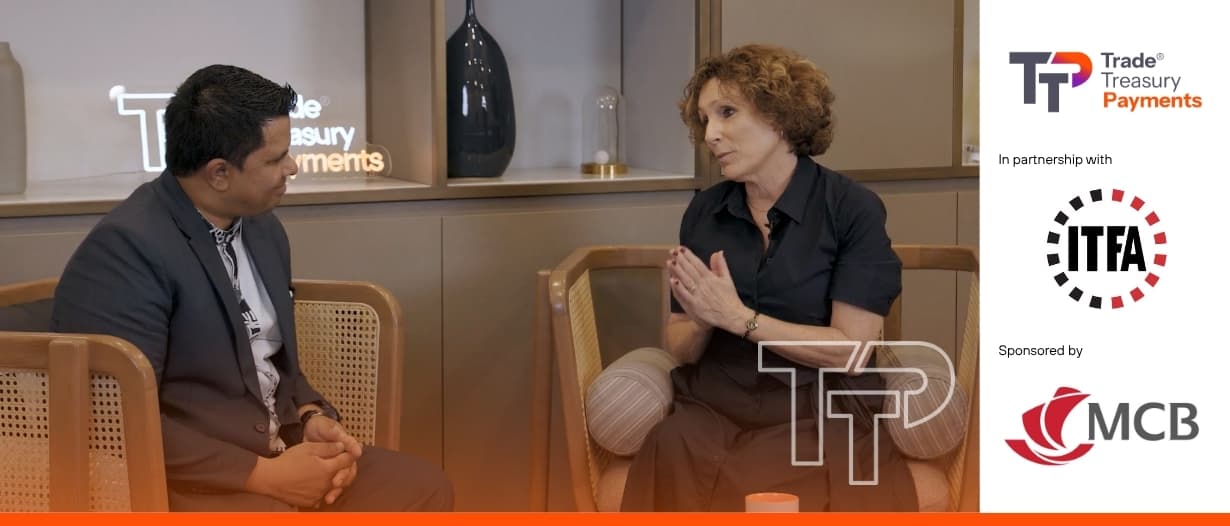
At ICC Austria’s Trade Finance Week, Andrea Hauptmann, founding member and independent international consultant, shared her vast expertise on bank guarantees in an interview with Deepesh Patel, Editor of Trade Treasury Payments. With nearly 40 years of experience, including over 25 years as Head of Department at Raiffeisen Bank International (RBI) and currently serving as Chair of the ICC Banking Commission Task Force on Bank Guarantees, Hauptmann offered valuable knowledge about the proper drafting and management of international bank guarantees.
Bank guarantees gained global recognition after World War II as reliable security mechanisms for international trade. Bank guarantees are effective in commercial transactions as they are neutral, irrevocable, and unconditional, providing immediate security to beneficiaries upon issuance.
The success of bank guarantees lies in their relative simplicity and global recognition. Hauptmann stated, “It’s not a difficult instrument. It’s quite easy. It helps in making a level playing field for all the parties involved, because everyone knows what it’s about, and it’s more or less handled the same way all around the world.”
Despite their apparent simplicity, proper drafting is crucial to avoid challenges during the lifecycle of a guarantee. Hauptmann stresses that most of the complications, particularly when demands are made, could be prevented with careful initial drafting. Common issues for drafting a bank guarantee include imprecise wording, excessive length, and problematic documentary conditions.
Lawyers without specialised knowledge of guarantees often create documents that are unnecessarily complicated. “What we see when a wording comes from a lawyer is that it’s much too long. The wording is too complicated,” Hauptmann notes. This complexity can raise suspicions from beneficiaries who expect standard formulations. These drafting errors typically surface at the most critical moment. If the demand is submitted on the last day of validity, it leaves no time for corrections. If documents cannot be corrected and the demand remains non-compliant, payment will be denied.
Dispute resolution options include ICC Official Opinions, which are free but time-consuming; DOCDEX, a rapid arbitration process with fees based on the guarantee amount; or traditional court proceedings, which Hauptmann cautions are lengthy, expensive, and uncertain.
Hauptmann concludes with three key tips for drafting bank guarantees. This includes i) begin the drafting process early ii) involve the bank from the start rather than presenting them with unchangeable wording iii) ensure any amendments are executed correctly.
These insights highlight the importance of proper drafting and management of international bank guarantees under frameworks such as the Uniform Rules for Demand Guarantees (URDG), helping trade finance professionals avoid errors and disputes in international transactions.
Trade Treasury Payments (TTP) is the official media partner of ICC Austria’s Trade Finance Week.
Watch the video vita Youtube.
Key Topics
- Bank guarantees became globally established after the Second World War because they offered a simple and consistent instrument recognised across markets
- Their neutrality, irrevocability and unconditional nature make them attractive for beneficiaries and workable for banks
- Most operational problems stem from poor drafting at the start, often due to applicants or lawyers preparing wording without bank input.
- Imprecise clauses, non documentary conditions and unclear interest or expiry terms are among the most common sources of dispute.
- Demands must be made with enough time to correct documents, especially when third party documents are involved.
Expert Analysis
Andrea Hauptmann’s reflections underline a truth long recognised in the guarantees community: the instrument itself is not the problem, the drafting is. Guarantees work because they are neutral, irrevocable and unconditional, but these strengths depend entirely on clear and documentary based wording. When applicants negotiate text without involving the bank, or when lawyers unfamiliar with guarantees introduce complexity or omit essential elements, the risk of dispute increases dramatically. Andrea’s experience shows that most issues seen at the moment of demand were avoidable, and that early collaboration remains the most effective safeguard. Her insights also highlight the practical realities of dispute resolution, from ICC opinions to DocDex and court action, reinforcing the message that prevention is far better than cure.— Andrea Hauptmann
Key Findings
- Many guarantee disputes could have been avoided with proper drafting at the beginning of the transaction.
- Interest calculations, expiry clauses and conditions that cannot be evidenced by documents are frequent sources of conflict
- ICC official opinions provide guidance but take time, while DocDex offers faster decisions at a cost.
- Court proceedings remain the least predictable and most expensive option.
- Banks prefer to be involved early to ensure the wording is workable and compliant with standard practice.
Implications
- Early collaboration between applicants, beneficiaries and banks reduces the risk of disputes and delays.
- Clear, precise and documentary based wording is essential for enforceability and smooth handling of demands.
- Beneficiaries should avoid making demands on the final day to allow time for corrections.
- Third party documents introduce additional risk because they cannot be amended quickly
- Choosing the right dispute resolution path can significantly affect cost, timing and certainty of outcome.