


About This Video
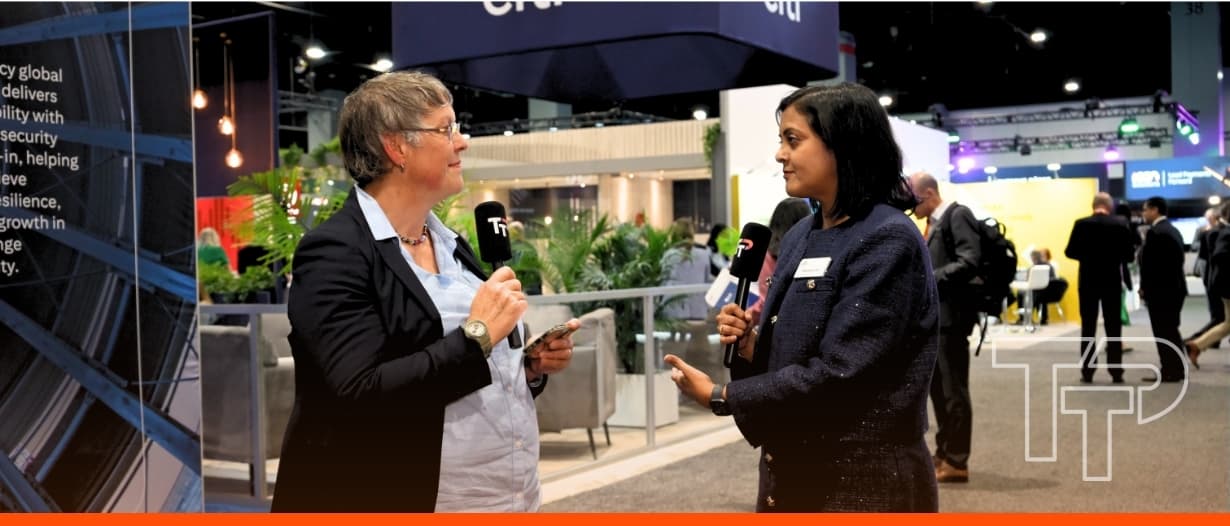
During the ICC Austria’s Trade Finance Week, Omer Guy, General Counsel of the Digital Container Shipping Association (DCSA), the Netherlands, shared his insights on the digitisation of transport documents, particularly electronic bills of lading, in an interview with Eleonore Treu, Director of Trade Finance Week Austria and TTP Editorial Board Member.
The DCSA is a not-for-profit organisation founded in 2019 by the ten largest container shipping companies worldwide, which collectively contribute approximately 75% of all containerised trade, giving the organisation influence in setting industry standards. DCSA develops digital frameworks for the container shipping industry, extending to trade finance, shippers, solution providers, terminals, and ports.
In his role as General Counsel, Guy has been deeply involved with electronic bills of lading. He stated, “E-bills have been here for more than two decades already, but there has never been such momentum as there is right now.” Despite this enthusiasm, adoption rates hover around 5-6% of the 40-50 million bills of lading generated annually.
Guy identified several challenges to adoption, one of which is fear. Fear of fraud, fear of cyber incidents, or security concerns. This creates a standstill and a hesitation loop where “shippers are looking at the banks, banks are looking at the authorities, and authorities are looking at the shippers again.” He emphasised that the solution is “you just need to start”, demanding immediate action and collaboration rather than continued waiting.
Looking toward the future, Guy outlined DCSA’s ambitious target of achieving 100% electronic bill of lading adoption by 2030, with nine of its members already committed to this goal. “We have recently launched our partnership program that invites industry bodies and companies to collaborate with us. This includes shippers, financial institutions, solution providers, ports, terminals, feeder operators, and all stakeholders involved in this ecosystem. The program encourages these organisations to connect with our members, engage in discussions, and actively participate in our standards development process. Additionally, we are focusing on the product side of our initiatives. We are developing products that will complement our existing standards and facilitate increased adoption of these standards across the industry,” he added.
As part of the Future of International Trade (FIT) Alliance alongside ICC, BIMCO, SWIFT, and FIATA, DCSA works to ensure standard alignment and interoperability across the trade ecosystem. The organisation is also actively engaged with UNCITRAL on their initiative for a convention on negotiable cargo documents.
In concluding the discussion with Eleonore Treu, Guy expressed appreciation for ICC Austria’s two decades of facilitating global trade finance conferences, highlighting the value of bringing diverse international perspectives together in meaningful industry discussions.
Trade Treasury Payments (TTP) is the official media partner of ICC Austria’s Trade Finance Week.
Key Topics
- Digitisation of transport documents
- The role of the Digital Container Shipping Association
- Barriers to adopting electronic bills of lading
- Collaboration and interoperability
- Legal and regulatory developments
Key Insights
Expert Analysis
The digitisation of transport documents highlights a familiar pattern in global trade. The tools already exist, but widespread change is slowed by cautious behaviour and fragmented interests. What makes the current moment different is the level of coordination now emerging. Industry groups, regulators and major shipping players are beginning to align around shared goals. Initiatives such as the FIT Alliance and UNCITRAL’s work on legal frameworks are helping to create a more stable foundation for change. Even so, hesitation remains. Many organisations are reluctant to take the first step, waiting instead for others to move ahead. This creates a cycle where progress stalls despite clear benefits. Breaking that cycle will depend less on new technology and more on building confidence, demonstrating practical use cases and ensuring that systems can operate seamlessly across borders and stakeholders.— Omer Guy
Key Findings
- Adoption of electronic bills of lading remains low at around six per cent.
- DCSA members represent a significant share of global container trade.
- Concerns around security and risk continue to slow uptake.
- Cross industry alliances are working to align standards.
- Legal frameworks are evolving to support digital trade, but are not yet fully established.
Implications
- Faster and more efficient trade processes
- A shift in how risk is managed
- Growing importance of legal alignment
- Opportunities for early movers
- Increased reliance on collaboration
Key Takeaways
- The industry is moving closer to meaningful digital transformation.
- Collaboration sits at the centre of progress.
- The main barriers are cultural rather than technical.
- Interoperability will determine long term success.
- Ambitious targets such as full adoption by 2030 are within reach, but only with shared commitment.