The wheel of risk: Navigating geopolitical transition and the future of trade
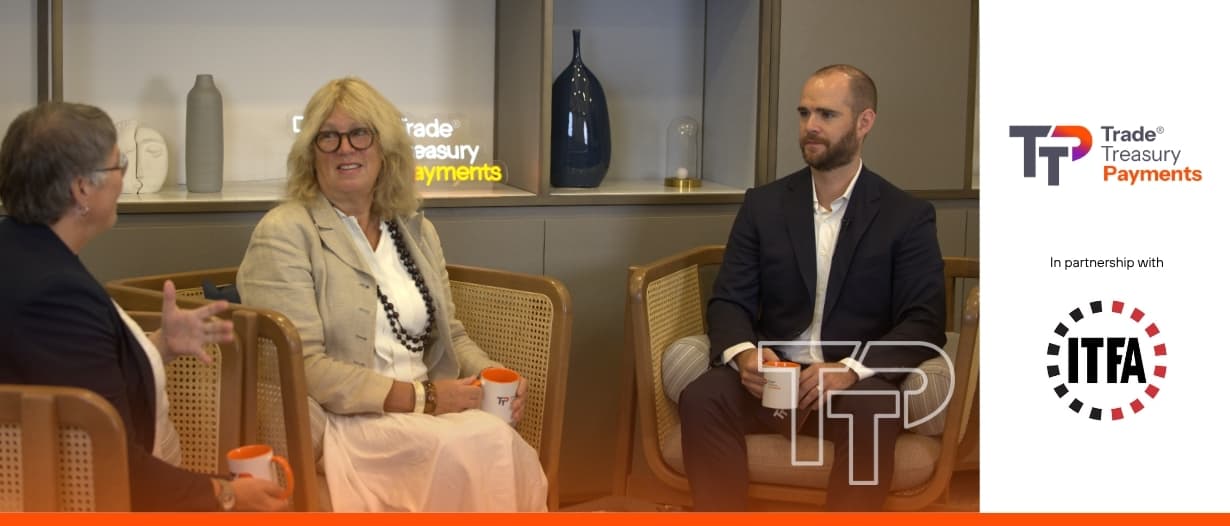
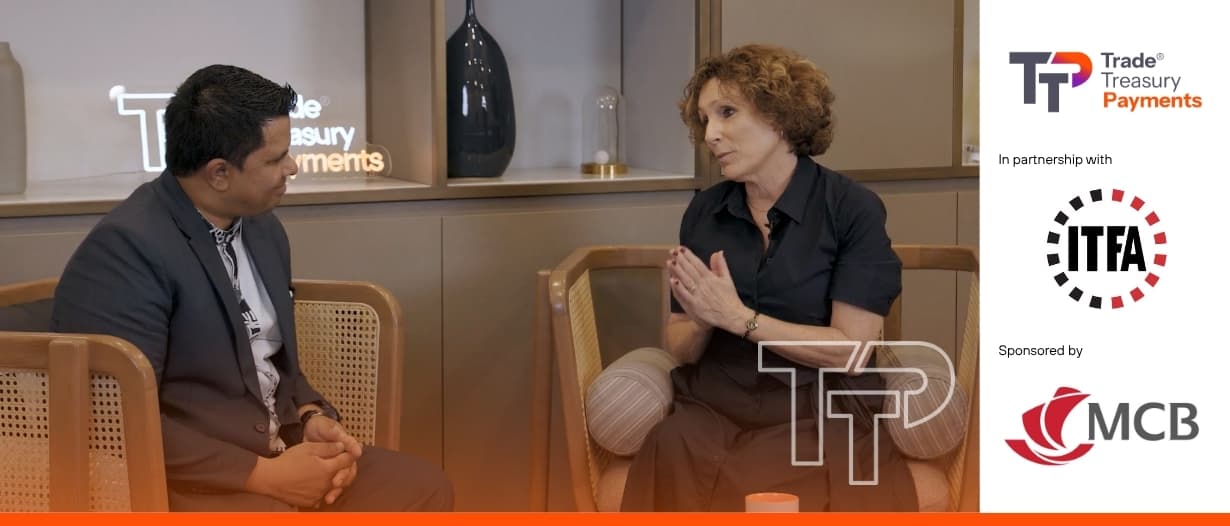
At TTP Studios, Trade Treasury Payments (TTP) spoke with Christopher Coppock, Head of Geopolitical and Economic Risk Analysis, Credit Specialties at Marsh and John Plomer, a Senior Vice President, Credit Specialties, Marsh about the growing risks shaping global trade, finance, and lending markets.
To guide this risk-driven conversation, we turned to the Wheel of Risk – a game-show-style spinner with four risk categories across its face: uneven regulation, non-payment insurance, conflict risk, and trade fragmentation.
Step up and spin the wheel, if you dare.
C, c, cl, cl, cl, cli, cli, cli, clic, click, click…., click……., click…………., click………………..
First spin: uneven regulation.
Uneven regulation and shifting capital flows
While perhaps not often thought of as a ‘risk’, uneven regulation brings a degree of uncertainty and variability into the market that certainly brings it into that domain. Banks around the world are now dealing with different versions of Basel implementation, and, while the overall rules may be similar, countries are applying them in different ways and at different speeds, which is changing how banks lend.
“If you look at the UK or Europe or the United States or Asia, you’re all going to see different levels of regulatory implementation of what were previously agreed rulesets,” Christopher Coppock said. “Different levels of implementation around the world means who can lend and to whom and at what rates differ depending on what jurisdiction you’re in.”
While many banks have spent years preparing for Basel reforms, tighter capital rules could still reduce flexibility in lending markets if economic conditions weaken.
“At the moment, banks are looking pretty healthy,” John Plomer said. “But if things were to start shifting a little bit, then that’s when you’re more likely to see a contraction in lending and business that is low risk but since Basel IV, consumes more capital becomes less economically viable.”
And as the pressures created by uneven regulation continue to build, banks are increasingly looking for new ways to protect balance sheets and preserve lending capacity. Perhaps the next spin of the wheel will point in that direction.
Cli, clic, click, click… Spin two: non-payment insurance.
The rise of non-payment insurance
Non-payment insurance is no longer being used only for isolated or higher-risk transactions, as was common in the past. Today, it is increasingly becoming part of how banks manage capital, structure deals, and preserve lending capacity in a more uncertain market.
This is a trend that accelerated after Basel II recognised non-payment insurance as an eligible credit risk mitigant.
“Many of the banks have made such big investments and made the buying of credit insurance part of their syndication process, part of their risk management process, that we now see a much more heavily embedded strategic use of the product,” Plomer said.
The market for non-payment insurance has also grown significantly since the 2008 financial crisis, with more insurers and more capacity entering the market.
But that is only one part of the risk equation. Back to the wheel.
Conflict risk and the return of geography
The third spin lands on conflict risk, which has become much harder to ignore as the number of global conflicts has increased sharply over the past two decades, many of which are lasting longer than before.
Coppock said, “The world is seeing twice as many conflicts as in 2005. On average, the conflicts are lasting twice as long. One of the reasons for that is that the mechanisms for conflict resolution aren’t as effective as they were 20-odd years ago.”
Large conflicts such as Russia-Ukraine and tensions involving Iran have wreaked havoc on global energy prices, as well as other economic indicators like inflation and supply chains.
But smaller conflicts are also creating disruption, even if they receive little international attention. One example from last year is the conflict along the Thai-Cambodian border, which disrupted manufacturing operations and forced companies to reroute supply chains at significantly higher cost.
The amalgamation of these clashes and the economic impacts that they have is causing financial institutions to pay closer attention to how different risks may be connected geographically. “Five or ten years ago, a bank might look at a risk in Iraq and a risk in Dubai and draw no connection between them,” Coppock said. “But in reality, we now know there is, in fact, a link there in terms of exposure to a broader conflict over the Strait of Hormuz that can lead to geographic concentration risks.
In the highly interconnected and hyper-optimised world that we experience today, problems in one region can quickly spread to others and impact a much wider array of trade routes and financial markets. “Diversification, where possible and open-eyed risk management are really the way forward,” Plomer added, before turning back for the final spin of the wheel.
A higher-friction trade environment
And with that final spin, the needle landed on the rising risk of trade fragmentation.
Governments are placing a much greater focus on areas like national security, industrial policy, or economic resilience than they have in the past few decades.
This mindset shift at the upper echelons of government is leading to more tariffs, more regulation, and more compliance requirements for businesses. “Higher friction is the term we settled on,” Coppock said. “We think there’s more complexity for businesses and financial institutions to have to deal with. There are more regulations, which means a higher compliance burden.”
And it seems that this change may be here to stay. “Our view is that governments will stay more as shapers of economic activity rather than facilitators of global growth and global economic activity, which is the role many large governments more regularly played at the height of the globalisation-era” Coppock added. “For businesses and banks, the recommendation would be to operate under the assumption that this is going to be sustained.”
When the wheel stops spinning
As our wheel of risk finally slows to a stop, it’s important to remember that these risks do not quite exist in segmented quadrants as we have depicted them. In the real world, where businesses, banks, and insurers must operate and make decisions, they are all highly interconnected and feed on each other.
Conflict can, and often does, drive inflation, while regulations directly impact how much capital is available in any given place at any given time.
The global economy is becoming more fragmented, more politically influenced, and more difficult to predict than it was during the decades that followed the end of the Cold War. This means that resilience and adaptability are becoming just as important as growth itself.
The Wheel of Risk may eventually stop spinning, but the risks shaping global trade are unlikely to do the same anytime soon.
Prefer to listen? The full conversation is also available as a podcast below.
Key Topics
- Regulatory divergence and its impact on lending
- The evolving role of non payment insurance
- Rising conflict risk and supply chain disruption
- Trade policy, fragmentation and higher friction trade
- Shifts in credit markets and the role of private credit
Expert Analysis
The discussion with Marsh Credit Specialties underscores a world where risk is increasingly interconnected. Regulatory divergence, persistent conflict, and interventionist trade policy are no longer episodic challenges but structural features of the operating environment. As Chris Coppock notes, “the world is seeing twice as many conflicts as in 2005”, a reminder that risk now emerges from both global flashpoints and overlooked local disruptions. For financial institutions, this means adopting a more holistic, geographically aware approach to risk, while leveraging tools such as non payment insurance that have become central to capital and portfolio management.
Key Findings
- Regulatory divergence is accelerating, driven by national priorities rather than global coordination.
- Non payment insurance has tripled in market capacity since the financial crisis and is now integral to bank risk management.
- Conflict risk is broadening, with both high profile and low profile events affecting global business operations.
- Trade policy is structurally more interventionist, increasing friction and compliance burdens.
- Private credit growth raises regulatory questions, but remains a smaller part of the global credit landscape.
Implications
- Borrowers face uneven access to capital as regulatory divergence alters lending conditions across jurisdictions.
- Banks may experience reduced flexibility if economic conditions tighten, potentially constraining lending appetite.
- Supply chains are increasingly exposed to localised conflicts that receive little global attention.
- Compliance costs will continue to rise, particularly in sectors exposed to complex tariff regimes.
- Risk transfer strategies will become more important, with insurance markets providing both capacity and intelligence.