
Multilateralism 2.0
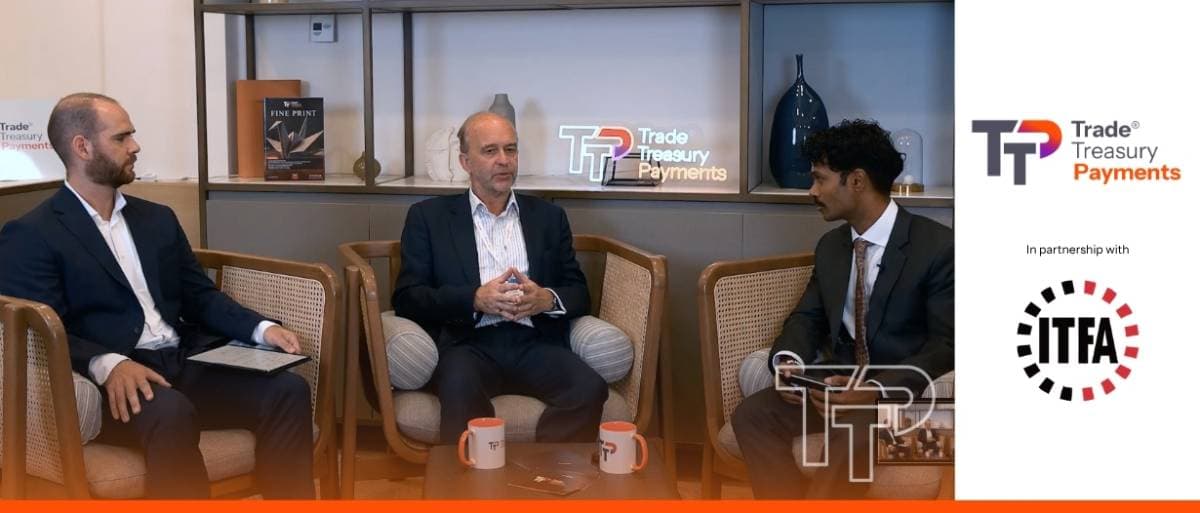
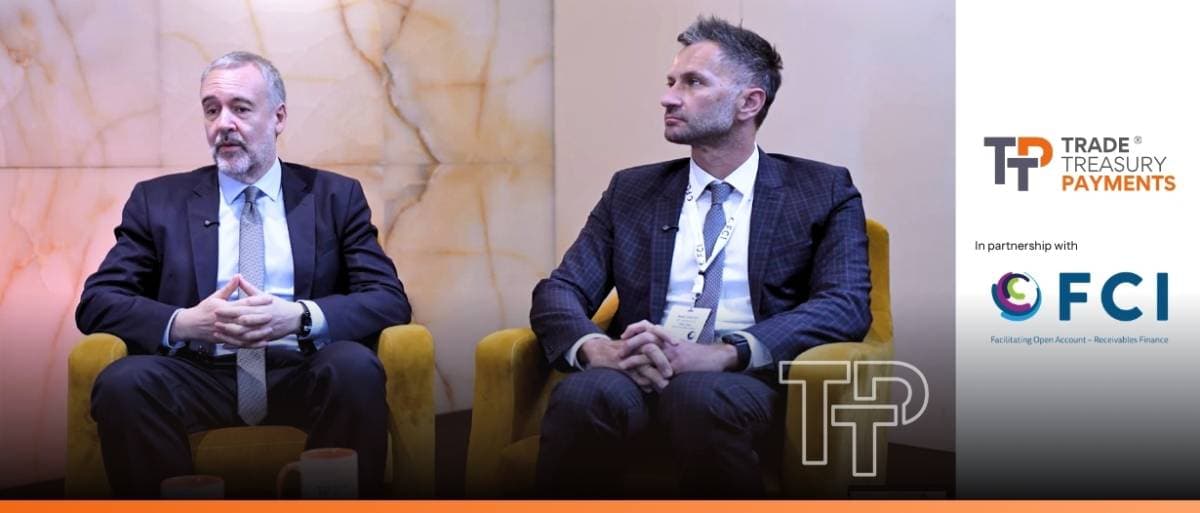
At TTP studio in London, Trade Treasury Payments (TTP) spoke with Chris Southworth, Secretary General of the ICC United Kingdom and Co-Founder of the International Centre for Digital Trade and Innovation, about the growing strain on the multilateral trading system, the future of WTO negotiations, and why smaller groups of countries may increasingly drive progress on digital trade.
One of the more recent signs of strain on the current multilateral system came during the 14th WTO Ministerial Conference (MC14), which was held from 26 to 30 March 2026 in Yaoundé, Cameroon. “By day three, we became reasonably optimistic there was going to be a decent package on the table,” Southworth, who attended the Ministerial, said. “An extension of the ban on customs duties on digital content over the border, a big investment deal with 130 countries, a big e-commerce digital trade deal with 70 countries, and a reform package.”
Instead, negotiations broke down amid increasingly rigid political positions from major economies. “It was like watching two big lions in the room,” Southworth said, “which was the US on one side and India on the other, just being incredibly dogmatic in their positioning. And they proceeded to torpedo everything.”
However, despite the breakdown, there was one significant development that came out of the conference in the form of a breakaway group of 66 countries that decided to continue advancing digital trade agreements outside the stalled consensus process.
“Japan, Australia, and Singapore had obviously done their planning and had a plan B,” Southworth said, “that if this goes sideways, then we’re going to get on with it anyway. We’re not going to ask permission from India or anybody else.”
The fact that such an outside agreement was necessary, Southworth argues, is an indicator of the reality facing the WTO today. While much of the organisation’s technical work and dispute functions do still operate effectively, its ability to negotiate large-scale trade agreements is increasingly constrained by geopolitics and veto politics.
“The trade negotiation function of the WTO is in trouble,” Southworth said. “Countries are either vetoing or playing really dogmatic politics and saying, ‘If you don’t do what I want, we’re not going to give you anything that you want.’”
At the same time, most countries still want open trade and practical outcomes, but the way that the current rules are set up allows a small number of countries to block progress. “If you’ve got 130 countries who want to do an investment deal, I would say that’s consensus,” Southworth said. “But all it takes is one country to say no, and that’s the end of that.”
As a result, plurilateral agreements involving smaller coalitions of willing countries may become increasingly important, particularly in areas such as digital trade, services, and data governance.
“From a business point of view, progress is better than nothing,” Southworth said. “Plurilaterals are better than bilaterals, which just make it ever more complicated. The bigger the group, the better it is. It’s not multilateralism, but it’s better than nothing.”
For the UK’s part, Southworth believes the country will have a growing role in shaping global trade discussions over the coming years, particularly with upcoming G20 and G7 leadership responsibilities and the ICC Banking Commission gathering in London. “There’s a two-year roadmap here where the UK is really in the hot seat of being able to shape the global economy,” he said. “It’s an incredible opportunity to showcase trade finance, what it’s trying to achieve, and the future of the industry as we all go digital.”
Prefer to listen? The full conversation is also available as a podcast below.
Key Topics
- Breakdown of negotiations at MC14
- The role of the US and India in blocking progress
- Structural weaknesses in the WTO’s consensus model
- Rise of plurilateral and breakaway agreements
- The UK’s strategic position ahead of G20, G7 and the ICC Banking Commission
Key Insights
Expert Analysis
MC14 revealed a stark truth: the WTO’s negotiation machinery is no longer aligned with the geopolitical environment it operates in. As Chris Southworth noted, “most of the world actually just wants to make progress,” yet the system allows a small number of large economies to halt movement entirely. The emergence of the 66-country digital trade coalition is a sign of what multilateralism 2.0 will look like: flexible, pragmatic and increasingly shaped by mid-sized economies. With the UK entering a period of significant global leadership, the next two years will be decisive in determining whether the WTO can be reformed or whether plurilateralism becomes the dominant path forward. “Progress is better than nothing… plurilaterals are better than bilaterals, and the bigger the group, the better it is.”
Key Findings
- MC14 failed despite near agreement on digital trade, investment and the moratorium extension.
- India blocked plurilateral deals, driven by domestic priorities around food stockholding and intellectual property.
- The US blocked the wider package, insisting on a permanent moratorium ban without offering concessions.
- Brazil’s pushback ended the negotiations, refusing to support US demands without movement on agriculture.
- A 66-country breakaway group salvaged momentum, proving that plurilateral progress is still possible.
Implications
- The consensus rule no longer reflects geopolitical reality. Without structural change, multilateral deals will remain out of reach.
- Breakaway groups will increasingly drive progress where consensus is impossible, especially in digital trade and investment.
- Commonwealth economies and other pragmatic actors are becoming essential stabilisers in a fractured system.
- Companies will operate across overlapping plurilateral, bilateral and partial multilateral frameworks.
- Its upcoming leadership roles position it to push for reform and champion digital trade modernisation.
Key Takeaways
- MC14 failed due to entrenched positions from the US and India, not a lack of global appetite for progress.
- The WTO’s consensus rule is now a structural barrier to effective negotiation.
- Breakaway plurilateral groups will increasingly drive global trade outcomes.
- Reform of the WTO negotiation function is the top priority for the next ministerial cycle.
- The UK has a strategic window to influence global trade governance through the G20, G7 and ICC Banking Commission.