
Robert Besseling, CEO of Pangea Risk and member of TTP’s Global Advisory Panel, on how tariffs, shifting geopolitics, and south–south trade are reshaping opportunities across emerging and frontier markets.
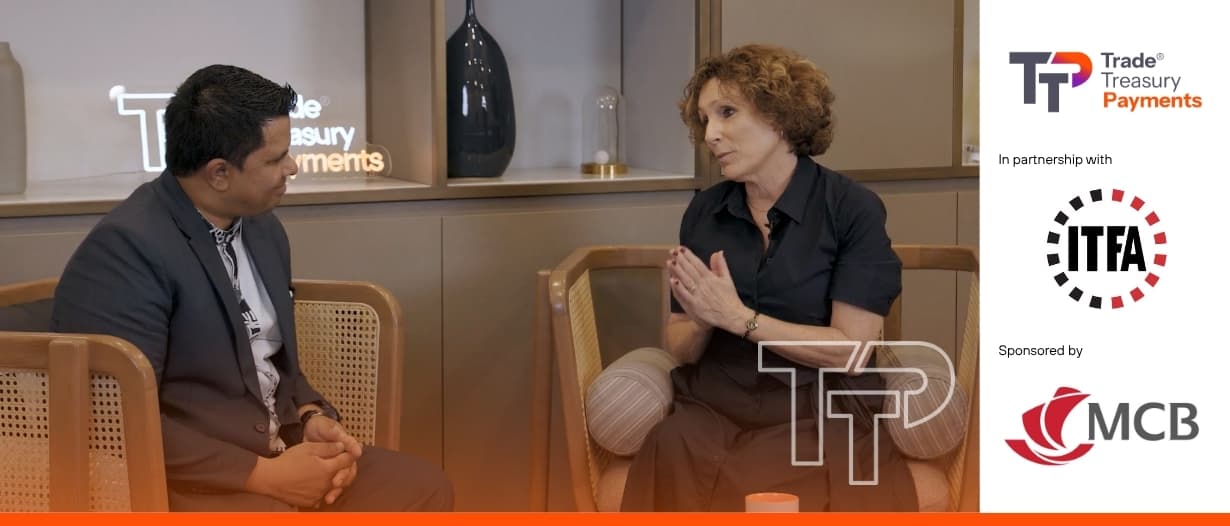
At the ITFA Annual Meeting in Singapore, Trade Treasury Payments (TTP) spoke with Robert Besseling, CEO of Pangea Risk and a member of TTP’s Global Advisory Panel, about the impact of tariffs and shifting trade dynamics on emerging and frontier markets.
Besseling said, “At Pangea Risk, we look at 100 emerging and frontier markets. Obviously, we’ve seen trade disruption before, starting with the pandemic, then the wars in Europe and the Middle East, and most recently the US tariffs and shifting US policy on aid, trade, and partnerships. For emerging and frontier markets, they’ve almost fallen off the news coverage. Yet 90% of global trade bypasses the US, and increasingly it is being derived from emerging and frontier markets.”
Despite the disruption, Besseling was quick to stress that risk brings opportunity. “For emerging markets, we’re already seeing global trade rerouted and opening up new opportunities,” he said. “Brazil, for example, has been hit with some of the highest tariffs by the US. But at the same time, China has dropped tariffs on more than 200 Brazilian agricultural providers. Similarly, India is looking towards ASEAN as a way to bypass sanctions and open up new trade routes. And Africa, often left out of the conversation, is already receiving new flows of Chinese electronics, automotive, and solar goods as tariffs are lifted on African partners.”
On regional integration, Besseling noted that global trade is increasingly moving from a unipolar to a multipolar structure, with the BRICS nations and ASEAN strengthening intra-regional ties. “There is no trade without infrastructure,” he added, pointing out that investment in payments and logistics is now at the centre of regional trade growth in both Africa and Asia.
A central theme at the Singapore gathering was south-south trade and for Besseling, this trend is actively accelerated by geopolitical shifts. “Cutting overseas aid means emerging markets have less fiscal capability to trade, and so we’re seeing a realignment of their trade partners,” he explained. “Competition for critical minerals – from Latin America, Africa, and Southeast Asia is also driving Global South collaboration and enhancing south-south trade.”
Looking ahead, he urged financiers and insurers to pay close attention to on-the-ground realities when assessing these markets. “Much of the country risk in emerging markets is misunderstood and sometimes exaggerated,” he said. “At Pangea Risk, we leverage local source intelligence to put risk into context, to forecast more accurately, and to make that commercially relevant for banks, underwriters, and DFIs.”
Key Topics
- Tariff-driven disruption in global trade
- Rerouting of supply chains across emerging markets
- Rise of South–South trade corridors
- BRICS influence on reshaping globalisation
- Competition for critical minerals in frontier markets
Expert Analysis
“From our perspective at Pangea Risk, the shift towards a multipolar and regionalised trading system is not slowing globalisation; it is reshaping it. Emerging and frontier markets are driving new trade corridors, leveraging tariff disruptions to pursue alternative supply chains, deepen South–South partnerships, and unlock opportunity amidst volatility.”— Robert Besseling
Key Findings
- Tariff-driven disruptions are accelerating the rise of South–South trade routes.
- Emerging and frontier markets are becoming central to global supply-chain realignment, bypassing traditional US-centric trade flows.
- The BRICS bloc and ASEAN partners are reshaping globalisation through regional currency use, new trade corridors, and cooperative export strategies.
- Critical minerals located in Global South economies are intensifying competition and deepening regional trade partnerships.
Implications
- Firms operating in emerging markets must reassess supply chain risk models as South–South routes expand and traditional corridors fragment.
- Tariff shocks will push more countries to seek regional trade agreements, local-currency settlements, and new geopolitical alliances.
- Access to critical minerals will define new investment priorities, with frontier markets becoming central to green-energy and technology transitions.
- Banks, underwriters, and DFIs must incorporate granular, local-source intelligence to accurately understand and price country risk in fast-shifting markets.