
Building Africa’s first solar-powered chocolate factory and pushing for fair trade rules
Video not playing? Watch via Youtube.
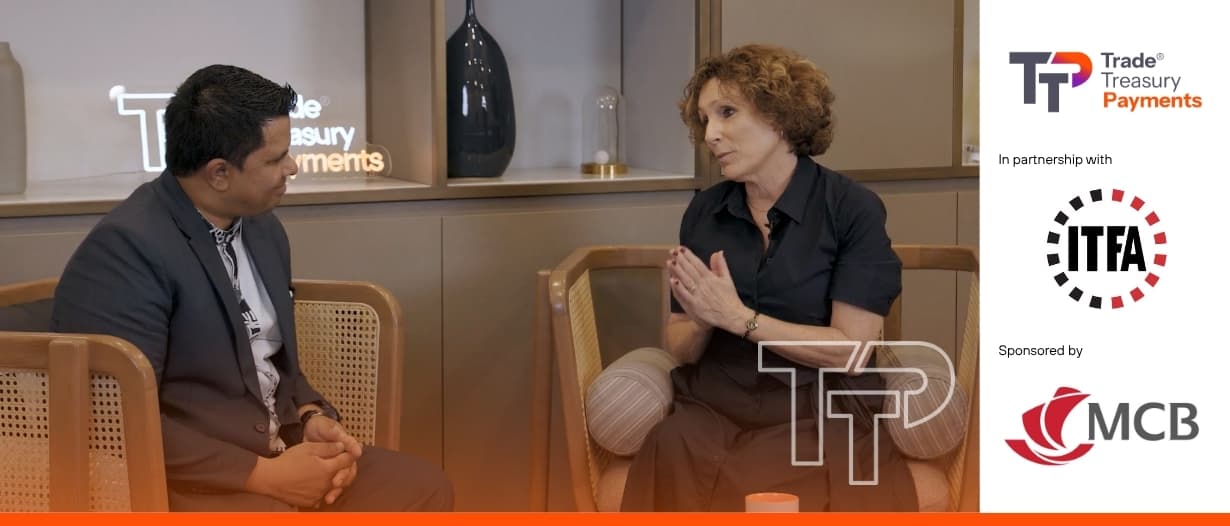
At the ITC SME Ministerial in Johannesburg, South Africa, Trade Treasury Payments (TTP) spoke with Michael Marmon-Halm, Managing Director of Fairafric Chocolates, to discuss the intersection of sustainable manufacturing, trade policy, and access to finance in Ghana’s cocoa industry.
Marmon-Halm explained, “Five years ago, we took a bold step to build the first solar-powered organic chocolate factory in a rural community in Ghana.” The project was launched at the height of COVID-19, and despite considerable headwinds, the company now employs more than 250 people and exports to five continents.
But that growth didn’t come easy.
“Access to finance from our jurisdiction is quite difficult,” said Marmon-Halm. Even with a compelling business case, early attempts to secure local funding were unsuccessful. The company ultimately turned to European partners – including the German development agency DEG – alongside crowdfunding and personal contributions.
The financing landscape in Ghana remains fraught with challenges. Marmon-Halm noted that interest rates have soared as high as 40%, which puts a strain on small and medium-sized businesses. “It becomes increasingly difficult for SMEs like my company to manage these – yes, I would say unnecessary – operating costs in the name of interest.”
Beyond cost, jurisdiction-specific criteria also create barriers. Marmon-Halm recalled being asked by a financial institution to rename the company as part of the collateral requirement. “Can you imagine? They were asking that our company be renamed just to qualify. Meanwhile, in Europe, I got this facility without any collateral. It’s a shame, and we’re hoping this changes.”
Trade policy adds a further layer of complexity. Despite the promise of the African Continental Free Trade Area (AfCFTA), intra-African trade remains costly.
“In South Africa, when South Africans import chocolates from Belgium or Switzerland, it’s zero tariff. But if they import the same quality chocolates from Ghana, they pay as much as 25%,” said Marmon-Halm.
Fairafric has been actively campaigning to address this imbalance. As a result of their advocacy efforts, the tariff has been reduced from 25% to 10%, but Marmon-Halm insists the work is not done. “We are still pushing the needle to get it to zero. How can SMEs be competitive with big brands from Europe, America, or China if this is what we are doing to ourselves?”
For Marmon-Halm, the message to policymakers is simple: “AfCFTA really wants to fix this problem? There’s too much talking – they need to wake up and start to work now.”
Key Topics
- Access to finance for African SMEs
- Cost of borrowing and interest rate pressures in Ghana
- The role of international and alternative funding
- Barriers to intra-African trade
- Local manufacturing and value addition
Expert Analysis
Michael Marmon-Halm, Managing Director of Fair Afrique Ghana Limited, shares a grounded perspective shaped by direct experience. His company built a solar powered organic chocolate factory in a rural Ghanaian community during one of the most uncertain periods in recent history. Despite the challenges, the business has grown to employ over 250 people and now sells across five continents. Yet this success did not come with local financial support. Attempts to secure funding within Ghana were unsuccessful, despite a strong business case. Instead, the company turned to European development finance, crowdfunding and personal investment to get off the ground. Michael highlights how high interest rates and unrealistic lending conditions continue to limit what African businesses can achieve. At the same time, trade barriers across the continent make expansion more difficult than it should be. For example, tariffs on African goods can be significantly higher than those applied to imports from Europe. His experience reflects a wider issue. There is clear potential for growth, but progress depends on practical changes. Financial systems need to better reflect local realities, and trade agreements must work in practice, not just on paper.
Key Findings
- Many viable businesses struggle to secure local funding
- Borrowing costs in some markets are not sustainable for SMEs
- External funding helps bridge the gap but is not a long term solution
- Trade policies can work against African producers
- Businesses that overcome these barriers can compete globally and create meaningful local impact
Implications
- Better access to affordable finance could unlock growth for SMEs
- Financial institutions need to adopt more practical, locally relevant approaches
- Lower tariffs within Africa would support regional trade
- Faster and more efficient logistics would improve market access
- Investment in local production can create jobs and strengthen communities