




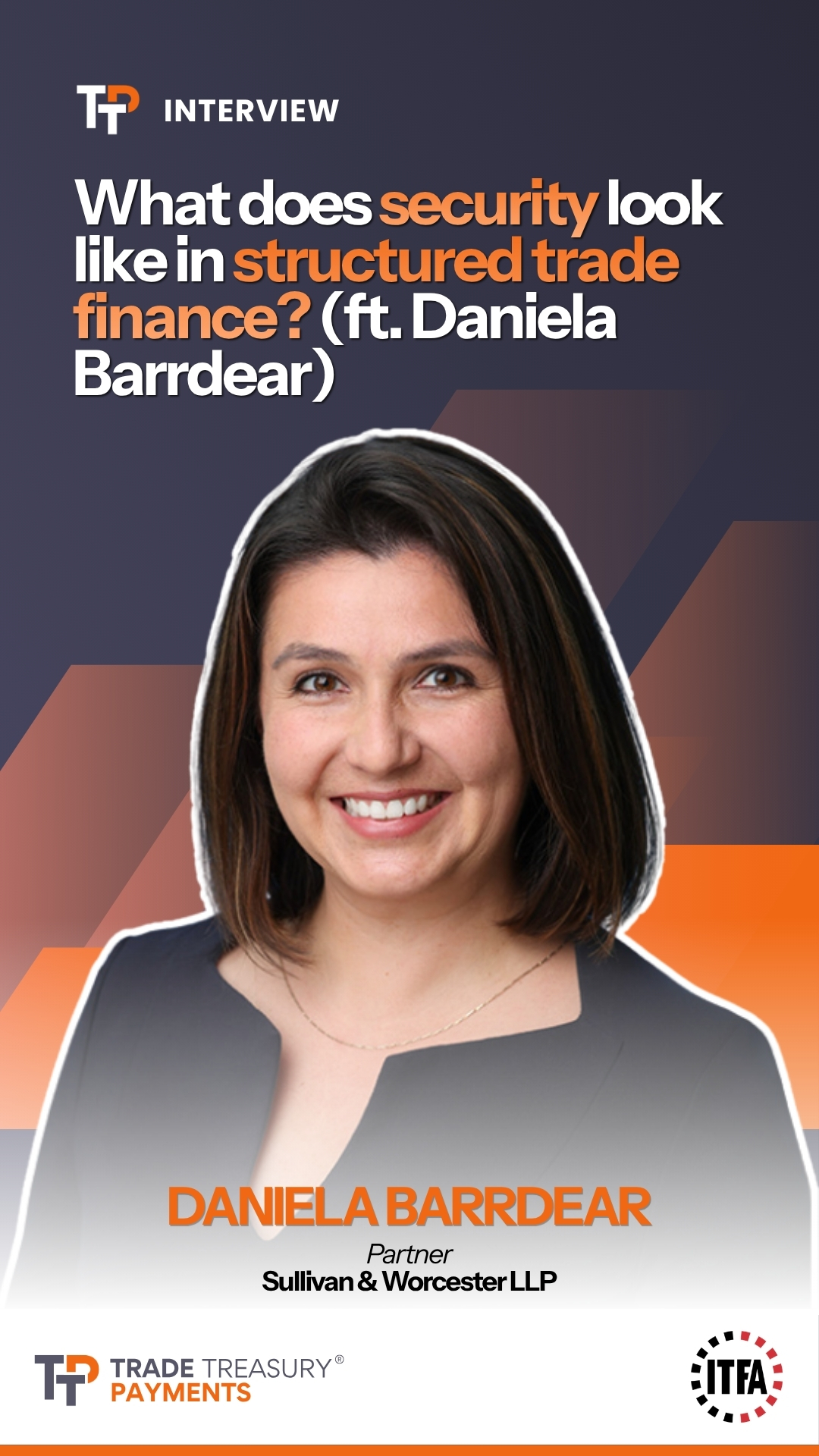

What does security look like in structured trade finance?
In this video, Daniela Barrdear, explains the fundamentals of structured trade finance and the key security mechanisms used in these transactions. Learn about taking security over goods, receivables, and collection accounts, as well as important legal considerations across jurisdictions.
This expert overview is ideal for professionals in trade finance, banking, and legal sectors looking to understand risk mitigation and deal structuring in international trade.
Key Topics
- Structured trade finance security
- Asset based lending across goods, receivables and cash
- Legal and jurisdictional considerations
Key Insights
Structured trade finance depends on taking security across several asset classes rather than relying on a single source of repayment.
In practice, this means looking closely at goods, receivables and cash flows together.
The legal environment plays a decisive role in how a transaction is put together
What works in one jurisdiction may not be enforceable in another, so each deal requires careful local analysis.
Control is central to reducing risk.
The more visibility and control a lender has over receivables and incoming funds, the stronger the overall structure becomes.
Expert Analysis
Daniela Barrdear, explains that structured trade finance is built around securing three key elements: the goods being financed, the receivables owed by the buyer, and the funds paid into a collection account. She highlights that a key challenge is ensuring that security can actually be taken and enforced in the relevant jurisdiction. This includes confirming whether receivables can be assigned and whether lenders can exercise sufficient control over the account into which payments are made. She also notes that there is no single template for these transactions. Each structure needs to reflect the nature of the assets, the legal framework and the level of control required by the lender. As a result, structured trade finance remains highly tailored, with legal and commercial considerations closely intertwined.— Daniela Barrdear
Key Findings
- Taking security across multiple asset classes provides stronger protection than relying on a single asset.
- The ability to assign receivables is often a deciding factor in whether financing can proceed.
- Control of the collection account plays a critical role in ensuring repayment and maintaining oversight of the transaction.
Implications
- Careful legal due diligence is essential to confirm that security arrangements will hold up in practice.
- Lenders need to remain flexible, adapting structures to suit different jurisdictions and asset profiles.
- Establishing control over cash flows and receivables can significantly improve the risk profile of a transaction.
Key Takeaways
- Structured trade finance relies on a combination of security over goods, receivables and cash.
- Jurisdictional differences can shape both the feasibility and the design of a transaction.
- Effective control over payment flows is one of the most important tools for managing risk.