
Financing defence supply chains and the case for a Defence Security and Resilience Bank
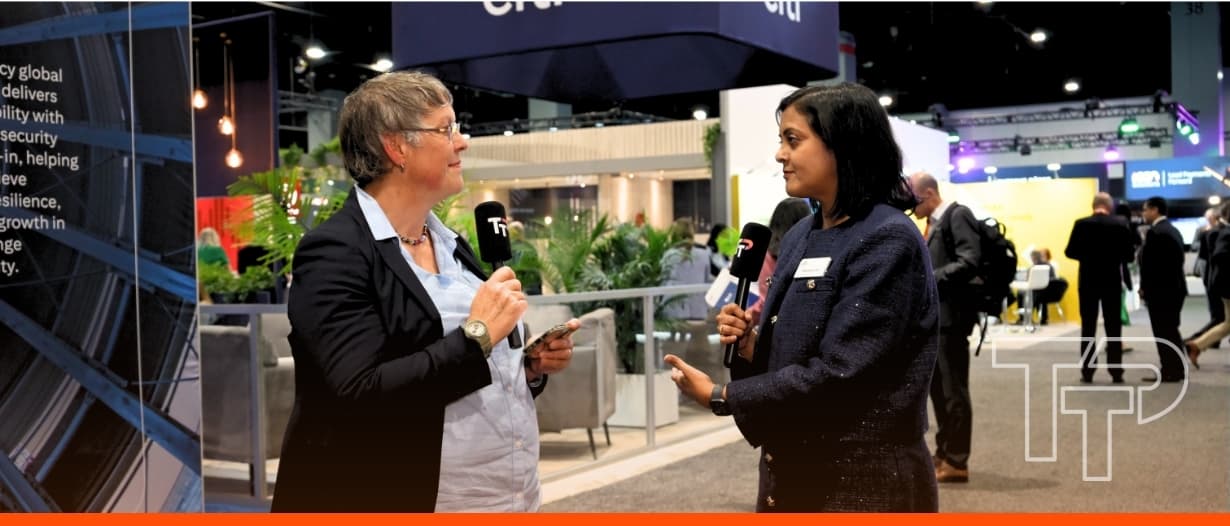
Trade Treasury Payments (TTP) spoke with Brigadier Robbie Boyd (Retired), a member of the senior leadership team at the Defence Security and Resilience Bank (DSRB) Development Group, about the scale of Europe’s defence financing challenge and what needs to change for banks to engage more confidently with defence supply chains.
Boyd argued that current levels of European defence spending fall well short of what is required to meet NATO’s deterrence objectives. While Europe spends roughly €350 billion a year on defence, he noted that recent analysis from think tanks and consultancies suggests the true figure needed could run into the trillions. “If Europe is seriously going to contribute what it needs to, because it’s been riding on the back of the US for some time, the numbers are far higher than what we are spending today,” he said.
At the same time, Boyd believes there is significant untapped potential in the commercial banking sector. Banks, he explained, have largely stayed away from defence financing for decades, not only because of ESG and compliance considerations, but also because of a lack of familiarity with the sector itself. “They haven’t done it for 40 years, so they don’t quite know where to invest,” he said.
To unlock that capital, Boyd pointed to three key enablers. The first is the use of guarantees. Centralised, institutional guarantees could materially reduce risk for commercial banks and help incentivise them to invest in defence-related supply chains without fear of losses. The second is a more deliberate focus on dual-use technologies (those that have both military and civilian applications). These investments, Boyd argued, are often easier for banks and investors to support and can be particularly valuable for start-ups and scale-ups operating at the edge of defence and commercial innovation.
The third is reframing defence as a source of long-term, commercially attractive investment. Boyd points to examples where military-driven innovation, such as advances in data storage or biosynthetic technologies, could have transformative civilian applications while also meeting critical defence needs. “These are good investments if you can target commercial banks onto the right things,” he said.
Central to this ecosystem, Boyd explained, is the Defence Security and Resilience Bank itself. He described the DSRB as a treaty-based, multinational lending institution, comparable in concept to a “World Bank for defence”. Owned by its member states and capitalised by them, the institution is designed to provide three core services: long-term, low-cost lending to governments for defence capability; direct financing support for nationally critical defence projects; and guarantees that enable commercial banks and investors to participate more actively in defence and innovation supply chains.
By providing AAA-rated guarantees and loans over extended time horizons, Boyd believes the DSRB could release tens of billions of euros from the private sector into defence, while also easing the political pressure on governments to divert funding from areas such as healthcare or welfare. “This is about working together across economic and military power to deter the threats we’re facing today,” he said.
For Boyd, the significance of the initiative lies not just in its financial mechanics, but in its timing. With geopolitical risks intensifying and defence inflation rising, he sees the DSRB as a pragmatic attempt to modernise how defence is funded, using proven financial tools rather than purely military innovation. As he put it, “The best piece of innovation in defence over the last 40 years may well be coming from the finance industry.”
Key Topics
- Defence financing and sovereign risk
- Mobilising commercial capital for defence supply chains
- Guarantees as a catalyst for private sector investment
- Dual-use technology and industrial resilience
- Multinational development banking models for security
Key Insights
Expert Analysis
Brigadier Robbie Boyd argues that Europe’s defence challenge is not only strategic but financial. While governments recognise the need to increase defence spending, he contends that sovereign budgets alone cannot deliver the scale or speed of investment required for credible deterrence. Boyd highlights the limited role of commercial banks, driven less by ESG constraints than by a lack of experience in defence financing. He positions the proposed Defence Security and Resilience Bank as a mechanism to unlock private capital through treaty-based guarantees, long-term sovereign lending and targeted support for defence supply chains, enabling financial institutions to invest with confidence while strengthening resilience and innovation across the defence ecosystem.— Robbie Boyd
Key Findings
- Defence resilience depends on financial innovation, not only military capability
- Guarantee structures can unlock tens of billions in private capital
- Dual-use investment expands the defence funding universe
- Knowledge and guidance are as important as capital for banks entering defence
Implications
- Defence investment gaps will increasingly require financial sector participation, not just sovereign spending.
- Guarantees and risk-sharing mechanisms will be essential to mobilise commercial bank capital into defence supply chains.
- Dual-use technologies will become a key bridge between defence requirements and investor acceptability.
- Lack of defence financing expertise within banks will emerge as a structural constraint unless addressed institutionally.
- Treaty-based, multinational financial institutions could redefine how long-term defence capability is funded.
- Europe’s defence challenge is no longer solely a military issue but a financing one. Deterrence at scale will require new institutional mechanisms to mobilise long-term capital, crowd in commercial banks, and de-risk investment across defence supply chains, innovation ecosystems, and sovereign capability programmes.