
Closing the FX risk gap for SMEs and mid-market companies
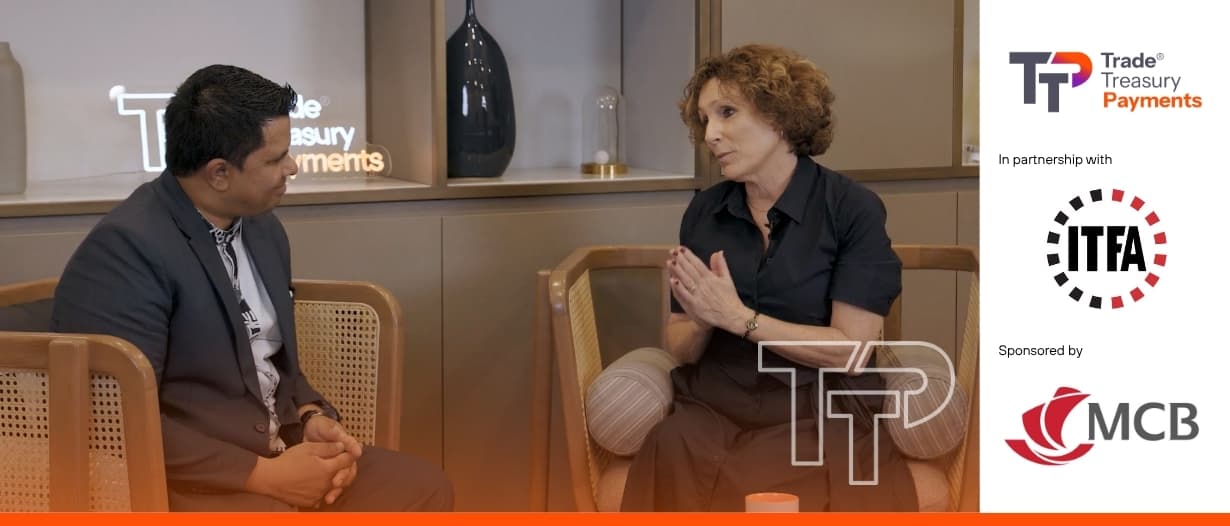
At Trade Treasury Payments Studios, Eleanor Hill, Treasury Editor at Trade Treasury Payments (TTP), spoke with Neh Thaker, Co-founder of HedgeFlows, about the challenges SMEs and mid-market companies face when managing foreign exchange (FX) risk.
While many companies focus on market volatility as the primary risk, Thaker argues that the real issue lies elsewhere. “Undoubtedly it’s the blind spots,” he said.
For most finance teams, movements in FX markets are expected and understood. However, the more dangerous exposures are often the ones that are not immediately visible, particularly economic exposures that sit outside traditional reporting frameworks.
Thaker said, “Those are the ones that tend to trip them up because they’re less visible.”
Unlike transactional or translational exposures, which are captured in accounting systems, economic exposure tends to stay hidden, which can lead to significant consequences, including unexpected performance declines, even when financial reports appear stable.
When risk becomes visible too late
These blind spots can and do have a material impact on business performance.
Thaker pointed to examples where companies with similar revenue profiles experienced very different outcomes depending on how they managed FX exposure.
In one case, a business saw sustained margin compression that only became apparent after the fact, forcing difficult conversations at the board level. In another, a high-growth company absorbed some FX impact through its margins, but ultimately had to reduce marketing spend, which in turn affected revenue growth.
“It started this sort of vicious cycle,” Thaker said.
In both cases, the underlying issue was not a lack of data but a lack of visibility into the full scope of exposure and its downstream effects.
The gap between perceived and actual control
A key challenge for SMEs and mid-market firms is the disconnect between how well they believe they are managing FX risk and the reality of their FX risk management.
For Thaker, this gap is driven by two factors. The first is unaccounted economic exposure, and the second is a lack of clearly defined objectives. “It’s very rare to find a mid-market company that has that conversation well in advance,” Thaker said.
Without clarity on the goal – whether it be to protect margins, stabilise revenues, support growth, or something else entirely – treasury decisions can become reactive.
This challenge is compounded by the fact that many firms lack the time, tools, or internal expertise to build a consistent FX risk management approach, particularly in high-growth environments where finance teams are already stretched.
Building resilience in FX risk management
Despite the availability of FX products and platforms, many SMEs only begin hedging after experiencing a significant loss. Thaker believes this reflects a deeper structural issue rather than a simple lack of access. Efforts to make FX products more accessible or affordable have not fully addressed the problem.
Encouragingly, there are clear indicators of when companies begin to manage FX risk more effectively. One of the most important shifts is moving from a reactive approach to a proactive one, where firms assess and hedge exposures before adverse movements occur.
Another is a change in mindset around hedging performance. Rather than focusing on gains or losses from individual hedges, more mature organisations evaluate whether they are achieving broader business objectives. “Are we delivering the business outcomes that we said we would?” Thaker says they should be asking.
Finally, resilience is reflected in the extent to which FX awareness is embedded across the organisation. When responsibility moves beyond the CFO and becomes part of the wider finance team’s routine, risk management becomes more consistent and sustainable.
Rethinking how SMEs are served
Looking ahead, improving FX outcomes for SMEs is going to require a shift in the approach taken by financial institutions. Traditional segmentation models, which tend to be based on turnover or transaction volume, often fail to capture the complexity of a company’s FX exposure. Smaller firms operating across multiple currencies can face greater challenges than larger, more domestically focused businesses.
As FX markets remain volatile, closing the gap between perceived and actual control will be critical. For SMEs and mid-market companies, that means moving beyond tools and access, and towards a more structured, informed approach to managing risk.
Prefer to listen? The full conversation is also available as a podcast below.
Key Topics
- Economic exposure remains the most overlooked FX risk for SMEs, as it never appears in accounting systems.
- Margin compression and revenue disruption often emerge long before FX gains or losses show up in financial statements
- Many SMEs only hedge after suffering a significant loss, driven by fear, lack of confidence or unclear objectives
- True resilience comes when treasury behaviour becomes anticipatory rather than reactive.
- Banks often mis‑segment SME clients, missing the complexity of their treasury needs.
Expert Analysis
Neh Thaker’s discussion highlights a persistent structural challenge in SME treasury management: firms are often unaware of the FX risks shaping their performance until the impact becomes unavoidable. As he explains, economic exposure rarely appears in standard reporting, yet it can compress margins or distort growth trajectories for months before anyone notices. His examples from a creative services firm facing hidden margin erosion to an e‑commerce business forced to cut marketing spend show how FX risk can ripple through operations in unexpected ways. Thaker argues that resilience depends on clarity of objectives, confidence in forecasting and embedding treasury thinking across the finance team. He also calls for banks to rethink how they segment SME clients, noting that complexity, not turnover, determines the level of support required. “The risk and the exposure was invisible to both the company and the bank”.— Neh Thaker
Key Findings
- Many SMEs experience margin erosion or revenue disruption before FX risk becomes visible in reporting.
- High‑growth firms often absorb FX movements until it begins to affect flexible costs such as marketing, creating a knock‑on effect on revenue
- Confidence gaps around forecasting, tenor selection and hedge ratios prevent firms from acting early
- Structural issues — not pricing or platform access — are the main barriers to SME hedging adoption.
- Treasury workflows must align with existing rhythms (weekly or monthly) to ensure adoption and consistency.
Implications
- Finance teams need better visibility into forward‑looking exposures, not just historical FX gains and losses.
- Banks and financial providers must rethink segmentation, focusing on treasury complexity rather than turnover.
- SMEs require advisory support that fits their weekly workflow, not heavy processes that disrupt operations.
- Hedging success should be measured by business outcomes, not by whether a hedge made or lost money.
- Embedding FX awareness across the finance team — not just with the CFO — is essential for long‑term resilience.