
Building trade finance that works for Sub-Saharan Africa
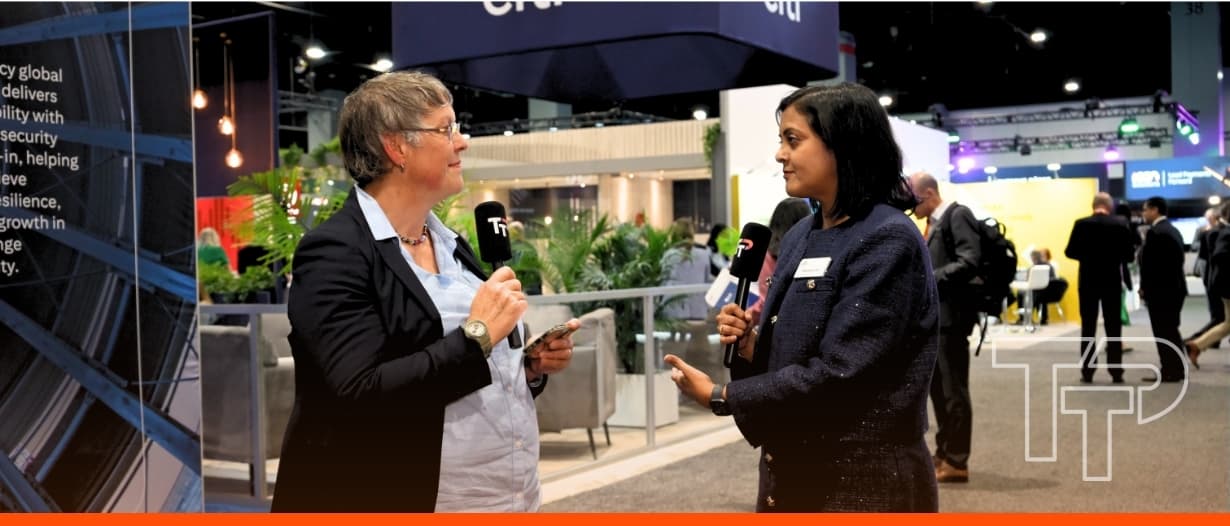
Ahead of the Trade Treasury Payments Awards, Trade Treasury Payments (TTP) spoke with Arnaud Levasseur, Executive Vice President, Trade Finance at Mauritius Commercial Bank Limited (MCB), this year’s winner of Best Cash, Liquidity and/or Risk Management Provider – Sub-Saharan Africa, about what it takes to make trade finance work across African markets, where long payment terms, logistics constraints, and limited information often shape outcomes more than access to capital alone.
For many of the bank’s clients, the challenge starts with supplier terms. Due to their perceived risk, African importers are frequently asked to make large upfront payments on orders and must often settle those transactions before shipment is made. Having such large upfront capital outlays before receiving goods ties up working capital for extended periods and poses a significant challenge for many African businesses who faces higher interest costs in their respective jurisdiction.
Levasseur said, “If you look at the profile of our clients that we have, it’s a lot to do with corporates in Africa or in Mauritius that unfortunately have restrictive terms of payment with their Asian counterparts… they will require substantial trade finance to be able to do the purchase. And then the logistics are challenging as well. So they have a longer trade cycle.”
MCB’s response has been to combine financing with better market visibility. Through its global trade portal (trade.mu), clients can see who is buying and selling similar goods across the region, often revealing closer suppliers or customers that were previously unknown.
“For us, information is essential,” Levasseur said. “A lot of clients and a lot of communities around don’t know that there are people that are buying in countries right next door, or again, people that are selling next door.”
When clients see those flows mapped out, it can change their approach to sourcing suppliers or finding buyers for their goods. “By putting some data, they now find a whole world of countries in Africa that are importing their products,” he said. “This is where I see sparks in my client’s eyes.”
Rather than competing head-on with domestic banks, MCB positions itself alongside them, providing structured trade finance, supply chain solutions, and credit support that complement local capabilities through confirmation of letter of credit, thus allowing suppliers to provide extended credit terms.
“A lot of these African banks are very good. They are doing a great job in terms of traditional trade,” Levasseur said. “Where we position ourselves is as a trusted trade partner… to be able to unlock opportunities for clients, but also for banks.”
The best way to see the impact that this financing can have is to look at real examples of recent transactions that MCB has financed.
In one case, MCB worked with a company in a landlocked African country that had secured an order for the equipment needed to print school books for primary schools, so that it wouldn’t be beholden to foreign suppliers and importing these from abroad. The buyer, however, required credit terms, while the overseas supplier of the printing equipment demanded cash in advance.
Levasseur said, “This is where we were able to craft a tailor-made solution on the back of the letters of credit, structure it to be able to help them purchase this equipment. And once they sold, they paid us.”
By structuring around letters of credit and trade instruments, the bank bridged the timing gap, allowing the equipment purchase to proceed. For Levasseur, the outcome went beyond the transaction itself. “What was more important for us was the underlying benefits of it and the social impact,” he said, pointing to the ability to produce textbooks domestically for the children of the country in line with the UN Sustainable Development Goals and reduce reliance on imports.
Levasseur also believes the trade finance industry in Africa needs to invest in education and awareness to support the next phase of intra-African trade. “First of all, I think that we need to demystify trade finance,” he said. “Trade finance is not something that everyone knows. We don’t learn it at school.”
For its part, MCB has responded with internal training, outreach to business schools, and research on regional trade flows to build deeper expertise across the ecosystem. MCB Group Limited (MCB Group) has released an in-depth report titled “Harnessing Africa’s Trade Potential: Strategies for Sustainable Growth,” highlighting the continent’s economic resilience and untapped trade opportunities. The report is based on insights from the second edition of MCB’s Africa Trade Week, held in 2024, which brought together key stakeholders to discuss the future of African trade amid geopolitical tensions and sustainability challenges.
Impactful transaction and a dedication to improving access to finance across the region contributed to MCB being named the Best Cash, Liquidity and/or Risk Management Provider – Sub-Saharan Africa at the Trade Treasury Payments Awards.
Key Topics
- Intra African trade development
- Trade data and market intelligence
- Structured trade finance solutions
- Bridging Africa’s trade finance gap
- Social return on investment in trade
Key Insights
Expert Analysis
Arnaud Levasseur, Executive Vice President, Trade Finance at Mauritius Commercial Bank Limited (MCB), outlines how access to trade data and structured trade finance solutions is helping unlock intra African trade opportunities. Through its trade portal, MCB enables corporates to identify alternative sourcing and export markets, strengthening their bargaining position and improving payment structures. Levasseur emphasises the importance of partnership with African banks to bridge the trade finance gap, combining confirmations, guarantees and structured instruments to support transactions. He also highlights the broader social return of trade finance, demonstrating how structured solutions can enable education infrastructure and sustainable projects, reinforcing Africa’s growing role in global trade.— Arnaud Levasseur
Key Findings
- Trade information enhances negotiation power for African corporates.
- Restrictive payment terms remain a structural barrier in cross border trade.
- Structured trade instruments reduce funding costs and unlock transactions.
- Bank collaboration is critical to narrowing Africa’s trade finance gap.
- Trade finance contributes to measurable social and developmental impact.
Implications
- Increased access to trade data may accelerate intra African trade growth.
- Structured trade finance will remain central to managing liquidity constraints.
- Cross bank partnerships are necessary to expand risk capacity.
- Demonstrating social impact strengthens the case for expanded trade finance in Africa.
Key Takeaways
- Information is a strategic asset in unlocking African trade.
- Structured trade finance can reduce cost and expand access to capital.
- Collaboration is essential to bridging Africa’s trade finance gap.
- Trade finance supports both economic growth and social development.