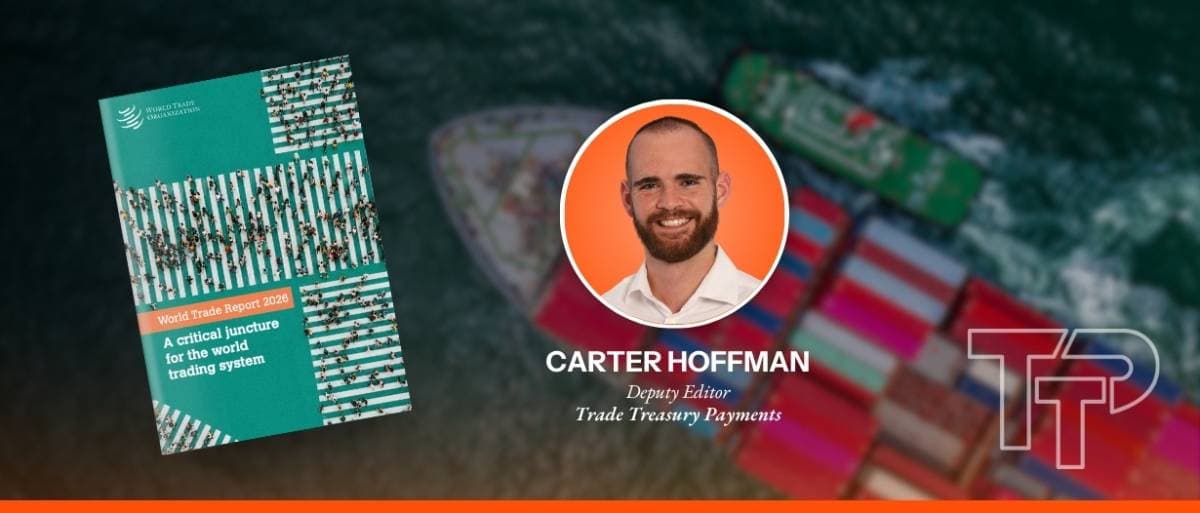
Geneva. The World Trade Organization (WTO) has published the World Trade Report 2026, which examines how the more open and integrated world economy the WTO helped to create has itself brought new challenges for the multilateral trading system.
This year’s edition was edited by Carter Hoffman, Deputy Editor at Trade Treasury Payments (TTP), together with the WTO’s Helen Swain, working closely with the WTO Secretariat and a number of contributors, including TTP Editorial Board member, Emmanuelle Ganne.
Titled “A critical juncture for the world trading system”, the report finds that global trade policy and the WTO are experiencing the most serious and sustained disruptions since the multilateral trading system was created 80 years ago. Its central argument is that many of the pressures the system now faces are, in an important sense, a consequence of its own success. The WTO rules helped to build a more open, integrated and rules-based global economy, but also one that is more multipolar, in which trade policy carries higher stakes and economic power is far more widely distributed than in 1947, or even in 1995.
Graph: Trade policy uncertainty has risen to unprecedented levels in recent years
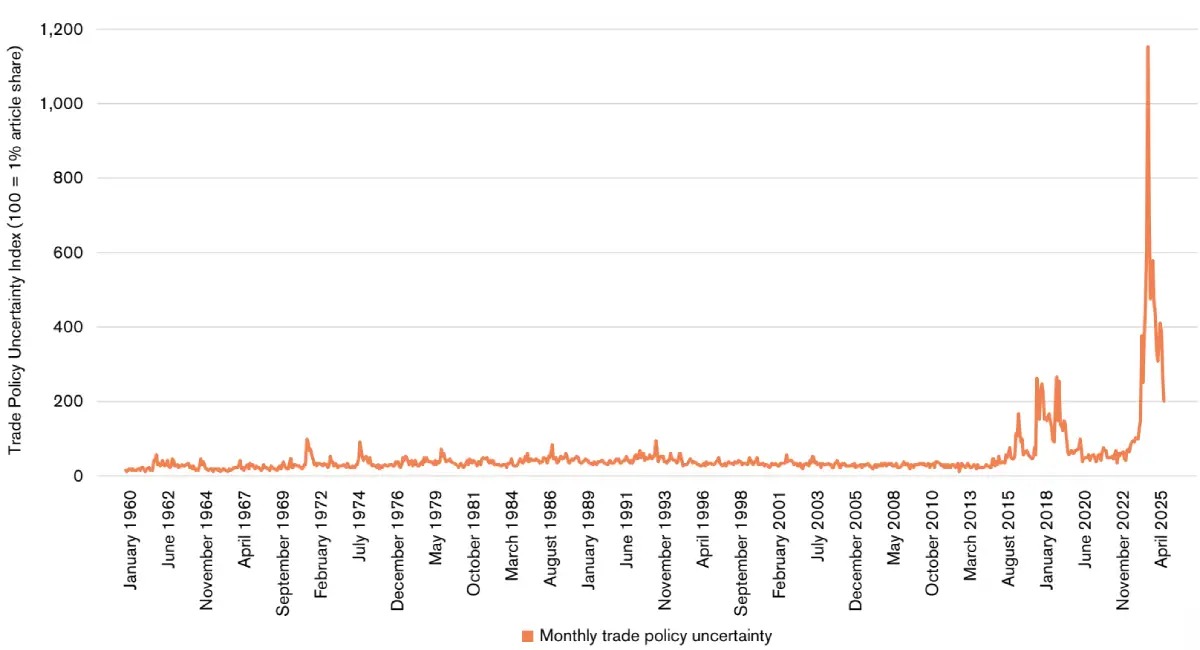
Source: WTO Secretariat calculations based on Trade Policy Uncertainty Index (https://www.policyuncertainty.com/).
Despite the trade measures seen over the past year, around 72 per cent of global merchandise trade still moves under the most-favoured-nation (MFN) tariff terms committed to by the WTO’s 166 members, which together account for some 98 per cent of world trade. According to the report, since 1995, membership has helped to expand trade between members by roughly 140 per cent. Scenario analysis by WTO economists finds that fragmentation of the trading system along geopolitical lines could reduce global GDP by around 5 per cent, and a world without the WTO closer to 7 per cent, with smaller and poorer economies losing far more than high-income economies. A strengthened multilateral system, by contrast, could add roughly 3 per cent to global GDP.
The report focuses on four developments: a more widely dispersed distribution of economic power; the growing diversity in how governments intervene in their economies; the changing nature of trade itself, shaped by global value chains, digitalisation, AI and the environmental transition; and rising geopolitical tensions. Unlike previous editions, which focused on a single theme such as artificial intelligence or inclusiveness, this year’s report addresses a more foundational set of questions about how and why the system has worked, what it has delivered, and where it is now under strain.
In her foreword, Director-General Ngozi Okonjo-Iweala says that the choice before members lies between adapting rules-based cooperation to today’s economic realities and drifting toward a more unpredictable, power-based way of managing trade that would ultimately leave most economies worse off.
Access the full report from the WTO website here.