
Pangea-Risk and Standard Bank introduce a practical new framework to assess project risk for resource development in Africa
Country risk ratings are a reliable compass for standardised risk assessments at the sovereign level. Yet, a sovereign-level score cannot distinguish a stable project enclave from a volatile hinterland, or a well-regulated industry from a nascent one. For export credit agencies, private insurers, and commercial banks, this gap translates into missed opportunities or unexpected losses, particularly in the complex African context. Pangea-Risk, in partnership with Standard Bank’s Energy and Infrastructure Finance team, have begun the development of a new Localised Opportunity and Risk Evaluation platform to turn risks into opportunities. This methodology delivers a concise and complementary lens that examines how location, sector, and resource dynamics reshape real exposure beyond the sovereign baseline.
Why do we need a new project and resources risk methodology?
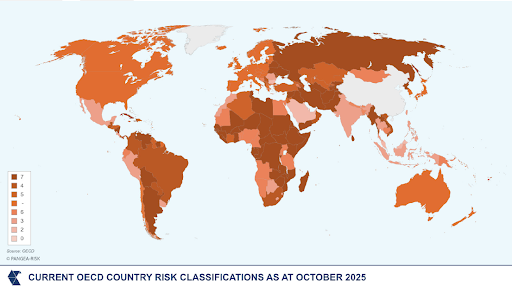
Country risk assessments have traditionally relied on national benchmarks such as the Organisation for Economic Co-operation and Development (OECD) Country Risk Classification. These frameworks have been instrumental in creating comparability and transparency, and a shared vocabulary for international lending. Yet, by design, OECD classifications treat national boundaries as homogenous units of risk, assuming a common baseline of governance, security, and institutional performance that rarely exists in practice within African geographies.
For credit practitioners, this approach can prove inadequate. Projects are not abstract exposures; they are grounded in specific regions and sectors that may bear little resemblance to the sovereign average. A hydrocarbon development near a secure port city, a copper mine positioned along a rehabilitated transport corridor, and even a cocoa cooperative operating in a forested border zone each face fundamentally different realities. Some enjoy strong infrastructure, stable local governance, and community cooperation, while others contend with fragility, logistical constraints, or social tension. When risk is measured exclusively at the sovereign level, it can lead to overly cautious lending where resilience is under-recognised or to unexamined vulnerability where national stability hides local weaknesses.
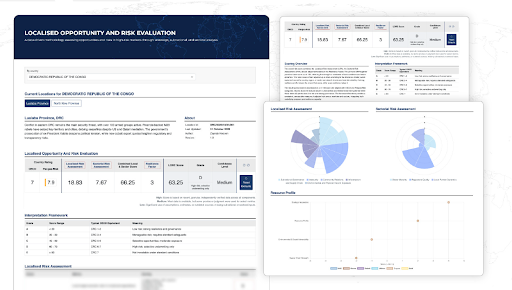
Recognising this challenge, Pangea-Risk and Standard Bank’s Energy and Infrastructure Finance team have collaborated to design the Localised Opportunity and Risk Evaluation (LORE) framework. LORE is an analytical complement to sovereign ratings that aims to capture the subnational and sectoral dynamics that determine whether a project could be bankable within its local or global environment. The framework combines structured reasoning on local governance, infrastructure, community relations, and security with a view of the sector’s maturity and the resource’s intrinsic resilience. Its purpose is to help credit and other business professionals identify where sovereign ceilings may overstate or understate risk, and where targeted mitigants, whether logistical, contractual, or social, can meaningfully shift a project’s risk profile.
Introducing the partnership
The Localised Opportunity and Risk Evaluation (LORE) development has been intentionally collaborative.
- Pangea-Risk brings country and political risk expertise, where its industry-leading methodology on country risk forecasting has recently been peer reviewed and published in the Journal of Risk Management in Financial Institutions.
- Standard Bank contributes local contextual structuring and commercial insight from frontier and emerging markets against the backdrop of the global imperative of SDG goals and the climate imperative.
Together, we have sought to create a usable platform reliant on concise indicators, transparent logic, and clear links between findings and credit outcomes.
This initiative also comes at a time when global credit risk is being reshaped by overlapping structural shifts, notable climate transition, geopolitical fragmentation, volatile tariff regimes, and supply-chain realignment. Export Credit Agencies (ECA) and private insurers are increasingly called upon to support strategic investments in markets that conventional ratings classify as high risk.
Yet within these same jurisdictions, projects critical to global supply chains are proving both commercially viable and operationally resilient. The LORE methodology responds to this new landscape, providing a disciplined way to identify and defend exposure where conventional indicators might otherwise deter participation.
The component parts: Local, sectoral, and resource-focused
The methodology centres on the key assumption that location, sector, and resource profile can each influence understanding of exposure. At the local level, the framework addresses whether the project’s operating environment is functionally stable. Factors such as subnational governance capacity, law enforcement effectiveness, infrastructure reliability, and exposure to environmental hazards collectively shape day-to-day risk. The sectoral perspective considers whether the industry itself provides a cushion or a constraint. Mature sectors tend to benefit from established institutional learning, long-term contracts, and consistent regulation. Emerging sectors, by contrast, may face fluid policies or untested local partnerships, increasing uncertainty.
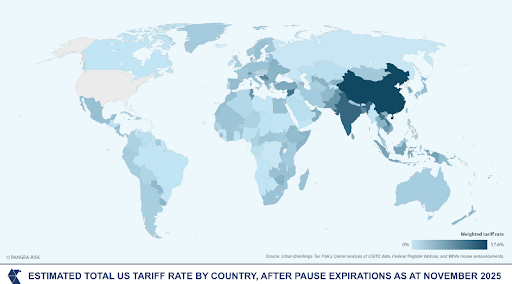
Beyond this, at the heart of this new methodology is a consideration placed on the resource at hand. LORE seeks to answer a fundamental question: can the type of resource underpinning a project – whether it be a critical mineral, liquefied natural gas (LNG), or an agricultural commodity – enhance its overall resilience? The framework considers how a resource’s strategic importance globally, physical characteristics, and supply chain strength can collectively buffer a project against broader drivers of risk, providing an additional mitigant beyond traditional country-level assessments.
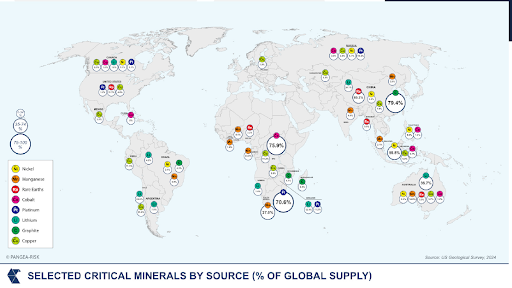
In Angola’s Soyo, for example, power reliability and port connectivity create a resilient base that national indicators might overlook. In Ghana, cocoa’s established position in the export mix provides predictability, yet tightening sustainability standards and deforestation-linked trade rules create new compliance risks that vary by district and cooperative. From a resource perspective, LNG and copper, both industrial and capital-intensive, are difficult to divert or smuggle and are supported by deep global markets. Cobalt, though equally strategic, is vulnerable to refining concentration and supply-chain chokepoints.
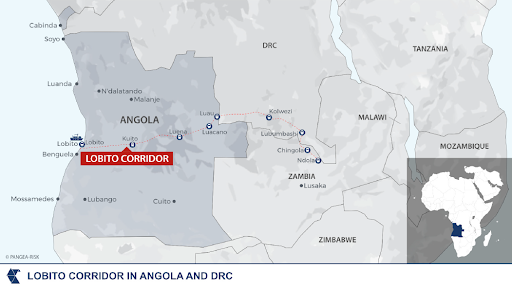
The interaction of these layers creates a more defensible, nuanced picture of risk at a project-level. A copper concentrator in the Democratic Republic of Congo (DRC) connected to Lobito by multiple routes presents a different profile from one reliant on a single corridor through conflict-prone zones. A cocoa export programme backed by traceable supply chains and community reforestation schemes may qualify for enhanced coverage even in a challenging regional context. Together, these comparisons illustrate how LORE translates the complexity of geography, sector dynamics, and resource characteristics into a structured understanding of where resilience may lie within an otherwise high-risk environment.
Insights from pilot testing
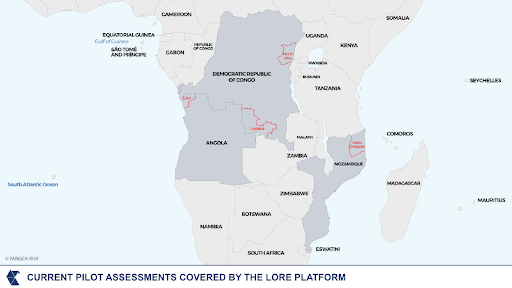
Early pilot assessments in Angola, DRC, and elsewhere illustrate how subnational and sector-specific factors can materially alter project risk outcomes. In some cases, projects initially categorised as “high risk” were reclassified as moderate once local governance, infrastructure access, and community relations were quantified. Conversely, projects in relatively well-rated jurisdictions were found to have underestimated risks due to fragile logistics or social exposure.
In Angola, for instance, the national OECD rating of 6 would overstate the risk associated with the Soyo LNG project in northern Zaire province. Local governance performance, logistical reliability, and relative political stability around the port corridor suggest a lower rating. This adjustment appears feasible given sustained FDI inflows in the energy sector, improvements in customs administration, and moderate community-relations risks compared with the southern provinces.
In contrast, for the DRC, comparative assessments between Lualaba and North Kivu underscore how governance fragmentation and conflict exposure shape project feasibility. While Lualaba’s established mining corridor faces bureaucratic opacity and recurring licensing disputes, its infrastructure and state presence support a moderate development rating. North Kivu’s conflict-prone zones, however, sustain extremely high operational and security risk, warranting a LORE score near the higher risk bound.
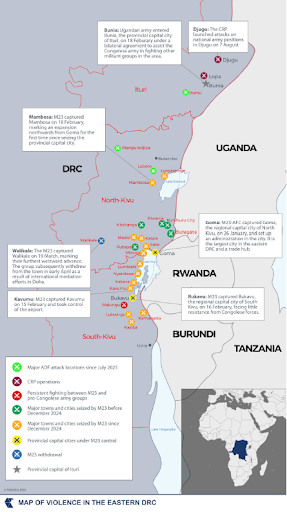
These LORE pilots confirmed that integrating local and sectoral intelligence not only improves analytical accuracy, but also enhances dialogue between risk originators, underwriters, and investors by grounding debate in transparent evidence.
Building on established benchmarks
For institutions accustomed to sovereign frameworks, adopting a second lens does not mean discarding established systems. The OECD baseline remains essential for pricing, eligibility, and policy alignment. LORE aims to build upon this foundation, providing a structured yet flexible reasoning process to bridge the gap between macro ratings and micro realities.
This process starts with the sovereign view, then applies a concise set of diagnostic questions: How capable is local governance in enforcing contracts? Are infrastructure routes redundant or vulnerable to chokepoints? Is community engagement credible and continuous? Are environmental or security risks integrated into project planning? Each question links directly to observable indicators that translate abstract risk into actionable conditions.
When applied consistently, this reasoning produces meaningful differentiation. By codifying this reasoning, LORE promotes analytical discipline and coherence. Credit teams can demonstrate not only what decision was made, but why, linking exposure to specific mitigants. This clarity strengthens coordination among ECAs, private insurers, commercial banks, and even development finance partners, who increasingly demand transparent, evidence-based rationales for selective exposure.
Institutional relevance: Supporting targeted risk appetite
LORE is designed to be both practical and adaptable, offering a shared framework that meets the needs of institutions across the credit and insurance landscape. For ECAs, LORE helps pinpoint “bright spots” within challenging markets, offering justification for selective cover where subnational resilience is demonstrable. It complements sovereign ceilings by providing a structured rationale for differentiated premiums or enhanced guarantees. Private insurers can use LORE to refine portfolio exposure mapping and premium pricing. The ability to disaggregate political and operational risk by geography or sector allows for more precise underwriting, rewarding well-managed projects rather than penalising entire markets.
For commercial banks, LORE functions as a triage tool, flagging projects that merit deeper due diligence and highlighting where additional risk-sharing with ECAs or DFIs is warranted. Its structured logic promotes consistency in internal credit discussions and early engagement with public and private risk partners. In doing so, LORE offers a common analytical language that improves coordination across institutions, supporting more transparent, defensible, and opportunity-focused decisions in complex markets.
“For ECAs, LORE helps pinpoint ‘bright spots’ within challenging markets”
Managing uncertainty and future development
No single framework can eliminate uncertainty. However, LORE is designed to manage it transparently. Subnational data quality remains uneven, and local reporting may be partial or delayed. To address this, the framework incorporates a confidence level based on availability and quality of the underlying data, signalling when further verification is required. It also supports updates in response to events such as a security flare-up, a regulatory change, or a climate-related shock without requiring a full recalibration.
Yet, the current version of LORE forms the foundation for a wider platform. Pangea-Risk and Standard Bank plan to refine its structure through continued pilots and user feedback, while developing a digital interface that will enable portfolio-level mapping and comparative dashboards. Future iterations will expand coverage across sectors, including renewables, agribusiness, and infrastructure as well as a growing location database to cover the divergent nature of frontier markets.
The LORE initiative embodies a shift from viewing risk as a barrier to seeing it as a spectrum that can be understood and managed. By combining sovereign insight with local, sectoral, and resource-level intelligence, Pangea-Risk and Standard Bank are equipping credit professionals with an additional mechanism to identify opportunity across frontier markets. As partners continue testing and refining the model, LORE will evolve into a shared language for identifying, pricing, and ultimately enabling sustainable investment where it is most needed.
Those seeking a deeper dive or conversations about LORE can engage Pangea-Risk or contact us for enhanced due diligence, proprietary resilience analytics, or tailored country-project assessments.