
By: Tim Staheli, Writer & Editor, Trade Treasury Payments
At a fintech summit in London recently, senior executives from some of Europe’s biggest banks listened to a company explain how it’d made money from its customers in ways they were never really meant to understand.
Several heads popped from phones. One or two in the room straightened in their seats.
The example concerned a £1,000 cross-border payment. The sender chose a reputable bank for security and convenience, and the screen displayed a not-particularly-outrageous commission, totalling £4.99. However, on checking the deposit, roughly £120 had vanished. The provider had applied its own exchange rate rather than the mid-market rate – the rate at which currencies are actually traded globally, and the one you’d find if you Googled it.
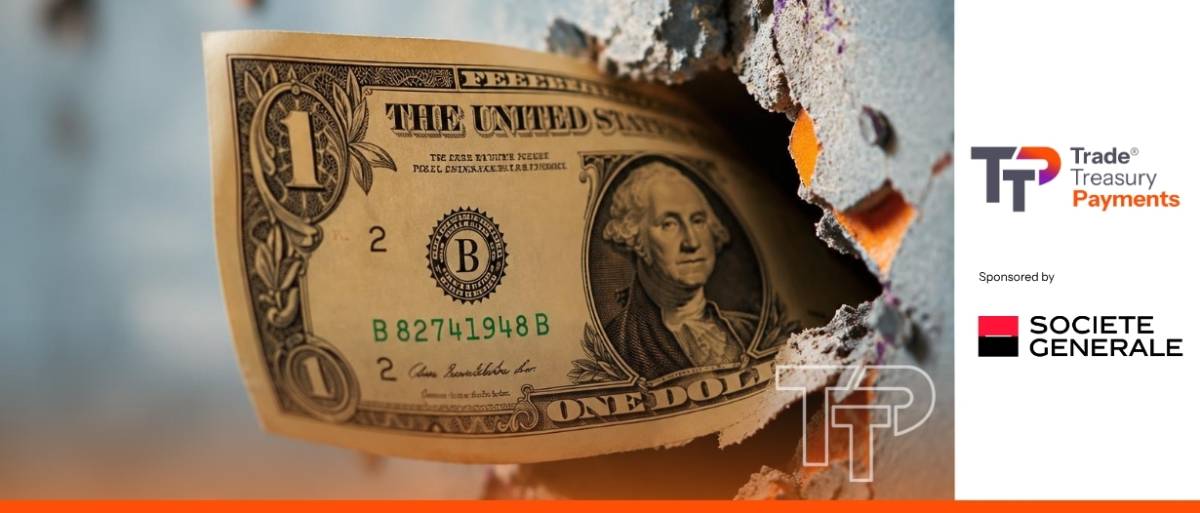
There was no receipt for that £120. It was just gone – absorbed into an inflated exchange rate. The banks have their own word for this, of course. The spread. Or FX margin. It’s a technical feature of currency exchange. But to many, it’s simply a hidden fee.
That invisible charge – a markup often averaging 2.5% – has been the banking industry’s most profitable open secret for decades. The EU first tried to ban hidden currency fees in 2018 but faced years of non-compliance.
Now Brussels is back – this time with sharper teeth.
Closing time
It was in November 2025 that the European Parliament and Council reached a provisional political agreement on the Payment Services Directive 3 (PSD3) – the overarching law governing how payment services operate across the EU – and its companion, the Payment Services Regulation (PSR), which sets out the specific rules providers must follow.
The final texts are expected to be published in the Official Journal this summer, at which point the regulation moves from political agreement to actual law.
Banks and payment providers will have around eighteen months to comply, with full applicability expected sometime between late 2027 and early 2028. For traditional banks still relying on opacity as a business model, this is a long-overdue reckoning.
Research has found that 92% of European banks are not forthcoming about their currency conversion fees. Even PSD2 – the previous directive, which stated explicitly that “non-transparent pricing methods should be prohibited” – changed little. Most institutions buried the markup in terms and conditions or behind a tooltip.
The numbers are sobering. Traditional banks typically embed a 2–5% FX markup directly into the exchange rate on cross-border payments. It rarely appears on any statement. And unlike an ATM fee or a wire transfer charge, an FX markup is, in regulatory terms, a phantom: invisible on arrival, and difficult to disprove. But highly profitable.
Nearly two-thirds of consumers say hidden fees have made them less trusting of their bank. More than half have already moved, or are planning to. Businesses feel it differently – the costs accumulate with every transfer, unaudited and uncontested.
Rate cycles come and go, of course. But what banks have never had to contend with – until now – is their customers knowing exactly what they are being charged. Transparency, it turns out, is the sharpest regulatory instrument of all.
The disruptors
The idea that things could be different didn’t originate in Brussels.
Kristo Käärmann and Taavet Hinrikus founded Wise (back then, TransferWise) in London in 2011, out of personal frustration with exactly this problem. Their proposition was ground-breaking in its simplicity: use the mid-market rate, charge a small transparent fee, and show customers everything before they confirm. In the years since, Wise has grown to a FTSE-listed company processing £145 billion in transfers a year, saving its 15 million customers an estimated £2 billion annually, compared with traditional banking alternatives. Its average fee today stands at 0.53% – a fraction of what the banks still get away with charging.
The model worked. And, crucially, it worked well enough to embarrass the incumbents. A cluster of forward-thinking banks – Monzo, N26, Starling, Nationwide, and UniCredit among them – embedded mid-market rate principles into their services, many through direct partnerships with Wise. No last-minute scramble for them. They ordered ahead.
Legacy banks face a harder reckoning. For many, the FX markup is loose change only in name. It is a revenue line built on concealment and cashed in for decades. Full disclosure will make that margin visible. And visible margins are competitive margins.
Settling the tab
Under the new framework, all payment providers must disclose currency conversion charges against a live mid-market benchmark before a transaction is confirmed.
A debate continues over the benchmark itself. Regulators have proposed using the ECB’s reference rate, which updates only once a day, but the ECB itself has resisted, and fintechs argue that a static daily rate is incompatible with instant payments. A live aggregated mid-market feed, they say, is the only benchmark that actually reflects what currency costs at the moment of transfer.
The UK, outside the EU since 2020, is moving in step. The FCA invoked the Consumer Duty in May 2025 to set out guidance on international payment pricing transparency, while the government’s Payments Forward Plan, published earlier this year by HM Treasury alongside the FCA and the Bank of England, sets out a 2026–2028 roadmap that mirrors the intent of PSD3. The PSR itself will apply directly across the EU within eighteen months of publication – with PSD3 requiring national transposition on the same timetable.
The banks that built fortunes on what customers couldn’t see are about to find out what happens when they can. After decades of profitable silence, Europe is finally forcing the financial industry to do the hardest thing of all: tell the truth about the price.