
Emerging Europe is experiencing significant demographic headwinds. Fertility rates have fallen well below the replacement level of 2.1 children per woman, averaging around 1.5. This decline is driven by delayed childbearing, changing social norms, economic uncertainties, and evolving family structures, says the EBRD’s latest Transition Report 2025-26: Brave Old World, launched today.
Between 2024 and 2050, the working-age cohort in emerging Europe is projected to contract significantly, leading to a reduction in annual GDP per capita growth by nearly 0.4 percentage points on average. A shrinking working-age population compounds the demographic decline.
The report highlights how ageing economies face mounting pressures while younger populations in other regions offer potential growth opportunities, if managed effectively.
Fertility patterns: First births and economic drivers
The report provides an analysis of fertility trends, distinguishing between first-time births and higher-order births. It reveals that the decline in first births is the primary driver of overall fertility reduction.
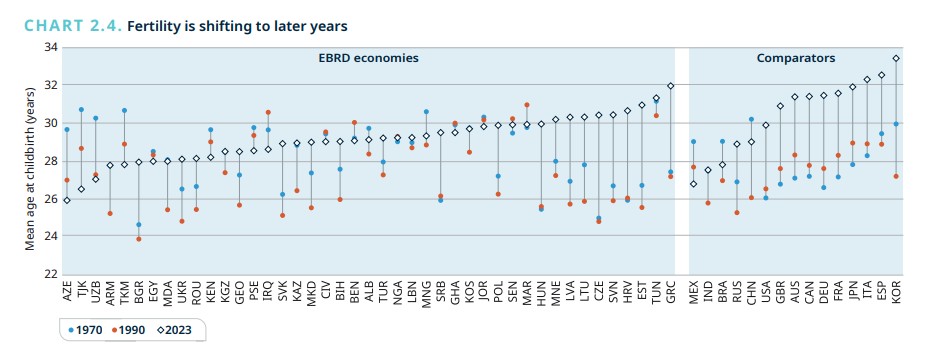
Many individuals and couples are postponing or opting out of parenthood entirely, rather than simply having fewer children after the first. Economic factors play a crucial role in this trend. Job insecurity, housing affordability, and the cost of child-rearing weigh heavily on decisions to have children. Social norms around marriage and family formation are also evolving, contributing to delayed childbearing.
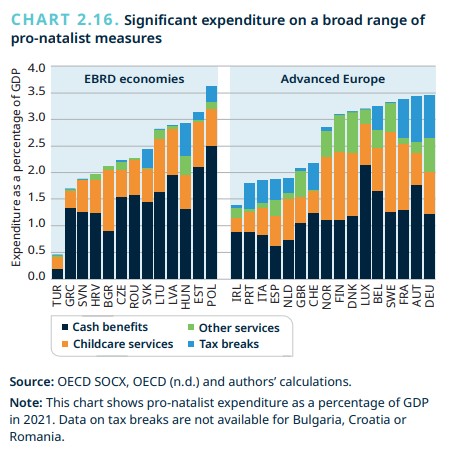
The report states that even generous pro-natalist policies, such as cash benefits and parental leave, have a limited long-term impact on reversing fertility decline.
Regional contrasts: Younger populations and emerging challenges
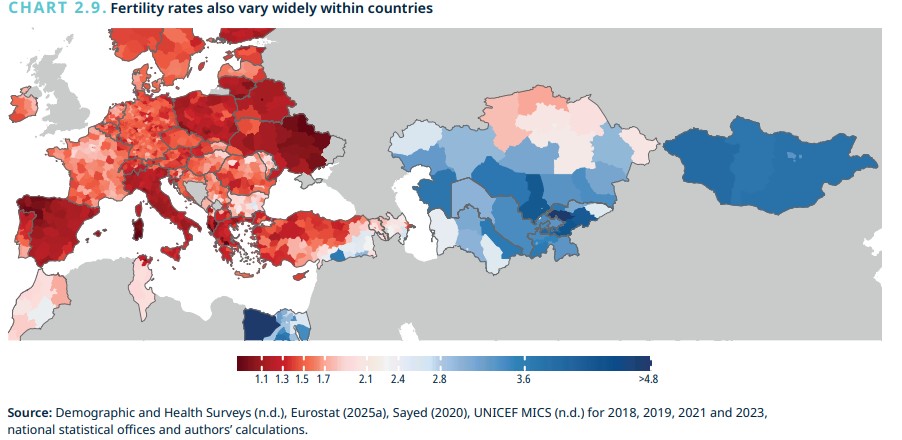
While emerging Europe faces demographic decline, parts of Central Asia and the southern and eastern Mediterranean continue to benefit from younger populations. These regions maintain higher fertility rates and expanding working-age populations, supporting near-term economic growth. However, the report warns that these demographic advantages are temporary. Fertility rates are trending downward, and ageing will soon become a pressing issue.
Sub-Saharan Africa has a distinct demographic profile in this case. Although fertility rates are beginning to fall, the region’s labour force is growing rapidly, offering a potential demographic dividend if economic structures can absorb and productively use this workforce.
The report stresses that realising this dividend depends on job creation, education, and infrastructure development.
Labour market adaptations: Extending working lives and job flexibility
In response to demographic pressures, labour markets are transforming. Employment is shifting toward “age-friendly” jobs that require less physical effort and offer greater flexibility, enabling older workers and women to remain economically active longer.
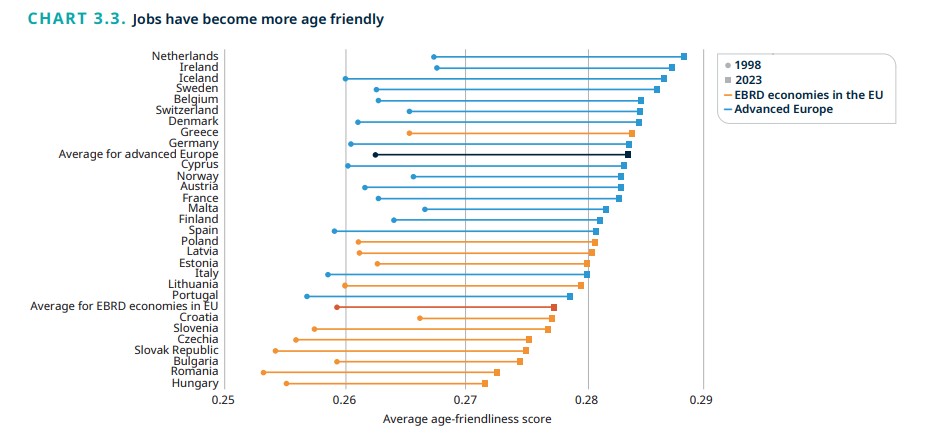
This transition is important for offsetting shrinking youth cohorts and maintaining labour supply.
Women’s participation in the labour force is rising in many countries, helping to address demographic decline. Supportive policies like flexible work arrangements and childcare have played a role, but progress varies by region, and obstacles still exist.
Technological advancements, including automation and digitalisation, are changing labour demand.
While these technologies can enhance productivity in certain sectors, they may also lead to job displacement in others.
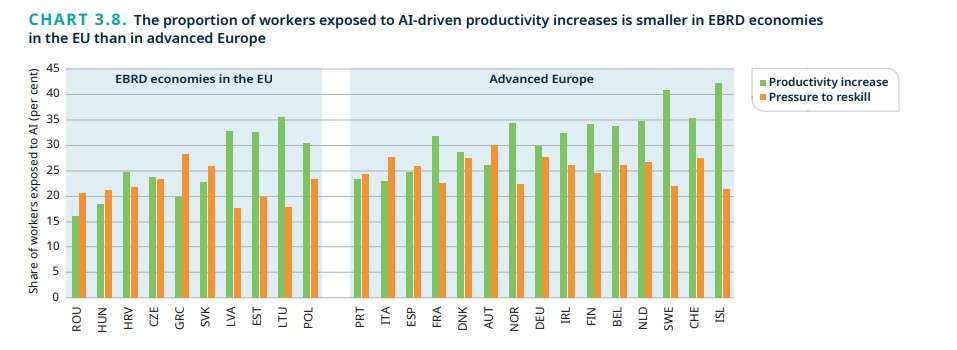
The report emphasises the urgent need for continuous reskilling and lifelong learning to keep the workforce relevant and maintain economic competitiveness.
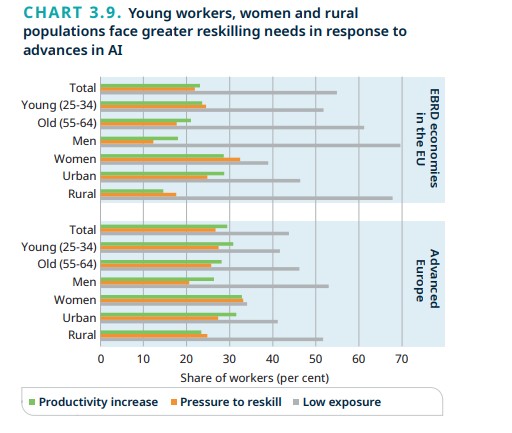
Organisations that successfully adopt new technologies tend to have higher human capital and better management practices, creating a productivity divide. Addressing this gap requires strengthening education systems, vocational training, and access to digital tools.
Migration is a partial but limited solution
Migration is identified as a key policy lever to alleviate labour shortages caused by ageing populations. However, the scale of migration needed to fully offset demographic decline would be unprecedented and politically challenging.
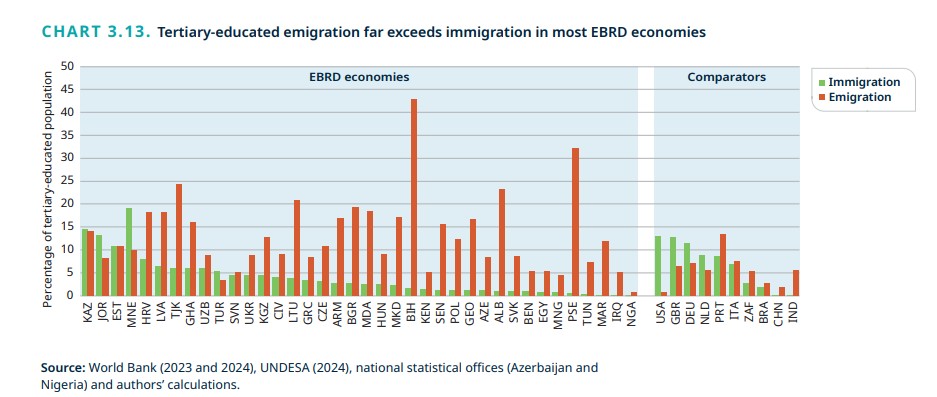
Emigration rates in EBRD economies have consistently surpassed the global average. By 2020, around 15% of people born or holding citizenship in these countries lived abroad. This was an increase from 12.2% in 2000, not counting those who returned. In Albania, 30% of people had lived abroad, and nearly half planned to emigrate again.
In 2020, about 20% of residents in EBRD regions were born in other countries, with fewer labour immigrants compared to other areas. In advanced economies, about 20% of residents were foreign-born, and 7.3% of their citizens lived abroad.
The report says that skilled workers from EBRD regions often seek opportunities abroad for education and careers more than their less-educated peers. Immigrants to these regions typically come from poorer countries with lower tertiary education rates.
For instance, in Bosnia and Herzegovina, about half of all graduates from local universities lived abroad in 2013, while foreign-born individuals are less than 2% of the country’s population.
High-income economies like the US, the UK, Germany, and the Netherlands have long attracted immigrants and have accumulated far more skilled immigrants than they have lost.
The report notes that migration policies must be integrated with broader strategies to increase labour participation and productivity.
Political economy: Generational divides and policy challenges
Demographic change affects political dynamics. Older generations now make up a larger part of electorates and leadership roles, which influences public spending priorities. The report shows clear differences between generations. Older voters focus more on healthcare and pensions, while younger voters care more about education, housing, and climate action.
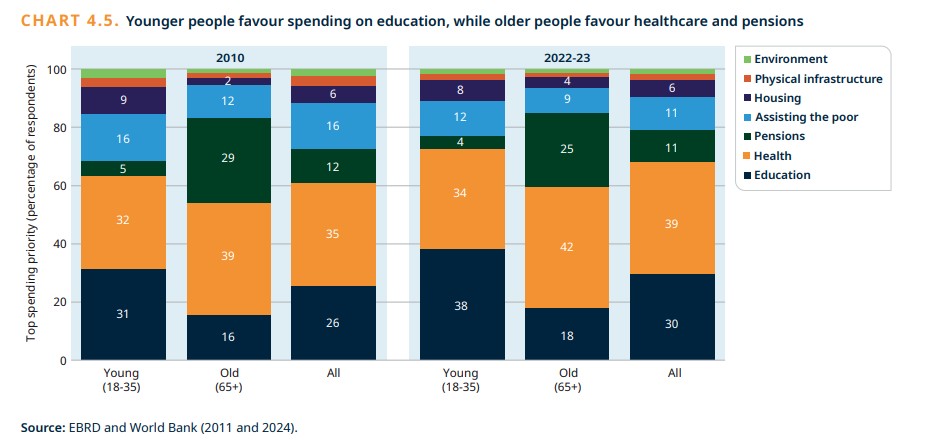
These differences complicate policymaking and contribute to political polarisation, making reforms more challenging to implement.
The report highlights how important structural reforms and economic integration are. Countries that improve their connections, lower trade barriers, and attract investment can better handle demographic challenges and continue to grow.
EBRD’s policy recommendations
The EBRD report outlines clear steps for governments. It focuses on encouraging longer working lives through adjustments to retirement ages and the promotion of flexible work arrangements.
Investing in education and skills training that align with the evolving demands of the labour market can also be helpful to equip workers to remain productive and adaptable. Managing migration strategically can help supplement domestic labour forces where shortages exist.
Supporting job creation is particularly important in younger economies, which can benefit from entrepreneurship and improved access to finance. Finally, the report suggests that balancing the needs of different generations is non-negotiable to maintaining social cohesion and political stability amid shifting demographic dynamics.
Access the full report here.