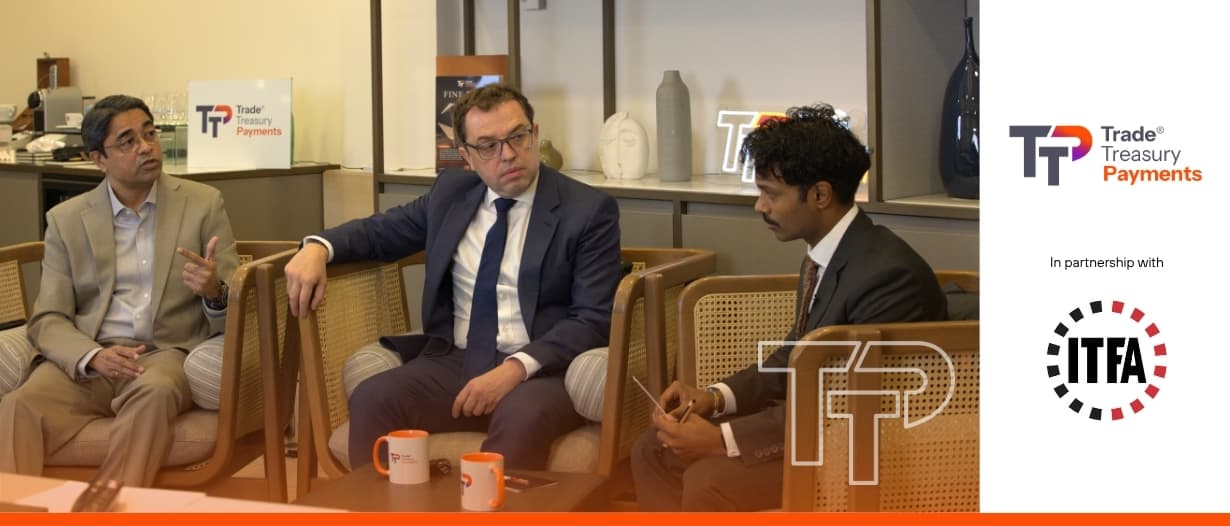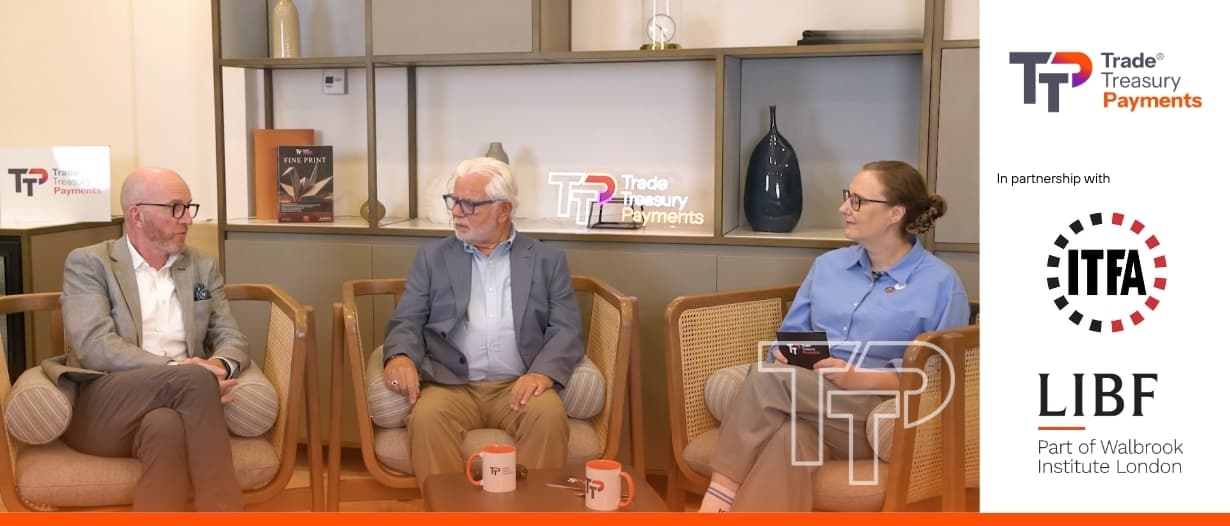

Enno-Burghard Weitzel, CSO of Surecomp and Alex Fenechiu, Co-Founder & COO of Finverity: Can we really make trade integration seamless?
At Sibos 2025 in Frankfurt, Trade Treasury Payments (TTP) spoke with Enno Burghard Weitzel, Chief Solutions Officer of Surecomp, and Alex Fenechiu, Co Founder & COO of Finverity, about the meaning of seamless trade integration and how their new partnership aims to make it a reality.
Weitzel explained that while Surecomp is widely known for its leadership in traditional trade finance, the company has long supported open account structures within its back office systems. “Growth lies in open account,” he said. “Traditional trade finance has reached its limit globally, and banks are now looking for platforms that can capture new opportunities in payables and receivables finance through simple, scalable integrations.”
For Finverity, the collaboration brings both reach and acceleration. “We provide the front end for supply chain finance programmes,” said Fenechiu. “It used to take years to onboard new clients, but working with a trusted partner like Surecomp changes that completely. Our integration is pre tested and plug and play, cutting implementation effort for banks by up to 95 per cent. Together, we can scale faster and deliver more value to corporate clients.”
The idea of “seamless integration” runs deeper than technology. Weitzel compared it to an operating system that grows through interconnected applications rather than bolt ons. “Banks using Surecomp can continue working in their own environment while their corporate clients use Finverity’s front end,” he said. “There’s no media break, no manual step, just a single connected workflow. That’s what seamless really means.”
Both agreed that the next phase of growth in supply chain finance depends on collaboration and execution. “We need to make it simple for banks to go live quickly, measure value, and give corporates the best possible experience,” said Fenechiu. Weitzel added, “At some point, you just have to start. Choose one use case, go live, and build momentum from there. Progress happens by doing.”
As discussions around interoperability continue to dominate industry forums, the Surecomp–Finverity partnership offers a clear example of how integration, done thoughtfully, can move trade finance closer to becoming truly connected and scalable
Key Topics
- SureComp’s shift from traditional documentary trade finance to supply chain finance.
- The value of seamless integration between SureComp (DOKA/RIVO) and Finverity.
- Growth potential in open-account trade (payables and receivables finance).
- Banks’ challenges in implementing new SCF systems (resources, complexity).
- The importance of delivering a unified corporate and bank experience.
- Scaling supply chain finance through interoperability, onboarding, and simplicity.
Expert Analysis
The biggest effort for banks is finding internal resources to run SCF implementation projects. With pre-integrated, tested solutions like ours, that effort goes way down. And the best way to scale is to give corporates the best experience possible.— Alex Fenechiu
Key Findings
- Traditional documentary trade finance remains static; growth lies in open-account solutions.
- Banks seek simple, integrated SCF platforms that minimise internal resource strain.
- The SureComp–Finverity integration enables banks to operate in DOKA while corporates use Finverity, eliminating media breaks.
- Large global banks prioritise receivables/payables and distribution; regional banks focus on pre-shipment and PO finance.
- SCF adoption slows when banks must juggle multiple systems or complex onboarding.
- Fintech partnerships must deliver true integration, not additional layers of technology.
Implications
- Banks can accelerate SCF launches by choosing pre-integrated solutions rather than building from scratch.
- Corporate clients gain a smoother digital experience, improving programme adoption.
- Market differentiation increasingly depends on ease of deployment and corporate usability.
- Seamless interoperability across systems (DOKA, RIVO, Finverity) reduces operational risk and speeds time-to-market.
- Banks should prioritise resource-light, plug-and-play SCF solutions to compete effectively.