Souleïma Baddi, CEO of Komgo on the challenges of removing paper from trade and the role of connectivity in driving digital transformation across the industry.
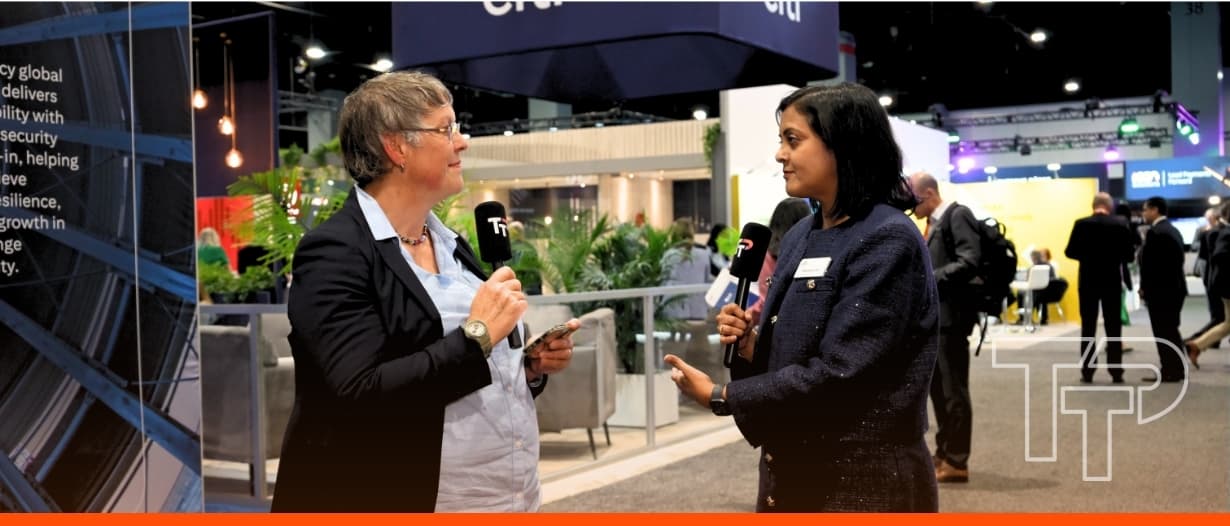
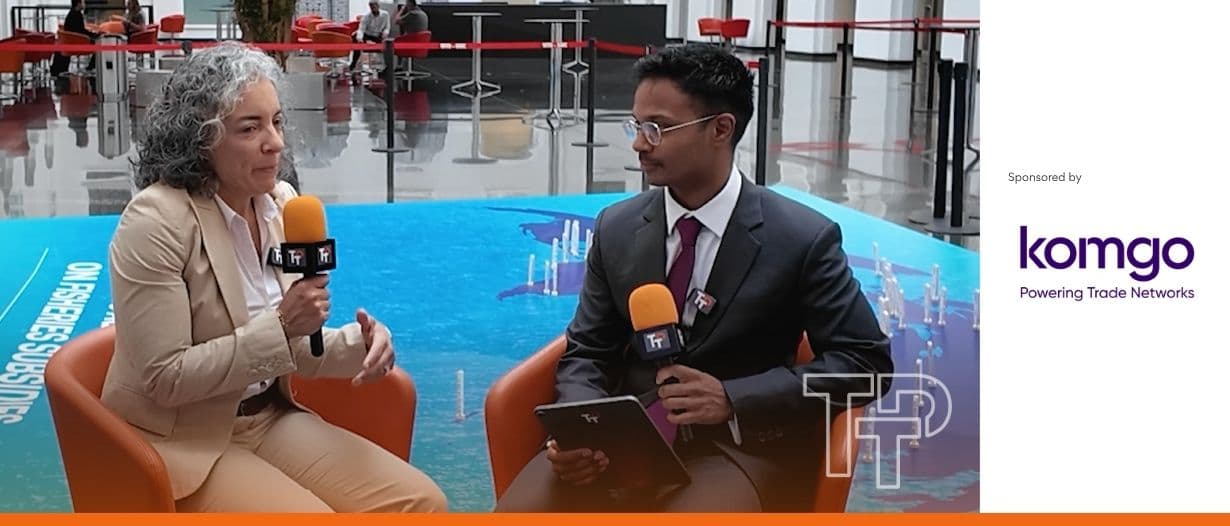
At the World Trade Organization (WTO) in Geneva, Trade Treasury Payments (TTP) spoke with Souleïma Baddi, CEO of Komgo, about the challenges of removing paper from trade and the role of connectivity in driving digital transformation across the industry.
Baddi said, “It’s a long and challenging journey, for sure. It’s not only a question of moving from paper to digital. It’s about providing the ecosystem with the entire toolbox – technology, people, and roles – that allows this transformation to happen.”
For Komgo, the key lies in connecting to what businesses already use to bring an extra layer of added value as well as a platform for future innovation. Rather than replacing legacy systems, the platform integrates with existing IT setups to automate workflows and bring digitalisation to life. Baddi stressed that creating an electronic bill of lading (eBL) is technically straightforward, but using it effectively requires operational changes across the entire end-to-end business process.
Which brings us to collaboration. “Trade does not operate in isolation. And treasury, by the way, does not operate in isolation either,” Baddi said. She pointed out that while proof-of-concept projects once dominated, they often failed to scale – leading to “digital fatigue” in the market. The focus now must be on delivering solutions that work at scale and provide measurable value to corporates, financiers, and governments.
Komgo’s foundation is built on this principle. Backed by 25 strategic shareholders, the company has grown from 13 founding institutions to a network of more than 300 clients worldwide. “Today as a bank, if you say to your clients, go back to email, good luck. This is not going to happen,” Baddi said. Through its applications (Konsole for banks and GTK for corporates) Komgo’s platform enables automation across guarantees, trade finance tools, and corporate-to-bank connectivity. In some cases, clients now issue 80 per cent of guarantees without manual intervention.
Underpinning this growth is a strong commitment to security and data protection. Baddi emphasised that Komgo’s clients entrust the platform with sensitive trade information that needs to be managed under rigorous standards. “Our clients audit us regularly, and we meet some of the toughest certification requirements in the industry, including SWIFT’s trade certification,” she said. “Data safety is at the core of everything we do, because trust is what enables true digital connectivity.”
Looking ahead, Baddi’s call to action for industry stakeholders at the WTO’s Digital Trade Transformation Forum is to keep it pragmatic. “We all know the end goal. But now we need it to happen. My recommendation would really be to agree on steps that are scalable, replicable, and that will show value – and that will bring us to succeed in removing paper from trade.”
Key Topics
- Removing paper from trade is not a technology problem but an operational, legal, and cultural one.
- Digitalisation requires full end‑to‑end process redesign, not just digital documents.
- Collaboration across corporates, banks, technology providers, and governments is essential for scale.
- Proof of concept fatigue has slowed adoption; users now demand solutions that work in real operations.
- Komgo’s ecosystem approach, shareholder backing, and certifications underpin its reliability and relevance.
Key Insights
Expert Analysis
The conversation at the WTO highlights a recurring truth in digital trade: technology alone cannot remove paper. As Souleima Baddi explains, the real transformation happens when organisations rethink how they operate, connect, and collaborate. Years of isolated pilots have created fatigue, but the industry now recognises that scalable solutions must integrate with existing systems and deliver tangible value. Komgo’s approach—combining automation, interoperability, and a strong industry‑backed network—illustrates how digital trade can move from aspiration to reality when the ecosystem works together.— Souleïma Baddi
Key Findings
- The barriers to digital trade are structural rather than technical.
- Scalable digitalisation requires ecosystem‑wide coordination.
- Komgo’s model shows that automation is achievable when connectivity and process redesign align.
- Trust, security, and certification remain central to adoption
- The industry is aligned on the end goal but must focus on practical, incremental progress.
Implications
- Organisations must invest time in redesigning processes, not just adopting digital documents.
- Technology providers need to prioritise interoperability and integration with legacy systems.
- Banks and corporates will increasingly expect automated, secure, and auditable trade workflows
- Regulators and multilaterals play a critical role in enabling cross‑border digital alignment.
- Industry wide fatigue from failed pilots means future initiatives must deliver immediate operational value.
Key Takeaways
- Removing paper from trade will only happen when the industry embraces practical, scalable steps that reshape end‑to‑end operations and strengthen collaboration across the entire ecosystem.