
Building factoring and supply chain finance capacity in Uzbekistan
Video not playing? Watch via Youtube.
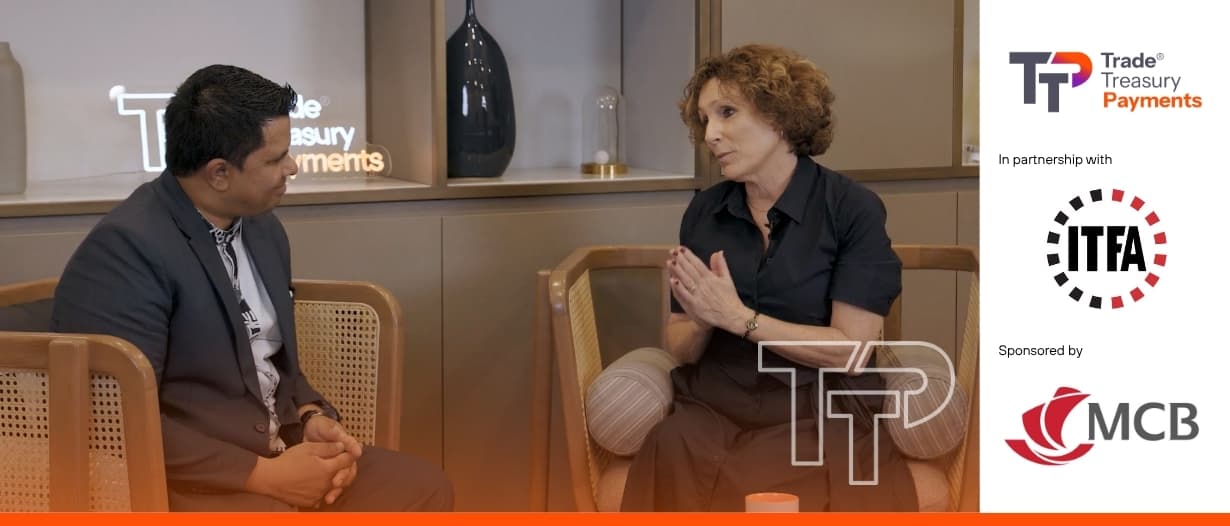
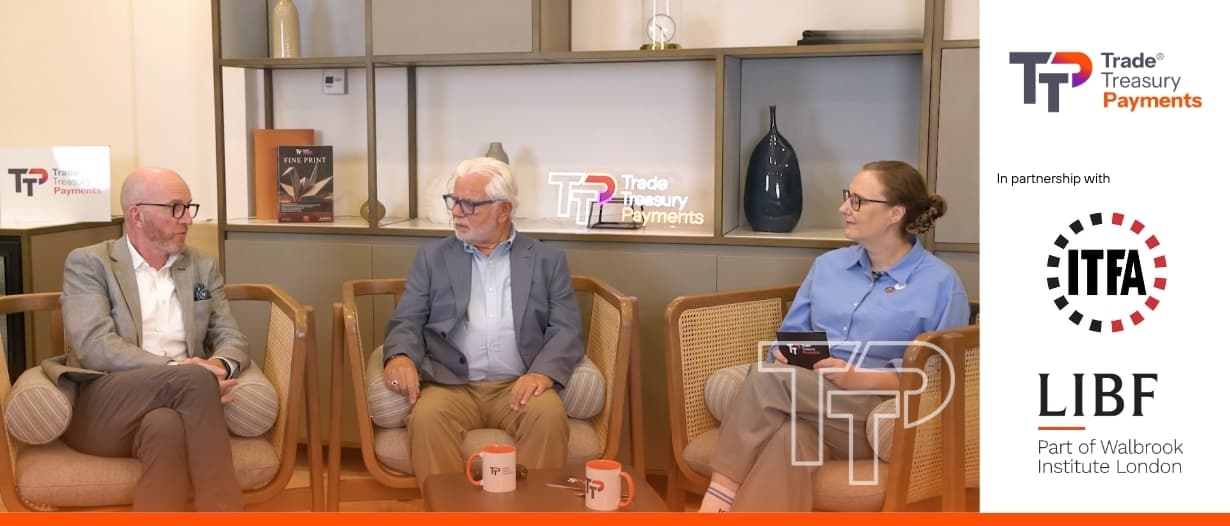
At the Tashkent International Investment Forum, Trade Treasury Payments (TTP) spoke with Aysen Cetintas, Education Director at FCI, to discuss the development of factoring and supply chain finance in Uzbekistan and beyond.
Cetintas was in Tashkent with her colleagues as part of a multi-stage capacity-building programme led by FCI in collaboration with the International Finance Corporation (IFC). The two-day training brought together representatives from the Central Bank of Uzbekistan, commercial banks, and policymakers to support the adoption of factoring and reverse factoring in the country.
“We have been in close cooperation with IFC in terms of Uzbekistan’s progress on factoring and reverse factoring,” Cetintas said. “This is now the second part of our joint effort. The first part was a kind of conference in December last year, and this time it is a full two-day training capacity building programme… we have a full house, almost 100, maybe more than 100 people inside. And really, we are very happy.”
Factoring and supply chain finance remain underdeveloped in many emerging markets, including Central Asia, where legal frameworks and financial infrastructure are still evolving. Uzbekistan, however, has taken formal steps to address these gaps—beginning with a presidential decree and a new factoring law.
“First of all, the legal infrastructure, but Uzbekistan made very good progress in that field,” Cetintas said, noting a recent presentation from IFC colleagues outlining reforms already underway. The country’s efforts, she suggested, could serve as a regional model.
“Uzbekistan should be a role model for the neighbouring countries to make them flourish and just have the courage to enter into the open account trade finance field, including factoring,” she said.
Despite the momentum, many challenges persist. In addition to regulatory gaps, banks often lack the operational readiness and internal knowledge required to offer factoring products at scale. Cetintas noted that most developing and emerging markets continue to face these same hurdles.
As part of the programme’s final session, FCI and IFC plan to hold a public discussion forum with local stakeholders to identify barriers and design practical solutions.
“We will open a discussion forum to the floor and we will invite also IFC delegates and Central Bank delegates, and we will discuss all challenges and how to overcome them, hopefully in Uzbekistan, and also in the neighbouring countries.”
Key Topics
- The development of factoring and reverse factoring in Uzbekistan
- Training and capacity building for central and commercial banks
- Legal and regulatory progress supporting supply chain finance
- Collaboration between FCI and IFC to develop local markets
- The growth of open account trade finance across emerging economies
Expert Analysis
The conversation reflects a clear shift towards more structured development of factoring in Uzbekistan, supported by close cooperation between FCI and IFC. What stands out is the practical approach being taken. Rather than focusing purely on policy, there is a strong emphasis on training, knowledge transfer and building real capability within banks. The legal framework has improved significantly, helped in part by government backing, and this is beginning to unlock momentum in the market. However, regulation alone is not enough. Banks need the skills, confidence and operational understanding to offer factoring and reverse factoring solutions effectively, which is where initiatives like these training programmes play a vital role. There is also a broader regional angle. Uzbekistan is not developing in isolation. Its progress is being closely watched and could encourage neighbouring countries to follow a similar path. If that happens, it could help accelerate the wider adoption of open account trade finance across Central Asia. Overall, the direction is positive. The foundations are being put in place, but continued collaboration, education and dialogue will be essential to turn early progress into a fully functioning market.— Aysen Cetintas
Key Findings
- Training initiatives are strengthening the ability of banks to deliver factoring solutions
- Legal and regulatory clarity is a key enabler of market development
- Uzbekistan has made notable progress compared to some neighbouring markets
- Market growth depends on both policy support and practical implementation
- Open account trade finance presents a strong opportunity across emerging economies
Implications
- Continued legal development is likely to support further growth in factoring
- Banks will become more active as training improves confidence and capability
- Partnerships between international organisations and local institutions will remain important
- Uzbekistan could take on a leading role in the region
- Ongoing engagement will be needed to overcome practical and structural challenges