
How Komgo’s GTK is digitising trade finance management
Trade finance is the foundational engine of global commerce. Yet, within an increasingly digital world, it has struggled with a frequent reliance on legacy workflows and paper documentation. Fragmented communication channels and administrative friction seem ever present challenges to overcome. Nowhere is this perhaps truer than with guarantee management, an arena where complex documentation, multi-party coordination, and manual tracking have traditionally slowed down operations for large corporations and global banks alike.
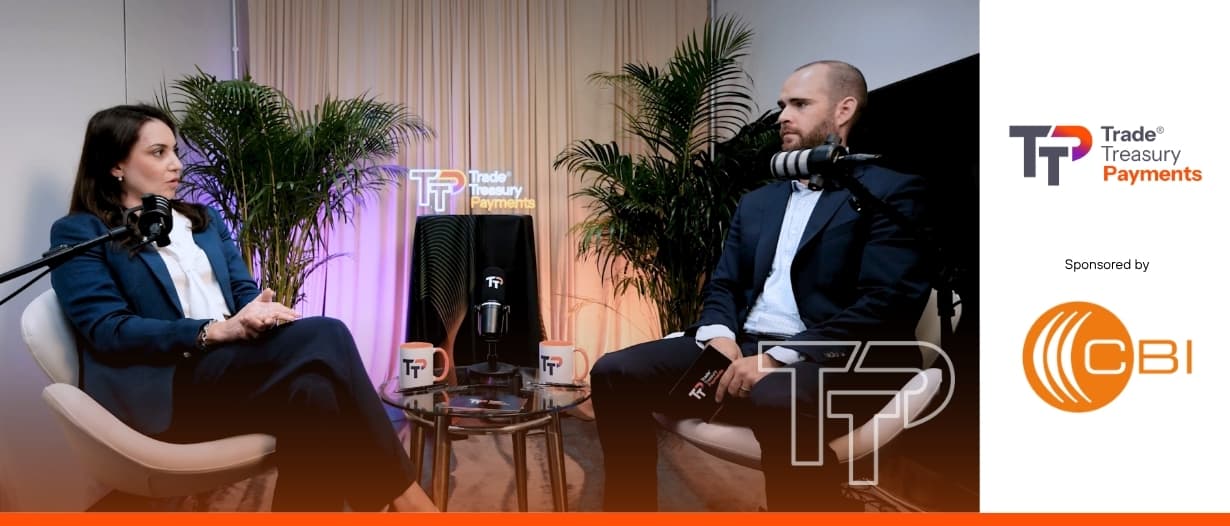
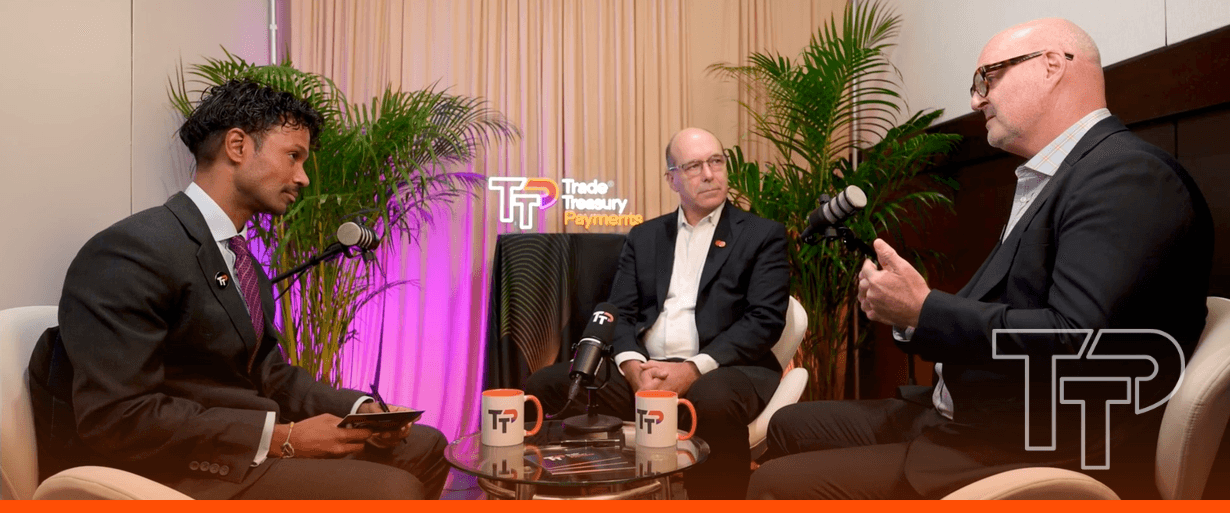
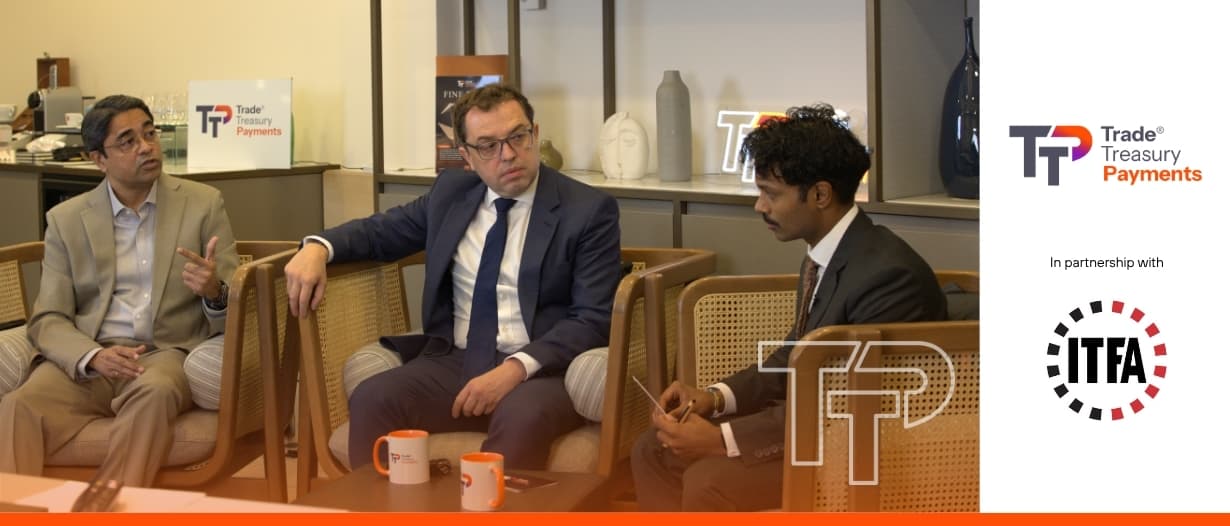
In a TTP Studio’s sit down on the ground at Sibos in Miami, Deepesh Patel, Editor at Trade Treasury Payments, spoke with the C-suite of Komgo – Souleïma Baddi and Baptiste Audren, CEO and CRO, respectively – to explore how the evolution of Komgo’s product suite is transforming the guarantees landscape, blending deep trade expertise with modern infrastructure and artificial intelligence (AI).
A four-year journey
Komgo’s story accelerated four years ago with the strategic acquisition of GlobalTrade Corporation (GTC). The move was designed to bring a specialised tool for managing large books of guarantees, letters of credit, and syndicated facilities onto Komgo’s established network. “The vision behind this acquisition was to bring massive additional digital trade flows coming from this very strong product suite to the banks, through the Komgo network” explains Baddi. As Baddi notes, the product was initially anchored to an aging technology stack. “We knew at that time that it was sitting on an ancient old platform ,” she says. Komgo decided to transform the GTK products in a powerful trade management system and bring them into the modern world. So, that’s what we have been doing over the four past years. And so, the now rebranded GTK sits natively within the Komgo ecosystem. As Baddi explains, Komgo moved the product suite from a data centre located in Canada to a modern AWS infrastructure that is hosted in Europe, but that can be deployed in any AWS infrastructure. The codebase was also entirely rewritten to modern software-as-a-service (SaaS) standards, drastically boosting stability, test automation, and performance while modernising the user interface. This multi-faceted technical modernisation was all in service of a larger strategic purpose: connecting this trade management system directly to the banking network. The culmination of this four-year journey is a reality where corporate clients can bridge their internal treasury management systems directly to their banking partners, creating a seamless, end-to-end trade workflow. “This is where you get full automation in trade, through the combination of the trade management system and the network” says Baddi.What AI can, and can’t, do
AI dominates technology discussions across the finance sector and beyond. A pressing question in many of these discussions is whether software can be entirely “vibe coded” (i.e., auto generated). The question of whether GTK could be replaced by AI was put to Audren, who acknowledged that “AI has allowed us to accelerate the roadmap that we had initially,” enabling developers to automate internal processes and “build a stronger tool than what we would ever have expected”. He emphasised, however, that human expertise cannot be replaced. “What you can’t change is the business knowledge,” he points out. “Business knowledge is what’s key and what we acquired. But we also have inside the teams a lot of trade finance experience amongst all our experts, our sales – all our sales do have trade experience.” As Baddi adds, “what you cannot vibe code is the network”. Komgo’s proprietary network, working with more than 25’000 corporate and bank entities in production, cannot be replaced by AI overnight. Working with major institutions like Citi, HSBC, Deutsche Bank, ING and many others, this trusted connectivity was built over years. Furthermore, rigorous SOC 2 compliance, continuous penetration testing, and deep integration with systems like FIS, CGI, and Finastra mean that software delivery must be carefully governed. “Four years down the road, all the global banks of this world use Komgo today, and this penetration deep into all FIs takes a lot of time” she summarises. Integrating AI While AI certainly cannot replace GTK, it is woven into its core architecture through model context protocols (MCPs). Treasurers and operations teams can interrogate data rapidly as agents can be queried directly inside or outside the application. “We’ve been working on these applications for two years now, and we spent a lot of time trying to get the right context, a fast application, not too expensive, and it really changed completely the dynamic…the way you interrogate it, changed the way you flow from one transaction to another,” Audren explains. For corporate and bank clients, this capability extends beyond simple chat queries. Users can query transaction data, check credit lines, and cross-reference parameters against internal bank policies or external knowledge bases. For Baddi, the next frontier is moving toward autonomous agents that can operate the platform securely for clients. “As we know in trade finance, there’s a lack of resources in many places,” she explains, “so many of our clients are asking us to help them automate the execution. The way we do it is to put agents in place as users, with roles and permissions, to help the operations team of our corporates andbank clients execute trade finance.”Making guarantees multilateral
Komgo continues to look to the future, building on the technological foundation it has established over the past four years. Digital delivery for guarantees is a particular focus, addressing a critical market need. Streamlined amendment and discharge processes are something participants seem to be calling out for, particularly in high-volume regions and mature markets like Germany. The platform is expanding to make guarantee management effectively multilateral. “The platform has always been operating on a bilateral basis,” Baddi explains. “So now we’re including the beneficiary, which is why it’s making it multilateral. [They] will be able to access the guarantee, its status, and perform actions without being a Komgo client.” By opening up the workflow to include the beneficiary and bridging the gap between corporate treasurers, global banks, and external beneficiaries, Komgo’s multilateral approach eliminates friction, increases speed of execution, and injects a vital layer of automation into what has been one of trade finance’s most stubborn operational bottlenecks. Komgo continues to scale its network and refine its intelligent infrastructure. As it forges forward, the company is helping to rapidly move the vision of a fully connected, digital trade ecosystem from aspiration to reality. Prefer to listen? The full conversation is also available as a podcast below.Key Topics
- Komgo's GTK guarantee management platform is being modernised to digitise a workflow that has long relied on paper documentation and manual tracking.
- Komgo moved the GTK product suite from a legacy Canadian data centre to a modern AWS infrastructure and rewrote its codebase to SaaS standards.
- Connecting the trade management system directly to the banking network is intended to deliver end-to-end automation of corporate trade workflows.
- AI is embedded in the GTK architecture through model context protocols, although business knowledge and the proprietary network cannot be replicated by AI alone.
- Komgo is extending guarantee management to include beneficiaries, making the workflow multilateral rather than bilateral.
Expert Analysis
Souleïma Baddi, CEO of Komgo, says the network is what cannot be replicated by AI. "What you cannot vibe code is the network." She notes that Komgo's proprietary network works with more than 25,000 corporate and bank entities in production, and that building this trusted connectivity took years. Baddi also observes that penetration into all financial institutions "takes a lot of time".
Key Findings
- Komgo's GTK product was moved from a data centre in Canada to AWS infrastructure hosted in Europe, and its codebase was entirely rewritten to SaaS standards.
- The modernisation improved stability, test automation and performance while updating the user interface.
- Komgo's proprietary network works with more than 25,000 corporate and bank entities in production and includes major institutions such as Citi, HSBC, Deutsche Bank and ING.
- AI is integrated into GTK through model context protocols, allowing treasurers and operations teams to interrogate data rapidly.
Implications
- Corporate clients may be able to achieve full automation of trade workflows by combining a trade management system with a banking network.
- Amendment and discharge processes for guarantees could be streamlined, which participants are reportedly calling for, particularly in high-volume regions and mature markets such as Germany.
- Including beneficiaries in the workflow is expected to reduce friction and increase the speed of guarantee execution.