

BNY: Update on one-leg-out and real-time payments
While the ultimate dream for many in the financial services sector is a seamlessly interconnected global market, the current reality is that cross-border transactions remain notoriously burdened by friction. Domestic real-time payment (RTP) networks continue to be rolled out worldwide, but moving money across borders is often still sluggish thanks to unpredictable settlement windows, opaque fees, and multi-day delays.
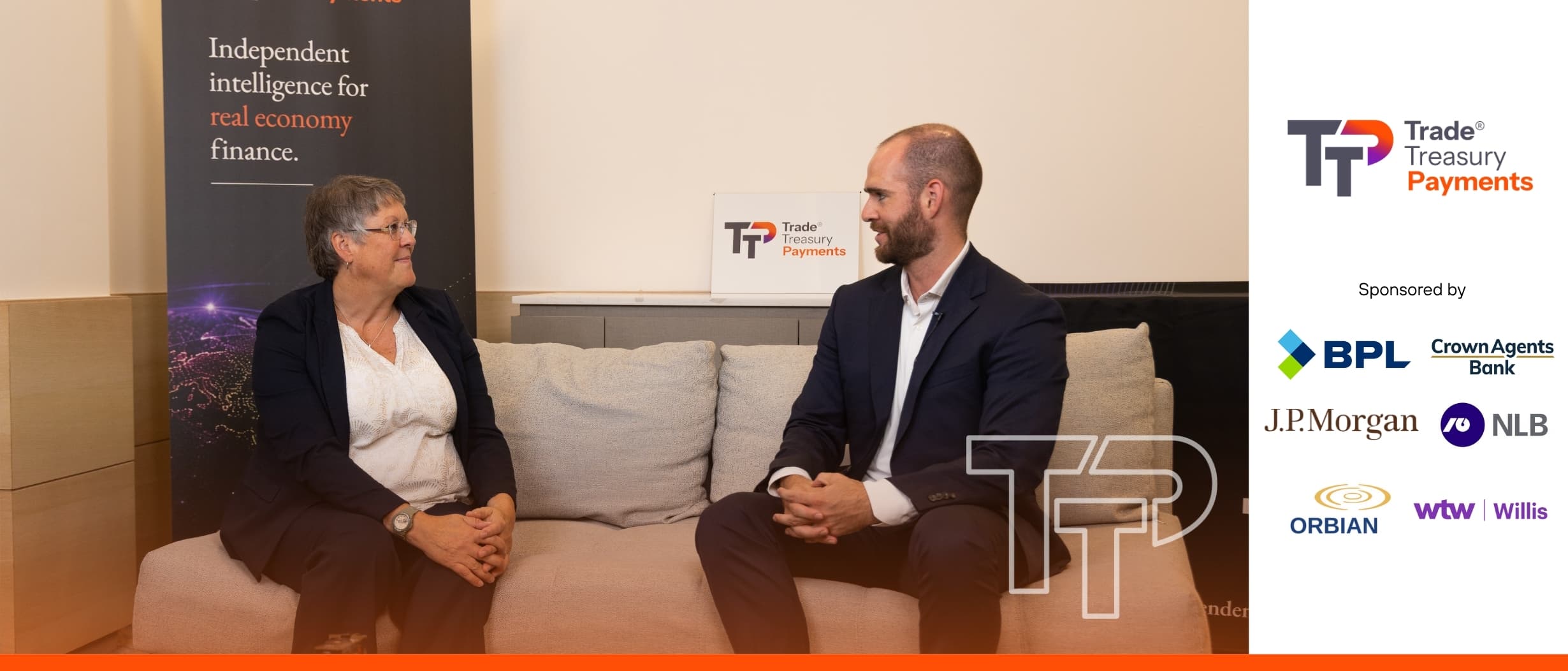
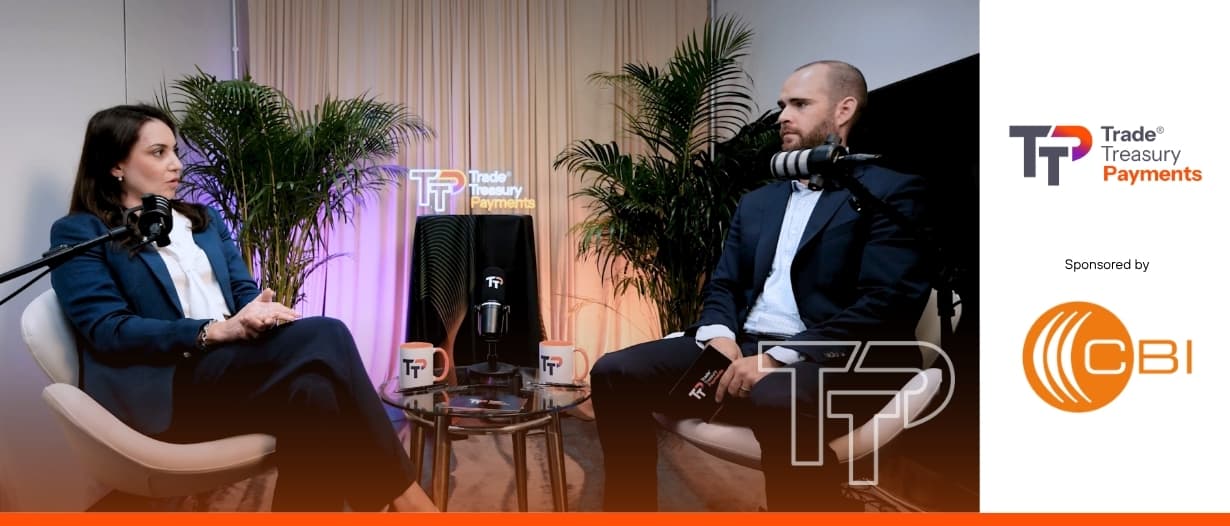
In a TTP Studios sit down on the ground at Sibos in Miami, Deepesh Patel, Editor at Trade Treasury Payments, spoke with Eralda Hasani, Head of Domestic Payments at BNY, to discuss the mechanics of ‘one-leg-out’ (OLO) instant payments, why overseas demand appears to be driving US payment modernisation, and how corporate treasurers can prepare for a 24/7 financial environment.
The value proposition of one-leg-out
The best way to understand the benefits promised by OLO payments is perhaps to first recognise where existing messaging frameworks fall short. Swift GPI, for example, brings exceptional visibility and tracking to cross-border correspondent banking, but remains as an information layer superimposed over traditional settlement channels.
The OLO model operates differently, instead serving to link international payment directly into a domestic RTP scheme for one portion (or ‘leg’) of the journey. In the United States, The Clearing House is enabling RTP to support OLO capability starting in early 2027. BNY is positioning itself among the early adopting banks.
“While Swift GPI is great from an information provision perspective… it does not allow for the instant settlement and finality, as well as the transparency that you get simultaneously with a settlement that you get via a real-time payment,” explains Hasani.
Beyond speed, Hasani also emphasises a vital structural advantage offered by OLO: principal preservation. In domestic instant payment systems, intermediary deductions are prohibited, ensuring that the full transaction value reaches the beneficiary. Extending this concept to international payments via OLO ensures that treasurers avoid the unexpected fee deductions that frequently plague traditional cross-border wires.
The drive for instant USD settlement is coming from abroad
Curiously, the demand for 24/7 USD beneficiary settlement within the US payments ecosystem seems not to be spearheaded by US domestic corporates. Rather, the push is coming primarily from overseas institutions and corporate treasurers operating in markets with highly mature fast-payment rails.
“The instant payment rails in many geographies and countries today are shaping the experience for cross-border payments as well,” Hasani notes. Corporate end-users accustomed to instantaneous domestic transfers are increasingly asking why cross-border transactions should remain bound to multi-day processing times, uncertain costs, and batch-based RTGS clearing windows.
BNY’s partnership with Commonwealth Bank of Australia (CBA) serves as the template for deploying the OLO model. Through Australia’s New Payments Platform (NPP), the Australian dollar leg of cross-border transfers settles in as little as 60 seconds; BNY is applying a similar approach to SEPA Instant inbound flows. With the early 2027 US deployment on the horizon, BNY is already looking forward at Canada’s emerging real-time system as another prime future corridor.
The different paths to global interoperability: complementary or competing?
Domestic RTS setups are proliferating worldwide, with schemes established in more than 80 countries. The global trade finance community, however, seems somewhat divided over the best path toward interoperability and establishing RTP across borders. In essence, two potential models have emerged: direct interlinking between two distinct national payment schemes, or coupling a single domestic fast-payment rail with correspondent banking networks – i.e., the OLO approach.
Rather than viewing these two approaches as rivals, Hasani sees them as complementary. Direct interlinking of different domestic schemes is an elegant end-state, but achieving it on a global scale is a huge undertaking hindered by complex regulatory alignment, technical standards, and governance hurdles. She points to past initiatives like Immediate Cross-Border Payments (IXB) – a joint pilot between The Clearing House, Swift, and EBA Clearing that ultimately stalled due to regulatory complexities – as a perfect example of how bilateral interlinking often demands immense effort to solve just a single corridor.
“To do that globally, you have to go a few corridors at a time,” Hasani observes. By contrast, leveraging OLO within established correspondent banking networks allows financial institutions to scale immediate efficiencies across dozens of jurisdictions simultaneously.
Within the context of the US specifically, internal interoperability also presents unique dynamics. With two distinct instant payment options operating concurrently – The Clearing House’s RTP and the Federal Reserve‘s FedNow – subtle differences in message specifications and ISO 20022 implementations exist. Institutions like BNY mitigate this gap, participating across both rails to create an internal orchestration layer that provides clients with unified messaging and operational resiliency.
One-leg-out and the last mile
Industry research from Swift indicates that up to 80% of cross-border payment processing time is consumed during the ‘last mile’ – i.e., the final stage of a transaction that takes place after funds reach the recipient in the destination country. The question was put to Hasani as to whether OLO simply accelerates the 20% clearing leg without solving the broader friction.
In her view, the impact of OLO depends entirely on transaction directionality. For inbound transactions into the US, OLO directly transforms the last mile – as RTP rules mandate that account processing, fraud checks, and final crediting occur within seconds, OLO fundamentally collapses the traditionally slow domestic delivery leg. In doing so, it also directly advances the G20’s core cross-border payment targets: improving speed, lowering costs, widening access, and enhancing transparency.
For treasurers, it’s outcome over infrastructure
In an evolving landscape of blockchain ledgers, FedNow, RTP, and cross-border messaging protocols, industry commentators often ask which specific payment rail will ultimately win.
Hasani believes this framing misses the point entirely; it’s “the wrong question, I would say overall”, she explains. Corporate treasurers are fundamentally outcome focused. They’re not interested in the specific underlying rail routing a transaction; they care about certainty, speed, cost optimisation, and liquidity preservation.
No corporate treasurer “wakes up in the morning and says: ‘Oh, I will be sending some real-time payments today ,’”remarks Hasani. It is the job of financial institutions, in her view, to take the parameters that are important to their clients and decide which way to route a transaction to fit these parameters to make things easier for treasurers.
What treasurers need to know
That isn’t to say there aren’t things corporate treasurers should be doing in preparation for the 2027 rollout of US dollar OLO schemes. Operational readiness requires proactive adjustment – transitioning to a 24/7 payment environment means shifting away from manual processes toward API-driven integrations across Enterprise Resource Planning (ERP) and Treasury Management Systems (TMS).
As a parting message as the conversation concluded, Hasani advised that the most important thing treasurers can do is understand what their liquidity optimisation strategy is and reevaluate if necessary. Operating in a real-time global market means ensuring funds are dynamically positioned to support weekend or off-hours settlements.
As instant payment rails continue to evolve and reshape global trade, organisations that modernise their liquidity and treasury automation will be best positioned to capitalise on frictionless cross-border commerce and its benefits.
Prefer to listen? The full conversation is also available as a podcast below.
Key Topics
- One-leg-out (OLO) payments link an international transfer directly into a domestic real-time payment scheme for one portion of the journey.
- Instant USD settlement demand is being driven largely by overseas institutions and corporate treasurers in markets with mature fast-payment rails.
- Interoperability between domestic instant payment schemes can be pursued through direct interlinking or through correspondent banking networks.
- The last mile of cross-border payments accounts for most of the processing time, and OLO aims to shorten that delivery leg.
- Corporate treasurers should prepare for a 24/7 payment environment by reviewing liquidity strategies and moving towards API-driven integrations.
Expert Analysis
Eralda Hasani, Head of Domestic Payments at BNY, argues that the debate over which payment rail will win misses the point. Corporate treasurers are outcome focused and care about certainty, speed, cost optimisation and liquidity preservation, so it is the job of financial institutions to decide how to route each transaction to meet those parameters.
Key Findings
- Cross-border payments remain burdened by unpredictable settlement windows, opaque fees and multi-day delays, even as domestic real-time payment networks spread worldwide.
- The Clearing House is enabling RTP to support one-leg-out capability starting in early 2027.
- Australia's New Payments Platform allows the Australian dollar leg of cross-border transfers to settle in as little as 60 seconds under the BNY and Commonwealth Bank of Australia model.
- Domestic instant payment schemes have been established in more than 80 countries.
- Swift research indicates that up to 80% of cross-border payment processing time is consumed in the last mile.
Implications
- Treasurers may need to move from manual processes towards API-driven integrations across ERP and TMS platforms to operate in a 24/7 payment environment.
- Treasurers should review their liquidity optimisation strategies so that funds can support weekend and off-hours settlement.
- Institutions operating across both RTP and FedNow may need an internal orchestration layer to offer clients unified messaging and operational resiliency.
- OLO could advance the G20 cross-border payment targets of improving speed, lowering costs, widening access and enhancing transparency.