
ADB and BAFT on deep-tier supply chain finance: the potential is clear, the law is not ready
At Sibos in Miami, Steven Beck of the Asian Development Bank and Tod Burwell of BAFT explained why financing smaller suppliers remains difficult, and why they are still looking for banks willing to test a cross-border model.
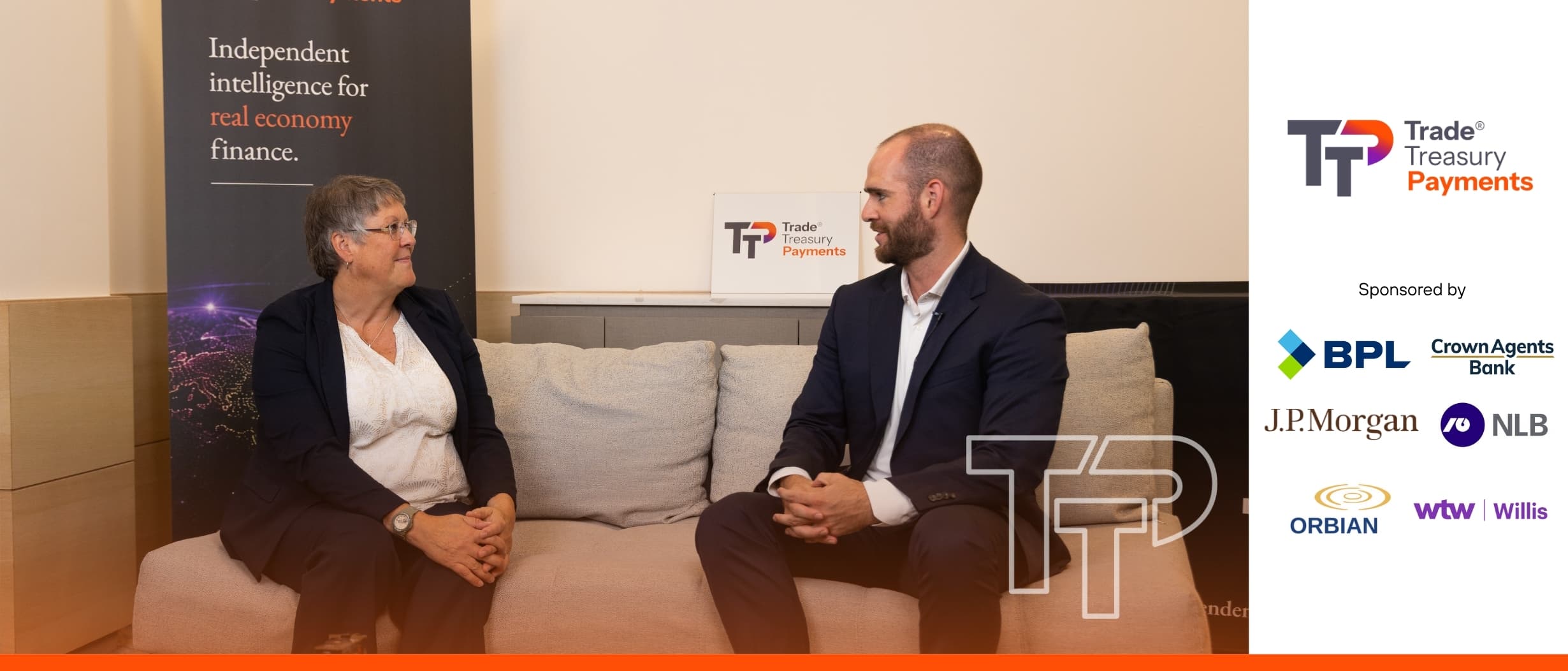
Supply chain finance has been around for well over a decade. The largest buyers’ immediate suppliers still receive most of the financing. Smaller companies further down the chain often miss out. At Sibos in Miami on 29 September, Deepesh Patel, TTP’s editor-in-chief, asked Steven Beck, director of the trade and supply chain finance division at the Asian Development Bank (ADB), and Tod Burwell, president and chief executive of BAFT, what it would take to reach them. Burwell also sits on TTP’s editorial board.
Supply chain finance is still unfamiliar in much of Asia
Even the established product is less widely understood than might be expected, Beck said.
“A lot of people don’t realize that even though supply chain finance has been around for ten or fifteen years, it remains a financial innovation that a lot of financial institutions and countries aren’t all that familiar with,” he said. “That’s certainly the case in Asia.”
ADB works with regulators and, sometimes, legislators on the rules needed to support supply chain finance. It also provides training and technical assistance to local banks.
Most of ADB’s trade finance business consists of guarantees against non-payment on instruments such as letters of credit. Its trade and supply chain finance programme supported US$5.7bn of transactions in 2025. Beck said business this year was growing by more than 65 per cent. On the supply chain side, ADB shares corporate risk with large global banks, covering the period between a buyer accepting goods and the supplier being paid.
No single rulebook for Asia
BAFT became independent of the American Bankers Association in September 2025. Burwell said its members operate in 65 countries and its role is to “connect the dots” across trade, payments and supply chains.
Asia is a particular focus because “there is no sort of single Asian system”, he said. Intra-Asian trade and cross-border payments are growing, but rules differ from market to market. BAFT works on common market practices and engages regulators on requirements, including who is authorised to carry out particular activities.
Burwell said ADB was a natural partner given its development remit. The two had already worked together on financial crime, including consistent reporting of suspicious trade activity.
Taking the buyer’s credit further down the chain
In 2024, ADB and BAFT published Deep-Tier Supply Chain Finance: Unlocking the Potential, a joint paper examining how to finance smaller suppliers beyond the first tier. Beck was “a little bit taken aback” by the interest it attracted.
Conventional supply chain finance “by and large benefits the first-tier supplier”, he said. Deep-tier finance would reach the companies behind them by “taking that receivable from the buyer and breaking it into proportional bits” matched to each company’s contribution to the finished product.
The important point for Burwell was that finance could reach smaller suppliers without losing “the integrity of the original instrument’s credit quality”. “That’s what differentiated deep-tier supply chain finance from microfinance,” he said. Banks involved in trade tend to lose interest when transactions become too small, leaving many of these suppliers outside their usual business.
Tokenisation helps the technology, but not the law
The joint paper identified legal, operational and technological obstacles to scaling deep-tier finance across borders. Burwell sees progress on one of them. “The technological obstacles I do think are made easier through tokenisation, for sure,” he said. “I still think we have some challenges from a legal perspective.”
Finding banks and companies willing to run a cross-border pilot has proved difficult. ADB has been looking since the paper appeared, Beck said, but recruiting participants has been “a real challenge”. With tokenisation attracting renewed interest, he wondered whether it was time “to redouble our efforts to try to find some guinea pig companies and their banks”.
Asked whether deep-tier finance was commercially viable today, Beck’s answer was brief: “No.” The regulatory and legislative environment “just isn’t there yet”, he said. China is an exception, having achieved some success with deep-tier finance. Burwell said BAFT was examining domestic models in other markets for lessons that might transfer across borders.
Finding a reason for everyone to take part
Large buyers, suppliers and banks would each need to see the benefit before deep-tier finance could take hold, Beck said. Buyers and suppliers higher up the chain could extend payment terms. Banks could gain “a much deeper window into supply chains” and access business they have previously overlooked.
For Burwell, the main beneficiaries would be the smaller companies further down the chain, which have had the least access to finance.
First, though, Beck needs some guinea pigs.
Prefer to listen? The full conversation is also available as a podcast below.
Key Topics
- Deep-tier supply chain finance extends financing beyond the first-tier supplier to smaller companies further down the chain.
- Supply chain finance remains an unfamiliar innovation for many financial institutions and countries, particularly in Asia.
- Legal and regulatory differences between markets are the main obstacle to scaling cross-border deep-tier finance.
- Tokenisation may ease the technological obstacles to deep-tier supply chain finance but does not resolve legal challenges.
Expert Analysis
Steven Beck of the Asian Development Bank observed that the product is still less widely understood than might be expected, even though supply chain finance has existed for ten or fifteen years. He said the regulatory and legislative environment for deep-tier finance "just isn't there yet", while noting that tokenisation has renewed interest in trying to find participants for a cross-border pilot. Tod Burwell of BAFT argued that the technological obstacles are easier to address through tokenisation, but that legal challenges remain.
Key Findings
- ADB's trade and supply chain finance programme supported US$5.7bn of transactions in 2025, and Beck said business this year was growing by more than 65 per cent.
- The joint ADB and BAFT paper, Deep-Tier Supply Chain Finance: Unlocking the Potential, identified legal, operational and technological obstacles to scaling deep-tier finance across borders.
- Deep-tier supply chain finance is not commercially viable today, according to Beck, while China has achieved some success with the model.
Implications
- Buyers and suppliers higher up the chain may need to see a benefit, such as extended payment terms, before deep-tier finance can take hold.
- Banks could gain a deeper view into supply chains and access business they have previously overlooked.
- Smaller companies further down the chain, which have had the least access to finance, stand to benefit most if the model is adopted.
- Progress on cross-border deep-tier finance depends on resolving legal and regulatory obstacles alongside technology.