
By: Neal Harm, Secretary General (FCI), Eleanor Hill Trade Treasury Payments (TTP) Editorial Board Member
When we talk about lifting nations out of poverty or accelerating development, we often look to grand infrastructure or breakthrough technology. Yet in the current world of open-account trade, there is an engine with the power to widen access to liquidity and strengthen real economies – supply chain finance (SCF).
Despite a lack of standardised taxonomy, SCF is not a single instrument. In its wider sense, it is a family of techniques – including receivables purchase and factoring programmes, dynamic discounting, distributor and inventory finance, and buyer-led programmes such as reverse factoring. These tools convert the lifeblood of trade into more fairly-priced liquidity that comes earlier in the process than traditional ‘wait-and-see’ approaches.
And by turning purchase orders, invoices and inventory into predictable cash flows, SCF helps both buyers and suppliers invest, hire and grow. This matters in London and Lagos, Mumbai and Manila alike.
It’s also why SCF has become one of the fastest-growing aspects of trade finance. In a cycle defined by volatility – geopolitics, inflation, fragile logistics and shifting demand – SCF steadies the system. It unlocks liquidity where it is most needed, keeps goods moving, and builds resilience up and down the chain.
Facing challenges with honesty
Despite the benefits on offer, we must also be clear-eyed about the obstacles – and this guide does not shy away from the challenges. Development is uneven across regions. Definitions and disclosures remain fragmented. Accounting scrutiny can slow adoption. Smaller suppliers face onboarding hurdles. And if programmes are designed around optics rather than outcomes, they risk losing their purpose.
But these challenges are not reasons to step back, rather they are reasons to engage more deeply. With the right tools, thoughtful implementation and a shared language, SCF can become a driver of positive change.
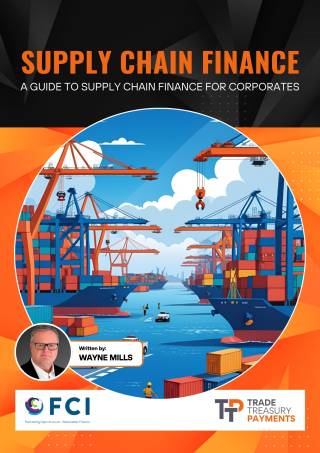
That is why we at Trade Treasury Payments (TTP) have created this guide in collaboration with FCI – the Global Representative Body for Factoring and Financing of Open Account Domestic and International Trade Receivables. Our aim is to celebrate what works, name what doesn’t, and give practitioners, policymakers and financiers a clearer path to help SCF reach its full potential. Corporate voices at the centre
To help achieve this, this guide is written specifically for corporates, bringing the voices of treasurers and industry practitioners to the fore. Their perspectives – sometimes enthusiastic, sometimes challenging – remind us that SCF only scales when it solves real problems. That means shortening cash conversion cycles, improving supplier health, reducing disputes and giving stakeholders greater certainty.
We also recognise the institutions that have laid the groundwork for SCF’s bright future. For example, FCI’s four-corner model, supported by its Edifactoring platform, provides a secure and standardised framework for cross-border receivables finance. With a network of more than 400 members in over 90 countries, FCI has built a practical backbone that allows even smaller firms to trade internationally with greater confidence.
We also thank the corporate treasurers who shared their thoughts with us. The corporate treasury community continues to be equipped with education, standards, and a platform for discussion – ensuring that SCF is no longer viewed as a niche technique but as a mainstream enabler.
A goal worth pursuing
Our vision at TTP builds on this solid foundation. We see SCF as a development tool, not just a financing technique. It can reduce the cost of capital for SMEs, push liquidity deeper into supply chains, and hard-wire resilience into how companies buy, make and distribute goods and services.
Beyond its role as a tool for corporates, SCF also serves as a bridge between the balance sheet strength of banks and the agility of fintechs. As this guide outlines, the point is not to choose between the two sides (bank versus fintech) but to combine their strengths around the needs of the client.
But achieving the full potential of SCF will take effort. Firstly, we need a common language, so that treasurers, procurement teams, banks and auditors can finally work from the same set of definitions. Next, alignment of incentives should be prioritised – treasury and procurement must be measured against shared goals if supplier onboarding is to move from aspiration to reality. Then we must work on widening access to SCF, extending financing beyond tier one into the deeper layers of supply chains through the use of better data, simpler onboarding and risk frameworks that are proportionate rather than prohibitive.
This guide is our contribution to that journey – practical where possible but candid where needed. On behalf of TTP and FCI, our thanks go our author Wayne Mills, and to every corporate and adviser who shared their experiences so openly.
Your honesty and insight have made this a stronger, more valuable piece of work. And helped us recognise that SCF can truly change the world.
Read online or download the magazine here: