
Global merchandise trade is cooling off, says the World Trade Organization’s (WTO) November 2025 Goods Trade Barometer. This indicator provides direction of worldwide merchandise trade ahead of the official data release.
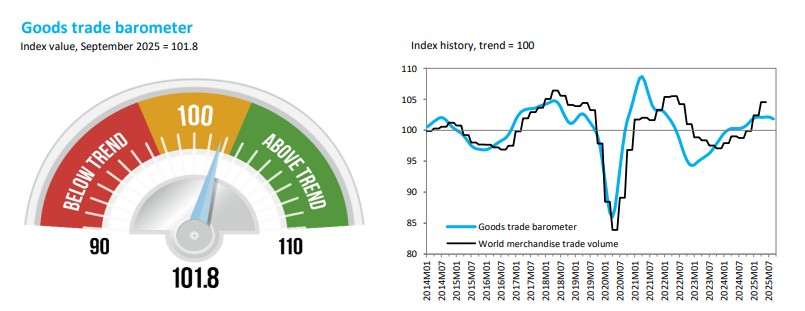
As of September 2025, the indicator stood at 101.8, above the baseline trend value of 100. This is a decrease from 102.7 in October 2024, as trade is expanding slowly due to ongoing tariffs and policy uncertainty.
The impact of the tariff is magnified when comparing the September 2025 number with the April 2025 number of 103.5, which marked the dawn of trade tensions.
Global merchandise trade is losing momentum, as indicated by a 0.9 point year-over-year decrease since October 2024. This downward trajectory, while still in growth territory (above trend), confirms the gradual loss of momentum in global merchandise trade.
Trade volume trends and growth dynamics
World merchandise trade volume grew faster in the third quarter of 2024, driven by deflation and lower interest rates that boosted real incomes and consumption globally. However, in the last quarter of 2024, it was sluggish before jumping again in the first quarter of 2025.
The recovery was driven by front-loading of imports and increased trade in AI-related products.
The second quarter of 2025 again saw slightly slower trade volume growth, though overall levels stayed high due to continued demand for AI-related goods. The third and fourth quarters are likely to stay above trend, says the latest Barometer.
The WTO’s October 2025 Global Trade Outlook projects merchandise trade growth of 2.4% for 2025 and just 0.5% in 2026.
Component indices: Mixed signals with overall positive trend
A detailed look at the barometer’s components shows varied but mostly positive readings.
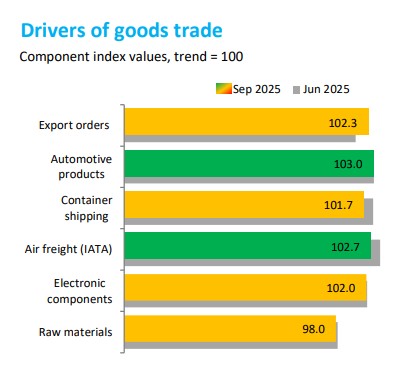
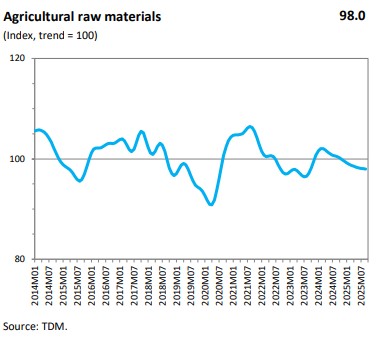
All component indices, except for agricultural raw materials, are above the baseline value of 100, indicating growth at different rates. Transportation indicators are showing slower growth, with air freight at 102.7 and container shipping at 101.7, both remaining above baseline.
The automotive sector remains stable at 103.0 despite economic challenges.
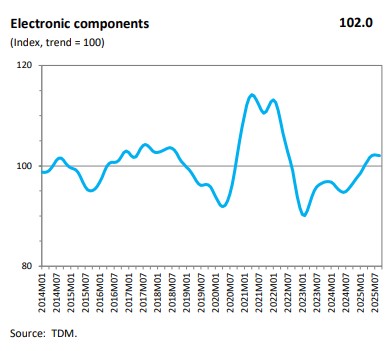
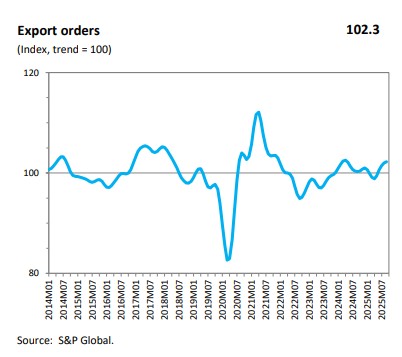
This year, electronic components reached 102.0, driven by the adoption of technology and AI products. Export orders increased to 102.3, signalling a recovery from previous volatility and indicating ongoing trade momentum.
Growth is slowing from its highs in early 2025. However, most sectors are still growing even with policy uncertainties and technological shifts shaping global trade.
What is the impact of trade policy and economic conditions
The slowing trade growth directly connects to changing trade policies. Higher tariffs and ongoing uncertainty about trade agreements have slowed merchandise trade expansion. The fading impact of import front-loading (where businesses rushed shipments to beat tariff increases) further contributes to this slowdown.
This situation shows the conflict between open trade and protectionism. While AI product demand is high, traditional industries face difficulties due to regulations and rising costs.
How these factors interact will shape global trade patterns in the coming months.