Following the Trade Treasury Payments Awards, we continue our series examining this year’s winners across trade, treasury, and payments.
In this latest instalment, we look at the institutions and individuals recognised for their work in payments, transaction banking, working capital, and financial infrastructure.
Payments Innovation of the Year
Winner: Cflox GmbH
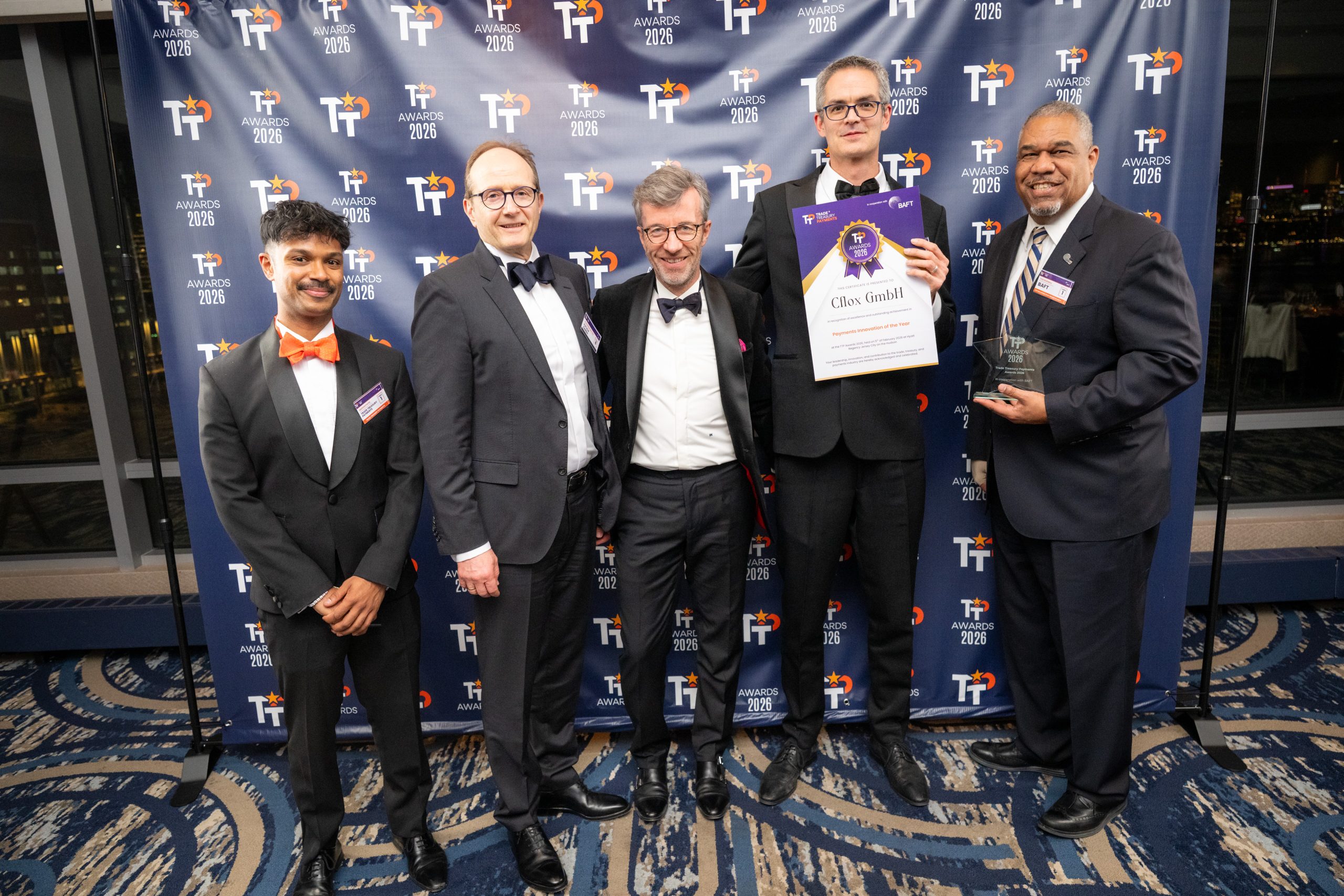
For many corporates, integrating traditional working capital and supply chain finance programs can mean months of IT integration and lengthy supplier onboarding. Cflox, the winner of Payments Innovation of the Year, decided it was time to simplify this.
Its solution, cflox pay, turns working capital optimisation into a payment method in itself. Buyers route payments through a dedicated cflox account, suppliers are paid as normal and on time, and cflox extends payment terms to the buyer in the background.
In the past year, cflox processed more than €15 billion in volumes across 16 countries, supporting over 150 programmes. That scale has come because treasurers benefit from immediate liquidity and improved cash flow without the added balance sheet strain. On the supplier side, it can create a process that provides timely payment without forcing that supplier to change how they work.
By stripping away the friction that has long limited supply chain finance, cflox’s innovation lies in making the process almost invisible.
Highly Commended: The Clearing House

For decades, real-time payments in the U.S. have largely meant small-value, consumer-style transfers, while urgent, high-value corporate payments were forced to default to wires or cheques. In 2025, the Clearing House changed that.
Its RTP network, already the backbone for instant bank-to-bank payments in the US, increased the individual transaction limit tenfold, from $1 million to $10 million. Suddenly, use cases that once required wires (such as supplier payments, real estate closings, cash concentration, large corporate disbursements, and the like) could settle in seconds, with finality, 24/7.
After implementing the change, daily transaction values on the network jumped from roughly $800 million to $4 billion. Within weeks, corporates began shifting meaningful volumes onto the rail, with payments above $1 million accounting for a growing share of activity. Over the year, RTP volumes passed $1.3 trillion in value and the service now serves hundreds of thousands of businesses each month.
By making instant payments viable for larger, business-critical sums, The Clearing House has given treasurers a genuine alternative to traditional wires, and in doing so, has helped redefine what “real-time” really means for corporate payments in the US.
Best Transaction Bank – Global
Winner: BNY
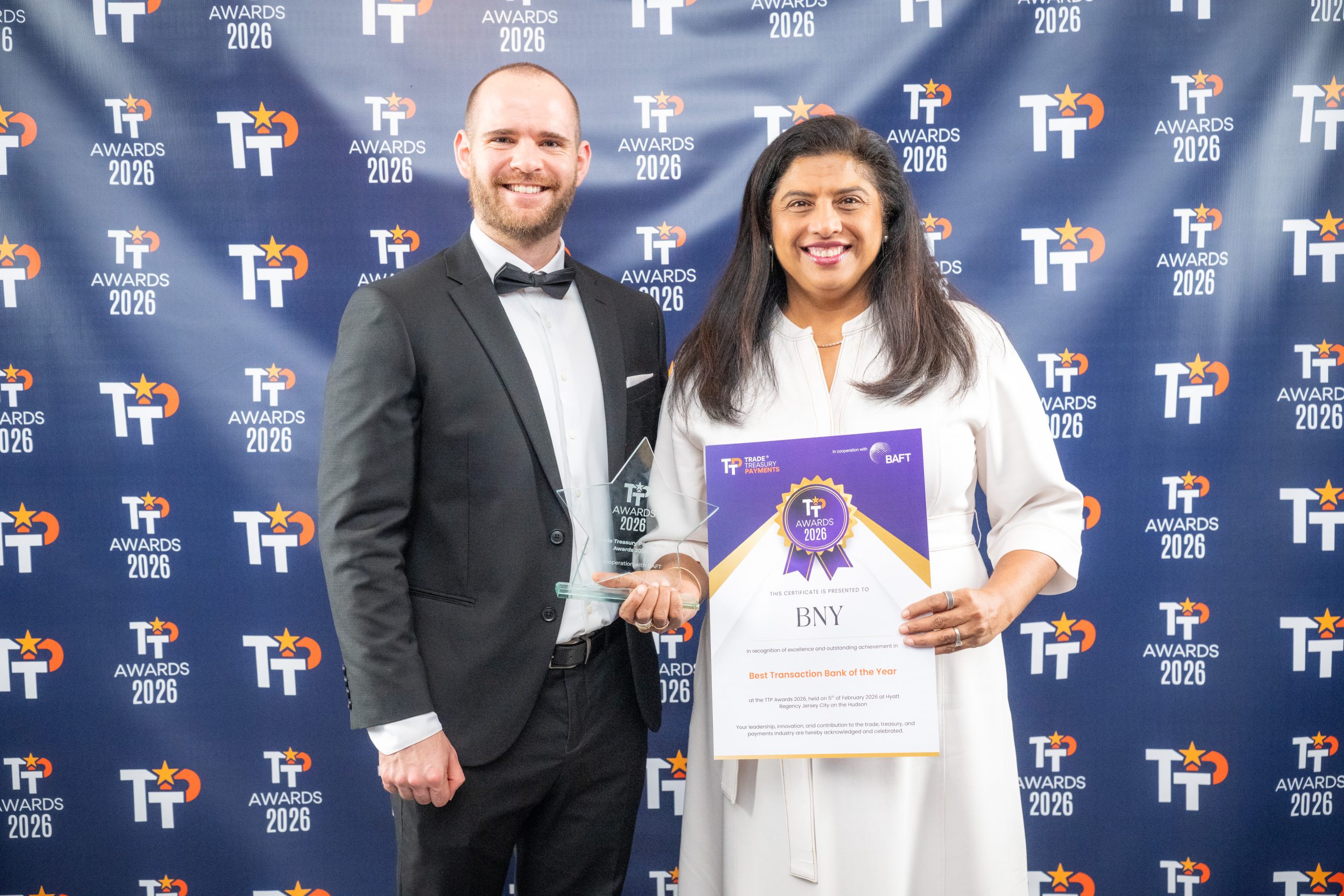
BNY was recognised as Best Transaction Bank – Global for its work building a shared infrastructure for financial institutions.
Rather than attempting to compete in every local market or product niche, BNY has focused on providing the underlying rails across payments, cash management, and trade. Today, it supports more than 2,000 transaction banking counterparties globally, offering scale and connectivity that many institutions would struggle to build independently.
In global payments, the bank has invested in modernising its infrastructure to support 24/7 multi-currency access, automation, and ISO 20022 readiness. One example is its collaboration with a European Bank to launch a digital cross-border payment solution that provides real-time FX rates and full payment tracking. The solution enables regional savings banks to offer a modern international payments experience within their own digital channels, without needing to build the capability from scratch.
In a market where building everything in-house is increasingly impractical, BNY’s model has helped financial institutions remain connected, competitive, and resilient on a global stage.
Working Capital & Payments Excellence Award
Highly Commended: Finverity
Finverity was highly commended in the working capital and payments excellence category for helping making supply chain finance more practical in markets where access to working capital is often hardest to secure.
Rather than offering a single product, the company built FinverityOS as a configurable platform that allows banks and corporates to run multiple programmes (running the gamut from payables and receivables finance to distributor and purchase order finance) in one place. The aim is ultimately to replace spreadsheets, manual reconciliations, and long implementation cycles with digital workflows that can be launched in weeks.
That flexibility has helped institutions roll out new programmes quickly and scale them without adding overhead. In one example, National Bank of Fujairah’s distributor finance programme with Redington saw invoices funded rise by 47% year-on-year after automating several processes.
By removing the friction that often holds back working capital programmes, Finverity has helped banks and corporates turn supply chain finance into a repeatable, everyday tool, widening access to liquidity across emerging markets.
Winner: Wells Fargo

Wells Fargo has claimed the Working Capital & Payments Excellence Award for its work simplifying the reconciliation of incoming payments.
While digital payments have made it easier to move money, many accounts receivable teams still spend hours chasing remittance details and manually matching deposits to invoices. That delay keeps working capital tied up longer than it needs to be. The bank’s Integrated Receivables solution automates that process end-to-end by using AI-driven matching to link payments and remittance data to open invoices and posted directly into clients’ ERP systems
This removes much of the manual intervention that traditionally sits between receiving cash and recognising it, and means that payments that once took hours to reconcile can be processed in seconds. According to the bank, some clients are now able to achieve automated posting rates that exceed 95 per cent.
Network, Standards or Infrastructure Partner of the Year
Winner: Association Of National Numbering Agencies (ANNA)
The Association of National Numbering Agencies (ANNA) has been recognised as the Network, Standards or Infrastructure Partner of the Year for the meticulous but essential work of standardising how financial instruments are identified.
Every trade, bond, fund, or token ultimately depends on clear, consistent identifiers and ANNA’s role has been to provide that common language at a global level through the International Securities Identification Number (ISIN) framework and the infrastructure that supports it. At the centre of this effort is the ANNA Service Bureau, which now provides single-point access to more than 122 million ISIN records across 200 jurisdictions.
In recent years, ANNA has also focused on linking standards together. Its ISIN-to-LEI mapping connects a security to the legal entity behind it, helping institutions understand not just what they hold, but who ultimately stands behind the risk. The initiative has grown to millions of mappings globally and has become an important tool for compliance, reporting, and ESG analysis.
As markets evolve, the same approach is being extended to digital assets. Through collaboration on Digital Token Identifiers and new XT-ISINs for tokenised instruments, ANNA has created a bridge between traditional securities and their blockchain-based equivalents.
By providing the standards and data foundations that others build on, ANNA has helped make global trade, treasury, and capital markets more interoperable, more transparent, and ultimately more trustworthy.
Editor’s Choice: Leadership in Trade, Treasury & Payments
Winner: Su Ashworth , Matalan Retail Ltd
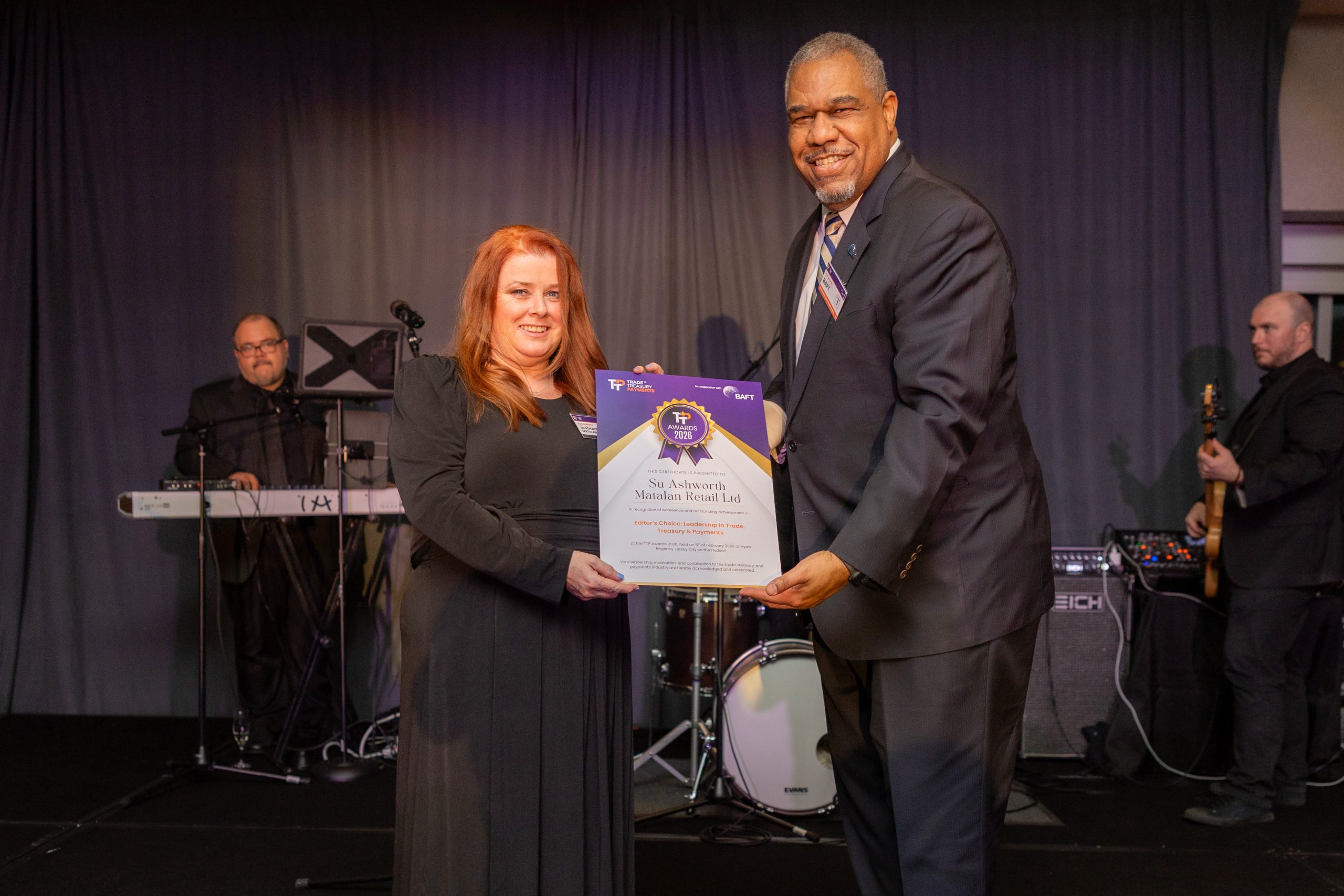
Su Ashworth was selected as the winner of the Editor’s Choice award for her tireless efforts to make digital trade a reality.
Working within a lean trade finance team at Matalan, a retailor that imports more than 80 per cent its goods, Ashworth experienced first-hand the strain of managing paper documents during the pandemic. Rather than accept that friction as an inevitable part of doing this type of business, she approached banking partners and began to push for practical digital alternatives.
Her efforts led to a series of industry firsts. Matalan completed the first transaction under the UK’s Electronic Trade Documents Act on the day the law came into force, issuing a digital promissory note in place of paper documentation. What would previously have required couriering documents on multiple occasions was executed electronically, cutting around three days from processing time and eliminating printing and shipping costs.
Within her own company, the impact has been tangible with the labour intensity required on digital deals being roughly 75 per cent lower than was previously required. Electronic bills of lading can be surrendered within minutes, helping avoid port delays and demurrage costs that previously added hundreds of thousands of pounds annually. Once fully scaled, the shift is expected to remove more than 500,000 sheets of paper a year from Matalan’s trade processes, directly supporting its ESG goals.
But what distinguishes Ashworth’s leadership is her role as an advocate beyond her own organisation. She repeatedly engages with key stakeholders across the industry, working with banks, technology providers, and industry bodies as well as suppliers in India, Sri Lanka, China, and now Bangladesh, to expand the adoption of digital trade workflows and products.
The full list of award winners is now available on the TTP Awards Winners page