Whether you love it or hate it, the United States is one of the world’s superpowers, which means that the decisions it makes about its economy, security, and trade relations are relevant in every corner of the globe. And if the last year has taught us anything, it’s that the way the United States thinks about international trade is changing.
Since the end of the Cold War, US administrations have generally treated trade as a separate track. They largely saw it as something to be handled by the invisible hand of free-market economics, with governments only stepping in during major disputes or crises. For many people working in trade today, that dynamic has been around for the entirety of their professional careers, which is partly what is making the trade-based mindset shift in Washington all the more jarring.
In November, the Trump administration released the country’s latest National Security Strategy (NSS). Once again, trade made a prominent appearance, with the administration evidently viewing it as a key part of the country’s national strength. And for good reason. Any trade professional will know all too well how interconnected trade is with supply chains, energy, technology, finance, and a host of other vital areas and disciplines.
The NSS lays bare the importance of supply chains, stable partners, and strong industries for American – and, in the administration’s view, by extension, global – security. It describes a world where economic strength supports national resilience and warns that too much dependence on outside actors can create risks during periods of stress. These ideas are not new. Indeed, many countries have talked about them for years, and they were a large part of the justification for the autarkic retrenchments of the 1930s. What is new on this side of the century is the scale of attention these viewpoints are receiving from Washington and the amount of energy being placed behind them.
Of course, this does not mean the United States can direct global trade on its own. No country can do that, especially given that 90% of global trade flows bypass the US. But it does mean the United States is trying to reduce its exposure to sudden shocks, particularly from unreliable partners and other weak links in essential networks.
This change is happening during a time when global trade patterns are already looking different from those of just a decade ago. Organisations have been reassessing long shipping routes after several high-profile incidents in major corridors, such as the grounding of the Ever Given in the Suez Canal in March 2021 and the ongoing Houthis’ attacks in the Red Sea since 2023. Countries are reviewing old trade trade agreements, and many are building new ones in their place. For some, the aim is shorter supply chains, while others want more control over materials like energy or minerals, and yet more are just seeking reliable alternatives to single points of failure in their supply chains. As these decisions spread across regions, we are starting to see trade become influenced by security thinking on all sides. The United States is not alone in this thinking, though it may be the only one yet willing to shout it so loudly.
The new approach to trade
The new approach to trade that is taking shape is built on three simple ideas.
The first idea is that supply chains need to be strong enough to keep working when conditions change. This means companies cannot rely on only one route or one supplier for something important. If a port closes or a shortage appears, there must be another option ready so production does not stop. Toyota, the original architect of Just-In-Time production, learned this lesson the hard way during a 2021 chip shortage that forced it to slash planned production by 40%.
The second idea is that strong partners create stable trade. Trade relies on people and institutions that behave in steady and predictable ways. When partners communicate clearly and honour the agreements they’ve made, the whole chain can run smoothly. When those partners change the rules without warning or delay shipments without explanation, it can erode confidence and force companies look for alternatives.
The third idea is that clear information makes trade possible. Banks, insurers, and payment systems rely on clear documents and trustworthy information. When the details do not match or important pieces are missing, they must usually put a transaction on hold until everything is verified. While this protects them from loss, it slows down the entire chain. You don’t need to look further than the fallout from the Greensill or First Brands collapses to see the importance of accurate documentation and reliable partners.
When any of these pieces break, the rest of the system slows down or stops. This is why the United States is trying to understand where the weak points are and how to lower the chances of disruption, even though many of its partners would argue it is breaking that second principle in the process.
Venezuela and Greenland
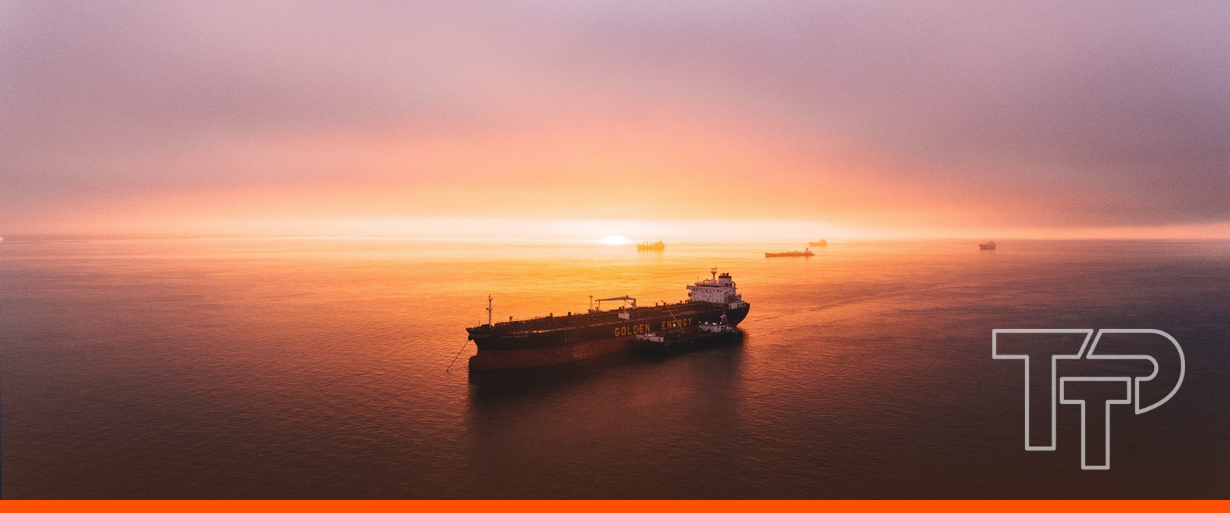
Let’s use the recent events in Venezuela as an example. On 3 January 2026, the United States launched a major military operation against the South American country in which they captured (or, as some are arguing, abducted) the President, Nicolás Maduro, and his wife, Cilia Flores, and flew them to the United States to face narcotics-related charges. The action was the culmination of months of rising pressure between Washington and Caracas, including stepped-up sanctions and repeated seizures of tankers carrying Venezuelan crude, as the US sought to enforce its trade and drug laws and curb the use of what it called sanctioned oil networks. Venezuela sits on vast oil reserves, and even as the country’s production and exports had declined over many years, its crude has remained a key part of the energy picture for buyers and traders around the world.
While the events of 3 January stoked division in the sentiment of the responses – some condemning the move, while others praised it – there can be little debate that they brought the situation in Venezuela into the global consciousness, and shone the spotlight on some long-running weaknesses. For years, the country’s supply routes had shifted back and forth, partners had been uncertain, and basic information about shipments and payments had not always been clear. Then, quite literally overnight, many questions that had been lingering in the background became part of the conversation for everyone watching. It also showed why these kinds of weaknesses feature so heavily in many governments’ security and trade strategies today, including the recent National Security Strategy released in Washington.
Another example that shows why reliability and clear partnerships are gaining so much attention is the sparsely populated self-governing territory of Greenland, which had rarely been a central character in global political news until Trump began voicing a desire to control the territory. Despite the audacity, there are good reasons for geopolitical ambitions in the far north. Rising global demand for critical minerals and changes in Arctic sea ice have made the region much more important for future shipping routes and resource supply.
Several countries, including the United States, have increased their diplomatic and economic engagement with Greenland, partly to support infrastructure and partly to ensure there is clarity around how resources are developed and traded. In this context, trade becomes inseparable from logistics planning and long-term cooperation, because investors and companies need clarity. Aligning with the three new ideas for trade established above, it could be said that the United States is simply trying to make sure it has a place in discussions about shipping routes, minerals, and security arrangements.
From assumed to earned stability
It can be helpful to think of the change in mindset related to trade as a shift from “assumed stability” to “earned stability.” In the past, the default was simply to trust many of the trade routes in existence since they had long histories and predictable patterns. Today, more routes carry uncertainty because of an array of factors like political tension, climate pressure, economic shifts, and rapid changes in supply and demand. This means trust and stability have to be earned.
While their methods may be controversial, the current US administration’s NSS and its headline-grabbing actions and rhetoric since the new year show that the country is striving to adjust to this new reality that it has had a heavy hand in introducing. But other countries are adjusting as well. No one can fully control the system, but every major player can influence parts of it, which creates a complex but manageable environment. Trade will continue, and goods will move. But the conditions attached to movement will become more demanding.