
On 22 November 2025, the industry crossed a line that has been approaching for nearly a decade. The coexistence period between SWIFT’s legacy MT messages and ISO 20022 has formally ended, and ISO 20022 is now the mandatory standard for cross-border payments and reporting.
The shift marks one of the most consequential upgrades to global financial infrastructure in modern times: a new operating system for payments, designed to support richer data, tighter controls, better interoperability, and the foundations of future digital rails.
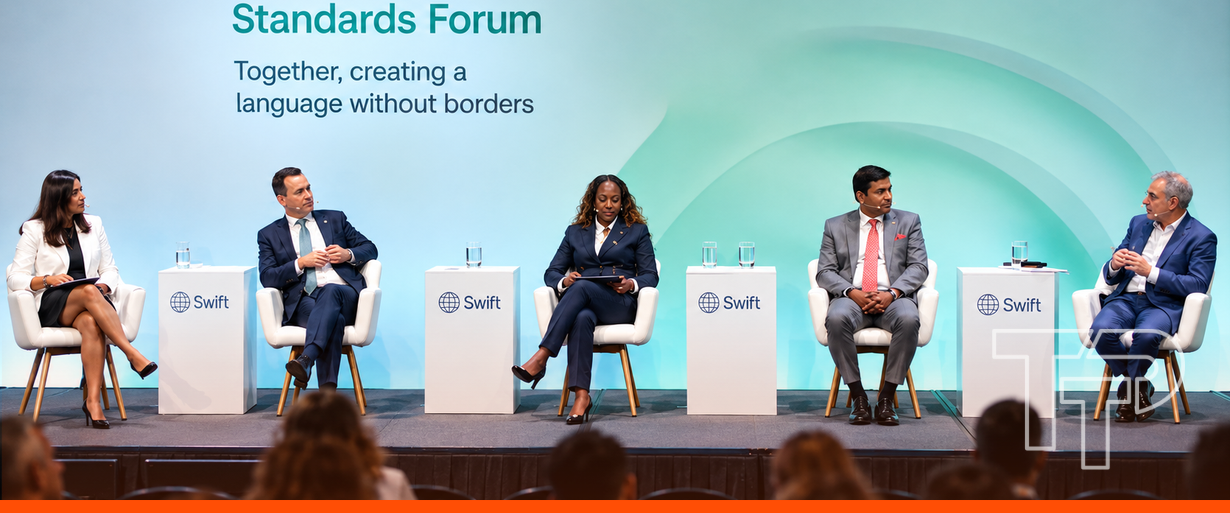
As Swift stated in its announcement, “The global financial community has reached a major milestone: ISO 20022 is now the standard language for cross-border payments worldwide.”
This milestone, Swift says, “reflects years of coordinated work across financial institutions (FIs), payments market infrastructures (PMIs) and the wider Swift community.”
Cross-border payments meet a new discipline
The starting point for understanding this transition is the inherent complexity of cross-border flows. These flows accumulate operational frictions as they move across time zones, cut-off cycles, screening tools, correspondent networks, and domestic clearing systems with widely varying capabilities.
ISO 20022 introduces discipline to this fragmentation. Where MT relied on terse text blocks, ISO 20022 enforces structure. Every element has a defined place, purpose, and schema. Granular identifiers can be screened, validated, and traced through the chain. Data can be reconciled and analysed at scale. And because the format is extensible, the same vocabulary can support adjacent use cases across trade, treasury, clearing, securities, and digital assets.
This is why Swift emphasises that ISO 20022 does more than replace MT. Jerome Piens, Chief Operations Officer at Swift, said, “ISO 20022’s rich, structured data is foundational to the future of payments – and a cornerstone of Swift’s strategy to enable an instant, frictionless, interoperable, and inclusive future.”
The coexistence window is now closed
The coexistence period that began in March 2023 was never designed as a comfort blanket. It was intended to give the industry time to re-platform systems built decades ago and not engineered to handle large XML payloads containing hundreds of fields. That window has now closed.
The shift will expose variations in readiness. Some institutions have completed multi-year upgrades, rebuilt data models, modernised screening engines, and deployed native MX processing end to end. Others operate older hubs that still rely on translation layers. These layers keep messages flowing but may flatten structured data into truncated text or discard fields altogether when systems cannot ingest them. As ISO-native messages begin to dominate global payment traffic, older platforms may encounter parsing bottlenecks, slower processing cycles, and inconsistent results across screening and reconciliation.
Swift has put in place a conversion service to automatically convert remaining MT instructions into ISO 20022 for a period. Yet the difference between institutions processing ISO 20022 natively and those dependent on conversion utilities will become more visible over time, particularly as corporates begin to expect richer reporting and as market infrastructures tighten rules on mandatory fields.
Despite the industry-wide push, regulatory frameworks remain uneven; as the G20’s cross-border payments roadmap repeatedly notes, differences in supervision, data-sharing rules, sanctions frameworks and market-access requirements continue to complicate end-to-end interoperability even where technology has been upgraded.
The unevenness of global adoption is not a criticism of specific markets or banks but a reflection of the intricacy of legacy environments. Payments architecture is layered, cumulative, and often deeply entangled with historic design choices.
A stress test for legacy infrastructure
The upgrade exposes the limits of older systems, especially payment hubs that were never designed to parse hierarchical XML structures or reconcile dozens of structured fields linked to purpose codes, identifiers, and remittance attributes. As enriched data enters the chain, these systems face three pressures:
- Performance: XML payloads are heavier, and inefficient parsing engines can introduce latency.
- Integrity: Mapping structured fields into free-text substitutes can result in data loss, complicating reconciliation and compliance.
- Screening: AML and sanctions tools built for unstructured text may misinterpret structured fields or apply outdated matching logic.
These stresses were anticipated. What matters now is resilience. Institutions with modern architectures, canonical data models, and API-driven integration layers will absorb the transition more smoothly. Those with layered translation stacks and fragmented data flows may see higher exception rates in the early weeks.
Treasury, trade, and compliance stand to gain the most
The benefits of ISO 20022 become clearer when examined through the lenses of treasury, trade and compliance, three areas where structured data immediately improves performance.
Treasury
Structured remittance information enables automated invoice matching, faster cash application, cleaner ERP integration, and richer cash-flow analytics. Purpose, debtor and creditor identifiers appear consistently across corridors, allowing CFOs to model exposures with greater accuracy. Forecasting improves when underlying datasets are less ambiguous.
The real open battlefield now lies beyond MT103: corporate reporting and liquidity management will hinge on the shift from MT940 to CAMT.053, where enriched, structured data can materially improve reconciliation, cash visibility and ERP/TMS integration.
Trade
ISO 20022 makes it possible to link payments more directly to purchase orders, shipment data, and customs processes. When banks, corporates and logistics providers share common identifiers across systems, discrepancies become easier to identify and resolve. The result is more transparent value chains and fewer disputes.
Compliance
This is where the shift may prove most transformative. Structured identifiers reduce ambiguity. Name-screening algorithms can use consistent formats rather than relying on free-text heuristics. False positives fall. Investigations accelerate. And regulators benefit from clearer audit trails and more predictable reporting patterns.
As Swift highlights, “By enabling richer, structured data within transactions, it helps financial institutions boost operational efficiency and straight-through processing rates, improve analytics, compliance and customer insight, and drive innovation and enhanced end-user experiences.”
A coordination challenge as much as a technical one
ISO 20022 forces organisations to become more data-centric. Problems that used to manifest downstream now surface earlier. Beneficiary banks may request adjustments to purpose codes. Correspondent banks may require refinements to remittance structures. Internal teams, operations, finance, IT, compliance, must collaborate more tightly as enriched data exposes inconsistencies in upstream workflows.
For multinational corporates, the real work begins after go-live. Treasury centres need guidance on field population. ERP teams must update interfaces. Compliance departments need revised matching and escalation rules. And CFOs need clear visibility of where exceptions arise, and why.
Swift acknowledges this ongoing coordination effort: “We’re also working closely with domestic markets, as PMIs continue their migration journeys; financial institutions and corporates, to ensure rich, high-quality data is captured at source and flows seamlessly across payment chains.”
The long arc: ISO 20022 as a platform for the next decade
The transition marks a change in capability rather than a final destination. As Swift notes, ISO 20022 “provides a strong foundation for digital transformation and integration of tokenised forms of value.” It supports future payment schemes that promise greater predictability, transparency and speed, and underpins initiatives such as Swift’s shared ledger and the integration of TradFi and DeFi ecosystems.
The next phase of ISO 20022 will focus on deepening adoption, improving data quality at source, and extending structured data across the entire payment lifecycle. Institutions that embrace this shift holistically, modernising architecture, strengthening governance, and collaborating more closely with corporates, will be best positioned to unlock new value.
ISO 20022 weekend will not be remembered for a single switchover event, but for what it enables: more structured, more transparent, more interoperable, and far better aligned with the needs of a digital financial system.